
Show summary Hide summary
- Malala’s new public phase: memoirs, media, and mainstream moments
- Controversy around alliances and Gaza statements
- Greta Thunberg: frontline presence and radical consistency
- Why the digital crowd sees them as rivals
- Different tactics, different eras: why the comparison misleads
- How online outrage reshapes perceptions of activism
- What their trajectories tell us about modern movements
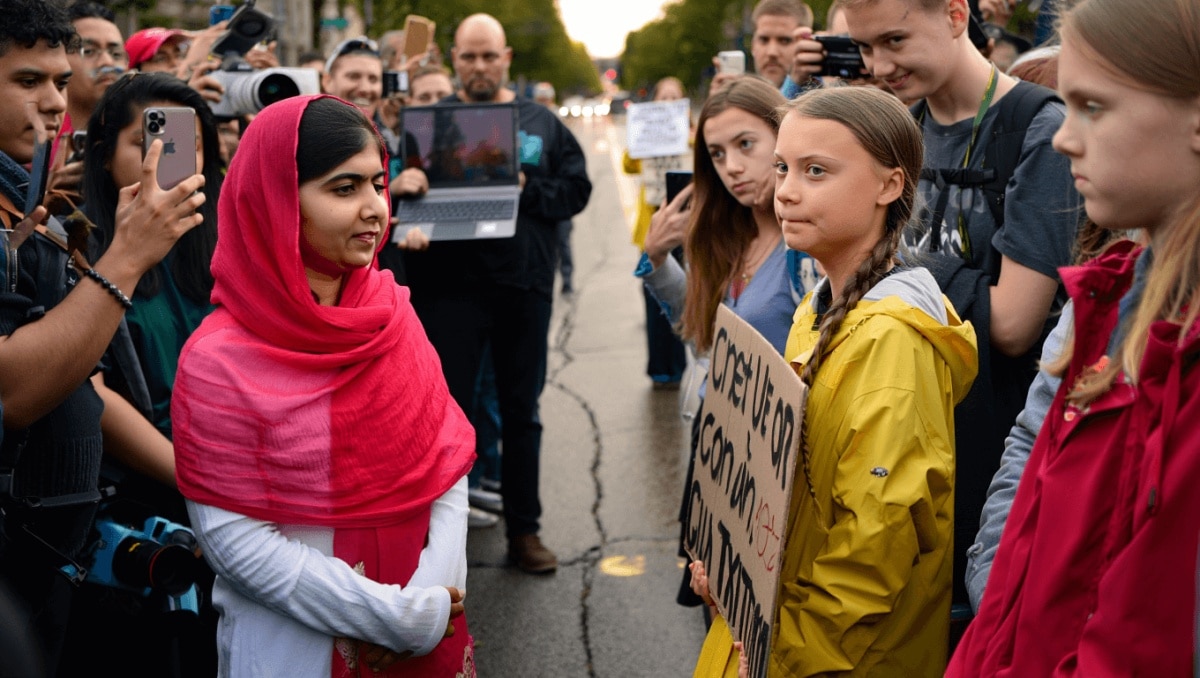
Malala Yousafzai popping up in glossy TikTok clips and late-night sketches while Greta Thunberg faces detention on a Gaza aid flotilla feels like a study in contrast. Two globally known activists, raised by viral headlines, now occupy very different public spaces. Their diverging paths have sparked fierce debate online about authenticity, tactics, and what modern progressive leadership should look like.
Malala’s new public phase: memoirs, media, and mainstream moments
Malala has spent recent months in high-profile, mainstream settings. She’s appeared on talk shows, posted playful videos, and promoted her new memoir, Finding My Way. The memoir revisits being shot by a Taliban gunman at 11 and her long climb onto the world stage.
Nas slams music industry over disrespect: teases new music, vows to address it
1992 vocal performances: 3 jaw-dropping moments that still amaze
Beyond interviews, she has expanded into film and theater production. One of her projects earned an Oscar nod. She is also listed as a co-producer on Suffs, a Broadway musical about the suffragette movement created with Hillary Clinton.
These moves broaden her reach. They also expose her to fresh criticism. For some, Malala’s partnerships with prominent Western figures raise questions about independence and alignment.
Controversy around alliances and Gaza statements
Critics have focused on the optics of Malala working with establishment figures.
- Her association with Hillary Clinton reopened old wounds about U.S. policy in Pakistan.
- Her public response after the October 2023 attacks on Israel was seen by some as insufficiently forceful.
- Online commentators read her messaging as balancing both sides, rather than naming structural power imbalances.
Yet the picture is not one-dimensional. The Malala Fund has funded relief for children in Gaza prior to 2023. She later posted statements condemning the Israeli government’s violations of international law. In interviews she has said public statements are only a part of what activists can do.
At home in Pakistan, attitudes toward Malala are complex and often hostile. Some suspect her of being co-opted by foreign interests. Her book argues she did not control her own narrative as a child. That lack of agency still shapes how critics view her choices today.
Greta Thunberg: frontline presence and radical consistency
Greta’s path has remained visibly confrontational.
She rose to prominence in 2018 after sitting outside Sweden’s parliament to demand stronger climate action. That simple, sustained act of civil disobedience sparked global “Fridays for Future” strikes.
Thunberg’s organizing quickly drew international attention. She met world leaders, addressed the U.N., and won Time’s Person of the Year in 2019. Yet praise came with criticism. Observers accused her rise of reflecting privilege and uneven media attention.
Still, Greta’s activism kept a clear edge. She has taken on causes that are less palatable to mainstream leaders. Her recent trip to the Mediterranean to deliver aid to Gaza and the reported detention by Israeli authorities underline her willingness to take personal risk for causes she endorses.
Why the digital crowd sees them as rivals
Social media fueled a narrative that pits Malala and Greta against each other. Clips, memes, and hot takes frame one as establishment and the other as radical. That split fits neatly into existing online tribes.
Observers point to several dynamics:
- Generational tastes: younger activists often prize radical stance over institutional partnerships.
- Visibility and performative culture: celebrities and mainstream platforms amplify what looks polished.
- Stan culture: fan-driven idolization turns political figures into personality contests.
Ryan Broderick, who edits a newsletter about internet culture, says much of the debate looks like fandom rivalry. To him, many posts resemble fan accounts arguing over pop stars rather than discussing policy or strategy.
Different tactics, different eras: why the comparison misleads
Comparing them as if they must fit the same mold ignores context.
- Malala emerged as a child survivor whose global fame was accelerated by international media.
- Greta built fame through visible direct action and refusal to cozy up to establishment figures.
- Their choices reflect different political moments and audiences.
One is operating within institutional channels; the other has leaned into grassroots antagonism. Both routes carry trade-offs. One invites scrutiny for relationships and compromise. The other invites scrutiny for purity and narrow focus.
How online outrage reshapes perceptions of activism
The feud narrative reveals broader shifts in progressive culture. Many on the left now demand uncompromising stances. They reward demonstrable risk-taking and radical language. They often punish perceived collaboration with old-guard figures.
At the same time, the rise of influencer-style fandom around political figures flattens nuance. Activists can be reduced to characters in viral storylines. That distortion harms public debate.
Stan-driven rivalries trade careful policy discussion for spectacle. This makes it harder to evaluate tactics, results, and moral complexity.
What their trajectories tell us about modern movements
Lessons from Malala’s choices
- Engaging mainstream platforms can broaden impact and funding.
- Institutional alliances help scale programs but complicate public perception.
- Longstanding global influence carries baggage that activism alone cannot erase.
Lessons from Greta’s approach
- Consistency and visible dissent keep causes in the public eye.
- Radical stances can galvanize young supporters and shift discourse.
- On-the-ground action raises credibility but can polarize audiences.
Both women are navigation points for younger activists deciding how to act. The conversation they provoke raises urgent questions about strategy, accountability, and the costs of fame in political struggle.










