Show summary Hide summary
- Details of the lawsuit and the producer’s safety fears
- How the complaint frames legal claims against Kanye West
- Broader implications for artists and the music industry
- Technical side: how AI-generated vocals are made
- What the legal process will likely involve
- Public and artist reactions shaping the debate
A record producer has taken legal action against Kanye West, alleging the rapper used AI to recreate his vocal performances without consent. The complaint claims the move has not only damaged the producer’s career, but also put him in fear for his personal safety. The case raises fresh questions about IP, deepfake audio, and how artists will protect their voices in the age of synthetic media.
Details of the lawsuit and the producer’s safety fears
The lawsuit, filed in civil court, centers on an alleged unauthorized use of AI to generate vocals that mirror the producer’s voice. According to the filings, the reproduced vocals were released on a track connected to Kanye West.
UK government urges people to stockpile food: here’s why it matters
Island Boys member hospitalized after drug overdose

The producer says he has received threats and harassment since the music surfaced. He asks the court for emergency relief and monetary damages.
What the complaint alleges
- The producer claims he never licensed his voice for use in AI-generated audio.
- He says the replicated vocals are recognizable and have caused reputational harm.
- The filing asserts that the release led to online harassment that escalated into safety concerns.
How the complaint frames legal claims against Kanye West
The legal papers mix intellectual property law with privacy and publicity protections. Plaintiffs in these cases commonly rely on several legal theories to stop use and recover damages.
Common causes of action cited
- Copyright infringement — if the original performance or recording is protected.
- Right of publicity — for unauthorized commercial use of a person’s voice or likeness.
- Contract or breach of agreement — if prior deals governed use of the producer’s work.
- Intentional infliction of emotional distress — when harassment or threats follow the release.
Broader implications for artists and the music industry
This dispute sits at the intersection of music and emerging tech. Creators now face the risk that AI can clone vocal timbres, styles, and idiosyncrasies.
Rights holders and musicians are pushing for clearer protections that will prevent unauthorized voice cloning and deepfake audio monetization.
Industry responses and policy gaps
- Record labels are exploring contract language to ban AI replication without consent.
- Streaming platforms and social apps are still developing detection tools for synthetic audio.
- Lawmakers have proposed new rules, but legislative consensus lags behind the technology.
Technical side: how AI-generated vocals are made
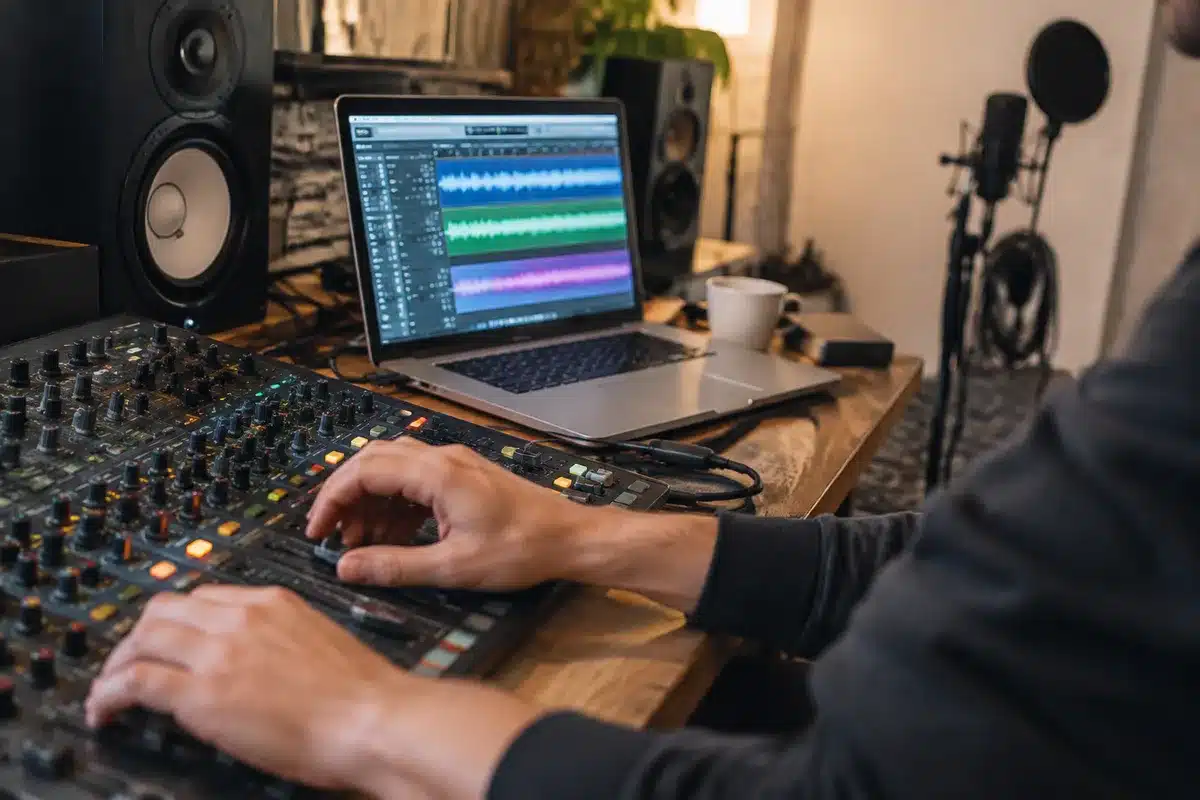
Modern voice synthesis uses machine learning trained on audio samples. With enough data, a model can mimic vocal tone and phrasing.

- Audio separation isolates vocals from mixes for training.
- Neural networks capture pitch, timbre, and cadence.
- Producers can then render new lyrics in a cloned voice.
What the legal process will likely involve
The court will consider evidence about who created the synthetic audio and how it was distributed. Key factors include proof of training data and any contracts.
Potential next steps in court
- Emergency hearings on injunctions to block further distribution.
- Discovery requests targeting developers, labels, and platforms.
- Expert testimony on audio forensics and AI model training.
- Possible settlement if parties favor a private resolution.
Public and artist reactions shaping the debate
Many artists have voiced alarm over voice cloning. Fans and industry figures are watching this litigation for signals about future rights.
The case could set a precedent for how courts balance innovation with personal and creative rights.
Actions creators can take now
- Include explicit AI clauses in recording agreements.
- Maintain clear records of vocal sessions and files.
- Monitor releases and act quickly when unauthorized uses appear.