Show summary Hide summary
- Premise that hooks: swap, accident and uncertainty
- Visual choices and Connie Britton’s curtailed presence
- Sam Nivola’s Sonny: the story’s emotional anchor
- Supporting cast and the amateur-investigator vibe
- Tone, pace and unexpected influences
- Plot development in the early half-season
- Questions the show raises about identity and family
- Credits, comparisons and style notes
- How to watch and what’s available now
Hulu’s new half-hour mystery-comedy Phony opens on a single strange question: after a near-fatal crash, why does a teen wake up convinced his mother has been swapped for someone else? The show’s first episodes play that dilemma for laughs, chills and a fair amount of unease, while asking whether reality is broken or just bending to a traumatized mind.
Premise that hooks: swap, accident and uncertainty
The series begins with a traumatic car wreck and a perplexing aftermath. Sonny, a high-schooler in the Pacific Northwest, regains consciousness days later to find his mother acting and appearing different. Nobody else seems to notice the change. That sliver of disconnection becomes the engine of the plot.
Rapper retirements reversed: 3 famous quits that turned into comebacks
Wiz Khalifa granted surprise legal lifeline: could derail prison sentence
The narrative leans into doubt. Is Sonny unreliable because of his head injury? Or is the world around him truly altered? The show frames the mystery as a possible “reverse cuckoo” scenario — someone replaced from the inside out — and keeps viewers guessing.
Visual choices and Connie Britton’s curtailed presence
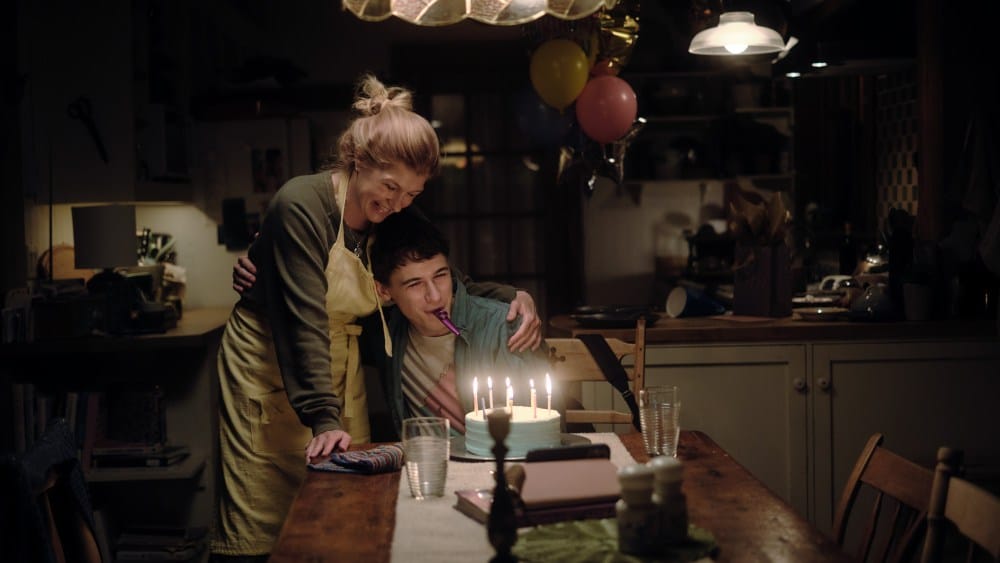
Rather than show Connie Britton in full, Phony uses visual effects to subtly distort her features and voice. The result is uncanny: viewers recognize Britton’s mannerisms, yet the show intentionally limits their emotional payoff.
- Altered appearance: Small changes to facial features create a dissonant effect.
- Purposeful withholding: The production treats Britton’s full expressiveness as a plot device.
- Emotional trade-off: The modifications make Elle’s absence palpable, but also reduce the audience’s access to her character.
The choice is brave but double-edged. It heightens the mystery but also removes some intimacy from scenes that depend on mother-son chemistry.
Sam Nivola’s Sonny: the story’s emotional anchor
With much of Ellen shrouded, the show relies on Sam Nivola to carry its emotional weight. He brings jittery charm and comic timing to Sonny, whose need to please clashes with rising suspicion.
Sonny is awkward, eager and sometimes dishonest to protect himself. That mixture makes him a sympathetic sleuth. His perspective dominates the early episodes, and the camera often aligns with his point of view.
How Sonny drives the plot
- He questions what others accept as normal.
- He assembles a makeshift investigation team.
- He struggles to confide in his girlfriend and friends.
Supporting cast and the amateur-investigator vibe
When Sonny can’t confide in his inner circle, he recruits two cousins who live on the fringes of their town. Mallory, an ex-homeschooler, and Weldon, a socially awkward peer, bring both comic relief and sincerity.
The trio’s tactics are low-fi: impromptu stakeouts, conspiracy forums and hiring an eccentric private eye whose qualifications are online enthusiasm. These elements tilt the show toward playful absurdity rather than straight horror.
Tone, pace and unexpected influences
Phony rarely sinks into pure dread. Episodes run about thirty minutes and favor a brisk, sometimes whimsical tempo. Creator Nick Paley’s background on comic and indie projects shapes that flavor.
- Comedy softens the premise’s horror edge.
- Regional atmosphere — evergreen forests and odd small-town details — nods to Twin Peaks.
- Most moments land as quirky rather than menacing.
The result is a show that flirts with eerie imagery but prefers lighthearted intrigue.
Plot development in the early half-season
The screeners provided the first half of season one, leaving the resolution out of reach. That makes it hard to assess whether early choices pay off later. By midseason, the series is past setup but not yet committed to a definitive explanation.
Circumstantial clues accumulate: missed gestures, odd errands and covert phone calls. Even outside Sonny’s viewpoint, Ellen remains slightly off, hinting that the mystery may run deeper than adolescent paranoia.
Questions the show raises about identity and family
Phony isn’t only a whodunit. It asks broader questions about adolescence, parental distance and the ways people become strangers to one another. Is this a coming-of-age tale, a family drama, or a surreal riff on identity theft?
- Coming-of-age angle: Sonny tests his instincts and boundaries.
- Family theme: Parenthood and adolescence create gaps in understanding.
- Surreal possibility: The show may be moving toward a stranger, more speculative explanation.
The early episodes provoke curiosity rather than urgency. Viewers may want to keep watching to see which emotional or narrative track the series follows.
Credits, comparisons and style notes
Nick Paley created Phony and directed several episodes. The cast includes Connie Britton as Ellen and Sam Nivola as Sonny, supported by actors who populate the town’s oddball corners.
- Stylistic fingerprints: indie comedy, surreal touches, and small-town atmosphere.
- Comparable works: Twin Peaks for mood, Marcel the Shell for whimsical perspective shifts.
- Episode length: roughly 30 minutes, with weekly releases scheduled.
How to watch and what’s available now
Hulu has released the first two episodes for streaming, then posts new episodes weekly on Tuesdays. Only the season’s first half was made available for early review, so much of the plot remains under wraps.
Current viewing tip: Expect a mix of mystery and comedy, and watch for details that may only pay off in later episodes.