
Show summary Hide summary
- What the proposed monument would look like
- Design intent, symbolism and reactions
- How the arch would change Washington’s skyline
- Legal battles and the veterans’ lawsuit
- Federal review and approval process
- How this fits with other White House-led architecture projects
- Cost estimates, timeline and next moves
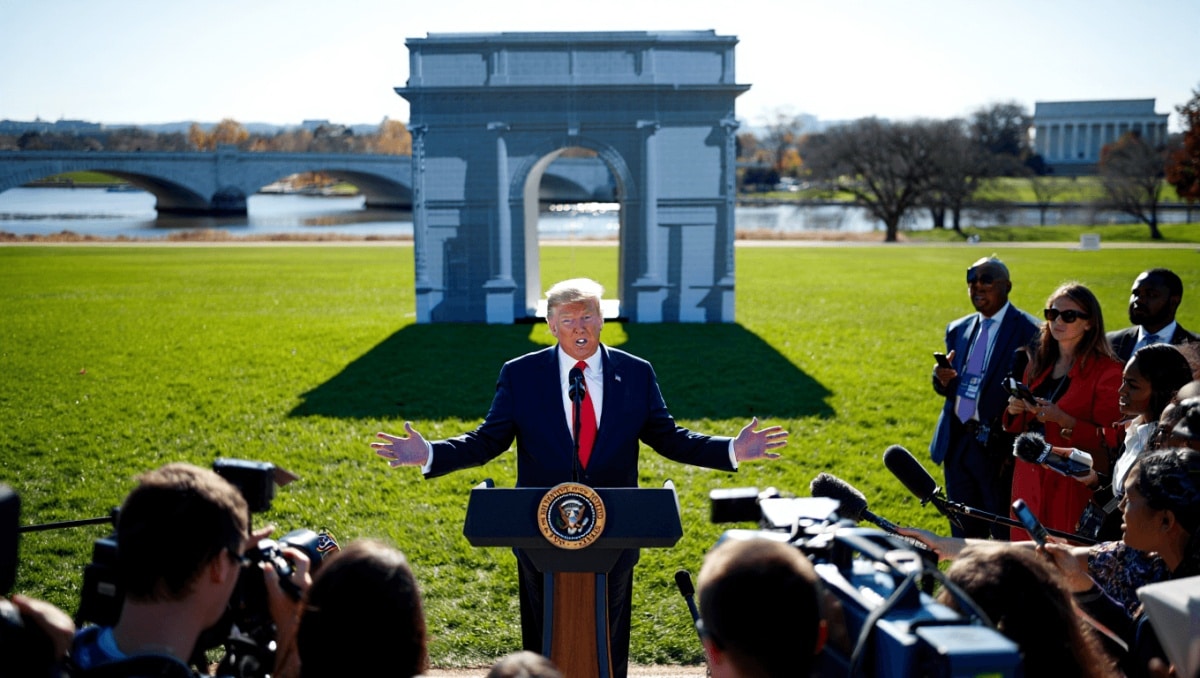
President Trump’s team released official renderings Friday for a proposed triumphal arch on the National Mall, a dramatic addition that would rise beside Arlington Memorial Bridge and cast a new silhouette over the capital. The images and design files set off immediate debate over aesthetics, authority and legal hurdles as planners prepare for agency reviews and courts weigh challenges from veterans.
What the proposed monument would look like
The mockups, produced by Harrison Design and published by the Commission on Fine Arts, show a large monumental arch echoing familiar European precedents. The structure is portrayed as ornate, tall and heavily symbolized.
Nas slams music industry over disrespect: teases new music, vows to address it
1992 vocal performances: 3 jaw-dropping moments that still amaze
- Height: The arch is shown at 250 feet tall, far taller than nearby landmarks.
- Decorative elements: Twin golden eagles and a winged, crowned figure top the structure.
- Inscriptions: Renderings display the phrases “One nation under God” and “Liberty and justice for all” on opposing facades.
- Visual parallels: It resembles the Arc de Triomphe in Paris but would be nearly 100 feet taller than that model.
Design intent, symbolism and reactions
White House aides describe the arch as a celebratory marker for the nation’s 250th anniversary and as a tribute to veterans and American sacrifice.
Outside observers offered starkly different takes. Critics describe the concept as oversized and politically charged. Some planners called it an attempt to create a monumental signature for an administration
Voices from preservation and design experts
Design advocates warned the proposal prioritizes scale over context. One expert said the plan looks aimed at grandeur above integration with the Mall’s historic composition.
Supporters counter that the work would create an iconic arrival at Arlington and enhance the visitor experience at nearby military memorials.
How the arch would change Washington’s skyline
If built, the arch would dominate views around the Lincoln Memorial and Arlington National Cemetery.
- It would be taller than most nearby monuments.
- It would reshape axial sightlines along the Mall and across the Potomac.
- Designers say placement at Memorial Circle would mark the Arlington Memorial Bridge terminus.
Legal battles and the veterans’ lawsuit
A group of Vietnam War veterans filed suit to stop the project. The plaintiffs argue federal law requires explicit congressional authorization for new commemorative structures in federal parklands.
They contend the arch may violate statutes that limit what can be built on National Park Service land without Congress’ OK. The case could block construction or tied the project up in prolonged litigation.
Federal review and approval process
The White House says it will follow legal procedures and noted the National Park Service has forwarded the design to the Commission on Fine Arts for review.
- Commission on Fine Arts: scheduled to evaluate the design.
- National Capital Planning Commission: expected to review planning implications.
- National Park Service: managing the site and facilitating submissions.
Notably, the current Commission on Fine Arts is composed of members appointed by the president. The White House also said the project will seek a mix of public and private funding.
How this fits with other White House-led architecture projects
The arch is one of several major construction ideas advanced by the administration in recent months. These initiatives signal a broader push to reshape federal and cultural sites in the capital.
Other notable proposals
- A proposed neoclassical ballroom at the White House, with an estimated cost in the hundreds of millions.
- Renovation plans for the Kennedy Center that prompted preservation groups to sue.
- Design overhauls proposed for Washington Dulles International Airport, attracting bids from high-profile firms.
- An executive order directing that large new federal buildings favor classical or traditional styles.
Cost estimates, timeline and next moves
The administration has not released a final price. Officials say cost figures are being calculated and that private funding will play a role.
The Commission on Fine Arts review is scheduled soon. If the commission grants approval, additional federal reviews and potential court challenges would follow. Lawsuits and congressional questions could delay or halt construction.










