
Show summary Hide summary
- Who’s on screen: the cast that carries the chaos
- Plot engine: a mayoral campaign, a stolen trinket, and suddenly crime
- Lineage and tone: echoes of Weeds and Schitt’s Creek
- Writing, pacing and the choice of implausibility
- Style and production: music, direction and editing that push you forward
- Character focus: who gets depth and who stays on the surface
- What works: reasons to tune in
- What may frustrate: plausibility and emotional stakes
- Season two potential and unanswered threads
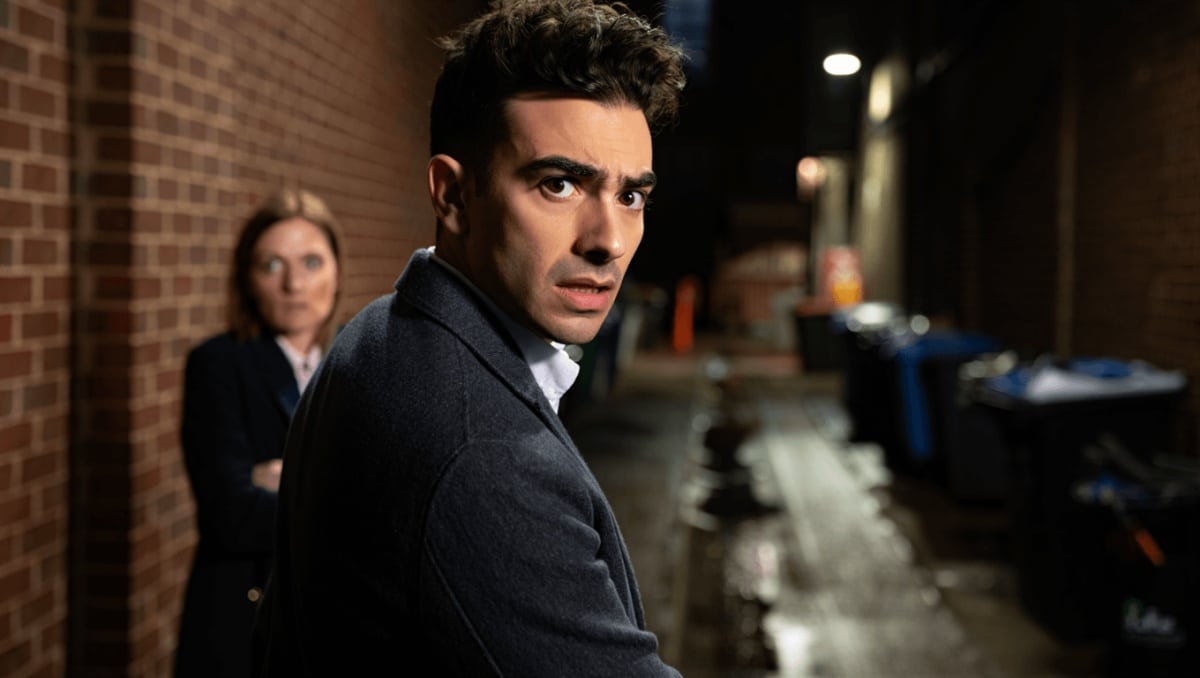
Netflix’s Big Mistakes arrives as a slippery, fast-moving dark comedy. Created by Dan Levy and Rachel Sennott, the series stitches family drama to crime caper chaos. It’s loud, often ludicrous, and anchored by a cast that can sell both the jokes and the danger.
Who’s on screen: the cast that carries the chaos
Leads and scene-stealers
Nas slams music industry over disrespect: teases new music, vows to address it
1992 vocal performances: 3 jaw-dropping moments that still amaze
- Dan Levy plays Nicky, a closeted clergyman whose private life collides with criminal danger.
- Taylor Ortega is Morgan, an ex-actor turned teacher whose impulsive streak fuels much of the plot.
- Laurie Metcalf portrays Linda, the hardware-store owner who launches a surprise mayoral run.
- Elizabeth Perkins appears as Annette, a wealthy mother with political interests and deep pockets.
Supporting cast includes Abby Quinn, Jacob Gutierrez, Boran Kuzum and Mark Ivanir. Each performer brings distinct energy, even when the writing pushes them into improbable beats.
Plot engine: a mayoral campaign, a stolen trinket, and suddenly crime
The show unfolds in a New Jersey town as Linda’s bid for mayor ignites family tensions. What starts as local politics quickly tips into organized crime.
- Nicky and Morgan buy a gift for their ailing grandmother.
- A refusal at a small souvenir shop leads to a shoplifting incident.
- The stolen item belongs to a criminal network tied to Russian gangsters.
- The siblings find themselves entangled in escalating violence and farce.
The setup demands big leaps of faith. Characters move from one reckless beat to the next with little practical motivation, which is part of the show’s intentional style.
Lineage and tone: echoes of Weeds and Schitt’s Creek
Big Mistakes fits into a recent TV strain: dark comedies where ordinary people descend into crime. That lineage traces back to Weeds and runs through newer entries like Killing It and Deli Boys.
Dan Levy’s comic instincts are recognizable. Like Schitt’s Creek, his work can begin broad and then refine. But here the series leans into chaos from the start.
Writing, pacing and the choice of implausibility
The writers’ room is stacked with experienced talent, including Mad Men alum Erin Levy. The scripts are clever and punchy. Still, the narrative often chooses luck over logic.
- Strength: Snappy dialogue and brisk episode pacing keep momentum.
- Weakness: Key plot turns depend on huge coincidences.
- Effect: Watching closely can expose thin motivations and holes.
The series builds toward a season-turning reveal that feels either wildly coincidental or inadequately seeded. The result unsettles viewers who prefer emotional stakes grounded in believable economics.
Style and production: music, direction and editing that push you forward
Direction by Dean Holland on early episodes sets a kinetic rhythm. Editing often trims breathing room in favor of forward thrust. The score, by Peaches and Nora Kroll-Rosenbaum, injects pulse at key moments.
When the show leans into style, it distracts from implausibility. The thumping soundtrack and tight cuts create excitement even when plot logic fades.
Character focus: who gets depth and who stays on the surface
Morgan emerges as the most textured figure. Ortega crafts a mix of charm and frustration that anchors many scenes. Levy’s Nicky shows comic exasperation but remains underexplored as a spiritual figure.
- Morgan: fully drawn in moments, emotionally volatile, often compelling.
- Nicky: funny arcs, limited exploration of faith as a real force.
- Yusuf (Boran Kuzum): a volatile supporting thread that sometimes disappears.
- Linda (Metcalf): commanding in both small and larger-scale scenes.
Some characters feel intentionally hapless. That choice generates humor but undercuts deeper emotional investment.
What works: reasons to tune in
- Sharp, catty banter that lands frequently.
- Strong performances from Metcalf, Ortega and Levy.
- Stylish production that keeps episodes moving at speed.
- Moments of genuine suspense wrapped in absurd comedy.
If you value forward motion and tone over airtight plotting, Big Mistakes will likely entertain.
What may frustrate: plausibility and emotional stakes
- Major plot beats rest on implausible coincidences.
- Motivations can feel manufactured rather than organic.
- Nearly all characters act as if they lack a believable internal logic.
Shows like Weeds and Killing It traded in believable economic pressure. Here, the strain often reads more like writers’ contrivance than lived desperation.
Season two potential and unanswered threads
The series reaches a dramatic revelation late in the season. It’s wild enough to suggest the next season could explore new tonal territory.
Whether the show will deepen character work and tighten plotting remains an open question viewers may watch to answer.










