
Show summary Hide summary
- How theatrical launches and streaming shifted Star Wars’ focus
- Why Clone Wars grew from cult favorite to franchise pillar
- Maul — Shadow Lord: creative team and standout cast
- Plot focus: crime, revenge, and a fractured Empire
- Character dynamics: where the series finds its emotional center
- Visual design: strengths, rough edges, and stylistic choices
- How to watch and release pattern
- Where Maul fits in the broader Star Wars roadmap
The next wave of Star Wars storytelling is arriving across screens large and small. After years in which new tales have bloomed on streaming platforms, a theatrical release and a daring animated spinoff are making headlines. Both developments show how the galaxy’s center of gravity has shifted, and how characters born in animation now carry weight in live-action and theatrical franchises.
How theatrical launches and streaming shifted Star Wars’ focus
The franchise has not been dormant, but its home has moved. Since 2019, when multiple projects debuted in quick succession, Disney has prioritized serialized stories on Disney+ over big-screen rollouts. Jon Favreau’s new film, The Mandalorian and Grogu, marks the first feature film tied to the franchise to return to theaters in years. This signals a partial reopening of theatrical space for Star Wars, while streaming continues to shape the saga’s core narratives.
Nas slams music industry over disrespect: teases new music, vows to address it
1992 vocal performances: 3 jaw-dropping moments that still amaze
Why Clone Wars grew from cult favorite to franchise pillar
Animation once sat on the sidelines of Star Wars lore. That changed as animated series built essential arcs and characters. Genndy Tartakovsky’s early 2000s take set the stage. Later seasons, especially those released on Disney+, created narrative bridges to the live-action universe. The result: animated figures now headline their own live-action projects.
- Ahsoka Tano evolved from fan favorite to live-action lead, played by Rosario Dawson.
- Animated continuity now informs character motivations and major plot beats.
- Fans and new viewers sometimes need prior animated knowledge to grasp twists.
Maul — Shadow Lord: creative team and standout cast
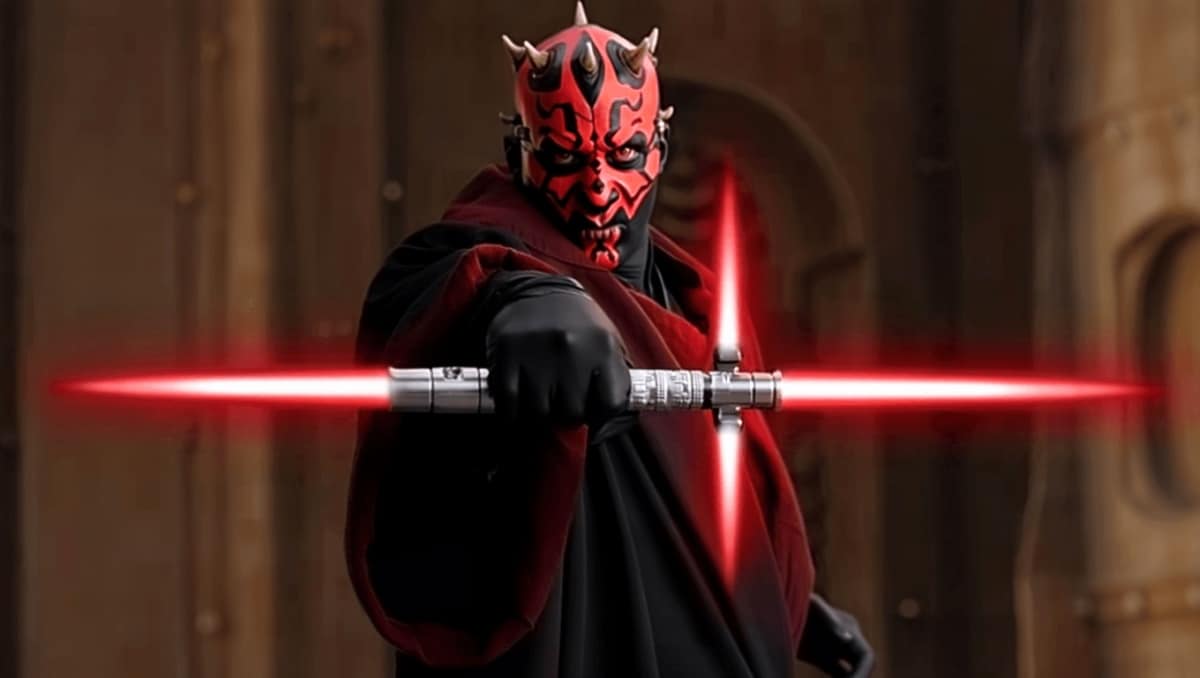
The new series Star Wars: Maul — Shadow Lord arrives as further proof of animation’s influence. Dave Filoni, often seen as the franchise’s creative lynchpin, guides the project. Filoni developed the show with head writer Matt Michnovetz and returns to themes he has long explored.
Main cast and contributors
- Sam Witwer resumes the voice of Maul, offering continuity for long-term viewers.
- Wagner Moura appears as a commanding presence in a supporting role.
- Richard Ayoade and Dennis Haysbert add notable variety to the ensemble.
- Gideon Adlon plays Devon, a central young character linked to the Jedi’s downfall.
Plot focus: crime, revenge, and a fractured Empire
Set on the metropolis Janix during the Galactic Empire’s rise, the series finds Maul reinvented as a crime boss. He maneuvers to control smuggling networks and confront old enemies. The storyline ties back to events introduced in Clone Wars, so some stakes hinge on prior animated lore.
- Maul’s role shifts from Sith warrior to underworld mastermind.
- Devon, a former Padawan, becomes a focal point for Maul’s schemes.
- The series examines themes of vengeance, lost orders, and moral temptation.
The series leans on established backstory to enrich emotional moments. That gives depth to returning fans but can create gaps for those new to this corner of the saga.
Character dynamics: where the series finds its emotional center
At the heart of the show is the push-and-pull between Maul and Devon. Their relationship probes whether trauma and rage can be repurposed into mentorship or manipulation. The show echoes classic franchise motifs — the seduction of power, the collapse of institutions, and the blurred lines between heroism and villainy.
- Maul’s attempts to recruit Devon recall past dark-side temptations in the franchise.
- Devon’s pacifist companion, Eeko-Dio-Daki, provides moral contrast.
- Scenes of temptation and defection aim to capture the saga’s highest emotional beats.
Visual design: strengths, rough edges, and stylistic choices
As an animated production, the show mixes striking sequences with uneven character rendering. The city of Janix offers a Blade Runner–esque skyline that elevates several set pieces. Lightsaber duels retain kinetic excitement. Yet some character models appear blocky or inconsistent in detail.
- High points: moody urban environments and dramatic close-ups of Maul.
- Low points: occasional stiff or unattractive character proportions.
- Overall: the series pushes Clone Wars-era storytelling forward but stops short of replacing franchise tentpoles.
How to watch and release pattern
The new series is rolling out on Disney+ in paired episodes. Early screenings covered most of the season, showing a total arc across ten episodes. Streaming remains the primary launch platform for most franchise content, even as theatrical entries re-emerge.
- Platform: Disney+
- Release cadence: weekly drops in two-episode blocks
- Episode count: ten
Where Maul fits in the broader Star Wars roadmap
Maul’s return underscores a broader trend: characters introduced in animated shows now anchor mainstream storytelling. While live-action projects and proposed big-screen films have faced delays, Disney+ continues to expand the galaxy through varied tones and formats. Some entries have been critically acclaimed. Others have divided opinion. Maul — Shadow Lord arrives as both continuation and experiment, aiming to satisfy longtime fans while carving out new territory for an iconic antagonist.










