
Show summary Hide summary
The Sonos Play arrives as a middle ground between the tiny Roam and the bulky Move. It aims to be the portable Sonos many users have wanted: roomy enough to deliver satisfying sound, yet small enough to toss into a backpack. After a week with a review unit, the Play feels like a calculated step toward restoring Sonos’ reputation after last year’s troubled app update.
How the Play looks and how you carry it
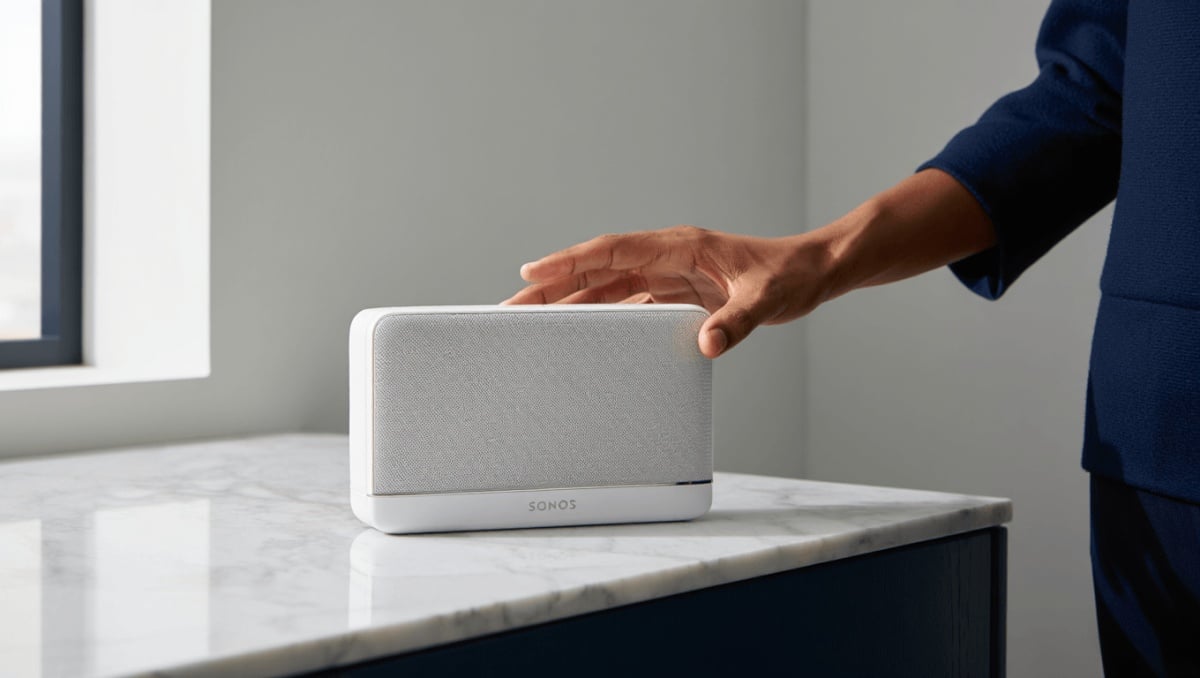
The Play keeps Sonos’ understated design language. Mesh wraps the speaker, the logo is low-key, and the top surface uses physical buttons instead of touch controls. That choice feels deliberate — more practical for outdoors and rainy conditions.
- Size and weight: Roughly 1.3 kilograms, easy to grab with one hand.
- Colors: Available in black or white.
- Ingress protection: Rated IP67, making it more water- and dust-resistant than the Move 2.
- Carrying aid: A small loop on the back exists, though it’s more convenient than essential.
Nas slams music industry over disrespect: teases new music, vows to address it
1992 vocal performances: 3 jaw-dropping moments that still amaze
Buttons, ports, and charging options
The Play includes a power switch, a Bluetooth pairing button, a privacy button to disable voice assistants, and a USB-C port. Sonos bundles a magnetic charging base similar to the Move 2’s dock. If you prefer to travel light, you can also charge the speaker directly via USB-C.
- USB-C: used for wired audio and direct charging.
- Magnetic charging base: included for home use.
- Physical controls: pressable buttons that work with gloves and wet hands.
Battery performance and an emergency power trick
Sonos rates the Play for up to 24 hours of playback. In real life, expect two long evenings of moderate use before needing a recharge. That makes it a solid option for short camping trips or weekend outings.
One notable feature: the Play can act as a power bank. Connect a phone or another USB-C device and the Play will provide power from its battery. Sonos quotes the internal capacity at about 35Wh, which can be handy when your phone is drained.
Sound profile: punchy, but not without limits
The Play is built to be loud and lively. It delivers surprising low-end impact for its size and clear highs on sparser tracks. Small ensembles and acoustic tracks often sound crisp and engaging.
But the speaker reveals its limits when music becomes dense. At high volumes or with complex mixes, the sound can get crowded. The Move 2 remains the benchmark for clarity and power in Sonos’ lineup. The Play shares a similar driver configuration — a mid-woofer with two angled tweeters driven by three digital amps — yet differences in amp class and woofer size give the Move 2 an edge.
Sound options to try
- Sonos “Loudness” mode is enabled by default. It boosts bass and treble.
- Turning Loudness off often yields a more balanced sound.
- The Play is directional: you get the best experience when facing the speaker.
Using the Sonos app today: improved, but imperfect
The 2024 app relaunch created a public relations headache for Sonos. Many bugs and interface changes hit users hard. Months later, the app works far better than it did at launch. Device setup is smoother, and basic playback is reliable.
That said, some UI choices remain puzzling. Search can require extra steps to find full albums. Volume controls sometimes open nested cards that make adjustments less intuitive. If you keep multiple Sonos speakers, the app still provides unmatched convenience for grouping rooms and syncing playback.
Why the Sonos app still matters
- Multi-room control: easily route audio to any combination of Sonos devices.
- Trueplay tuning: optimizes sound for your room when available.
- Third-party services: the app aggregates Apple Music, Spotify, and streaming radio, but each service must be linked.
Voice control remains limited to Sonos’ own assistant and Amazon Alexa. The Sonos assistant does basic tasks well, but it isn’t as capable as modern AI assistants.
Comparisons, pricing, and who should buy one
Positioned between the Roam 2 and the Move 2, the Play tries to balance portability with strong sound. If you already own a Move 2, the Play won’t replace it sonically. But for portability and multi-room flexibility, the Play fits a specific niche.
- Battery life: Matches the Move 2 at up to 24 hours; outlasts the Roam 2.
- Durability: IP67 vs. Move 2’s lower water rating.
- Portability: Easier to toss in a bag than the Move 2.
Price is a sticking point. The Play launches at $299 in the U.S. and €349 in Europe. That places it closer to higher-end portable speakers, and some buyers may expect Move 2-level performance for that money. If Sonos had priced it around $200, it would be a straightforward pick for ecosystem fans. At its current price, the decision depends on how much you value Sonos integration and portability over absolute sonic refinement.
Pros and cons at a glance
- Pros: Strong battery, IP67 protection, physical controls, Sonos multi-room features.
- Cons: Not as sonically refined as Move 2, app quirks persist, higher price than some rivals.
If you travel light but want genuine Sonos multi-room capability, the Play is an attractive option. If ultimate sound quality is your priority, the Move 2 remains the better choice. If budget is tight, there are less expensive portables that offer excellent single-speaker performance for less than the Play’s asking price










