
Show summary Hide summary
The Apple TV+ drama Imperfect Women drops viewers into a tightly wound mystery about long friendship, hidden injuries and the masks people wear. What begins as a simple identification call soon fractures into a hunt for truth. Each episode peels back layers of loyalty, betrayal and the ways women protect themselves and each other.
A violent night that triggers a public mystery
The series opens with a chilling moment: Eleanor is summoned by police to identify her friend’s body. The discovery jolts a group of old friends into an uneasy investigation.
Nas slams music industry over disrespect: teases new music, vows to address it
1992 vocal performances: 3 jaw-dropping moments that still amaze
A detective, Bethany Ganz, questions Eleanor about the last time she saw Nancy. The story then rewinds to the women’s final evening together at a birthday dinner. Tension rises as Nancy’s phone keeps buzzing. She’s been involved with a mysterious man who has begun to threaten her. Nancy walks out of the party to end the affair. That decision becomes the center of an eight-episode unraveling.
Meet the trio: characters and the actors who bring them to life
Principal cast and short profiles
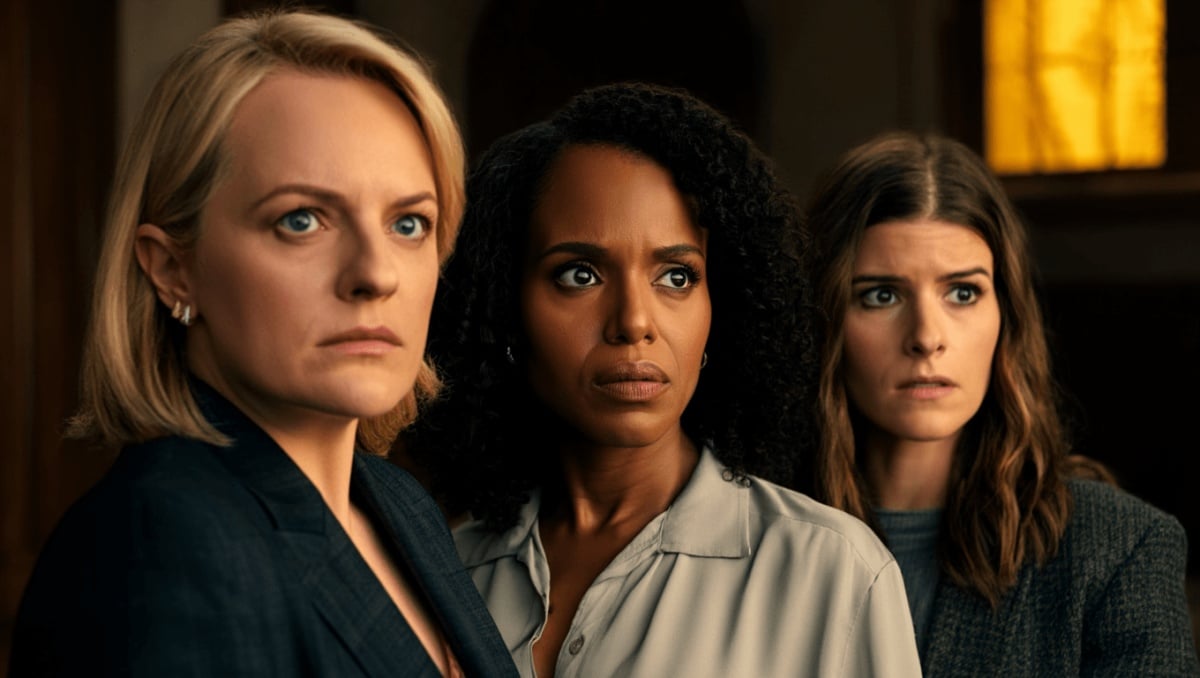
- Eleanor — played by Kerry Washington. A Boston native, raised with privilege, who now runs a busy non-profit. She’s single but entangled in a risky workplace fling with a younger employee.
- Nancy — played by Kate Mara. Married into wealth to Robert Hennessy, yet she carries a harsh past from an abusive Bakersfield upbringing. Her secret affair and its fallout drive the mystery.
- Mary — played by Elisabeth Moss. A devoted stay-at-home mother who shields optimism even as her husband struggles with underemployment. She is the most outwardly trusting of the three.
- Detective Bethany Ganz — played by Ana Ortiz. The officer piecing together the night’s events while probing the complicated web linking the women.
- Supporting roles include Joel Kinnaman as Robert Hennessy, Corey Stoll as Howard, Rome Flynn as Eleanor’s colleague, and Jackson Kelly as Mary’s teenage son, Marcus.
How the narrative structure sustains suspense
The show alternates viewpoints, letting each woman narrate parts of the story. This approach deepens the mystery. As scenes flip from Eleanor to Nancy to Mary, previously hidden details take shape.
- The central timeline resets and reframes key moments.
- Flashbacks provide emotional context for each character.
- Clues surface slowly, keeping viewers uncertain who to trust.
Imperfect Women uses a compact eight-episode arc that balances procedural investigation with intimate character study. The first two episodes premiere on March 18, followed by weekly releases on Wednesdays.
Core themes: silence, shame and the cost of concealment
At its heart, the series examines why women hide painful truths. From youth, many are taught to mute discomfort. That culture of silence lets shame accumulate.
The show argues that secrecy corrodes trust. As the characters reveal what they’ve been hiding, the story suggests a different approach: radical honesty among close friends can be freeing.
Scenes of disclosure are often raw and uncomfortable. Yet they also show how shared vulnerability can become a tool for survival and solidarity.
Style, tone and creative pedigree
Adapted by Annie Weisman from Araminta Hall’s novel, the show blends psychological suspense with domestic drama. The Los Angeles backdrop feels lived-in, switching from glossy social settings to quieter, more intimate spaces.
Lead performances carry the series. Washington, Moss and Mara give layered portrayals that sell both friendship and fracture. The result is a thriller that reads as a portrait of womanhood and long-term bonds.
The series leans on mood and interpersonal friction rather than action. It rewards attention to dialogue, small gestures and the slow accumulation of unease.
What viewers should expect from the mystery
- Character-driven revelations rather than shock for shock’s sake.
- A steady, episodic tempo that deepens rather than rushes the plot.
- Exploration of class, trauma and the performative roles women often occupy.
- Strong central performances that anchor the suspense.










