
Show summary Hide summary
- M5 MacBook Air: performance that blurs the line with Pro laptops
- When more power becomes a problem: the M5 Air paradox
- Cost and value: what the M5 MacBook Air costs you
- Real-world use: daily workflow, design and macOS 26
- Who should buy the M5 Air now—and who should wait
- How we tested: benchmarks and real-world checks
Apple’s latest MacBook Air with M5 silicon arrives as a sleek, featherweight workhorse that feels unexpectedly close to a MacBook Pro. Its speed and polish impress, but the new Air also raises questions about price, positioning, and whether most buyers truly need this much power in such a thin laptop.
M5 MacBook Air: performance that blurs the line with Pro laptops
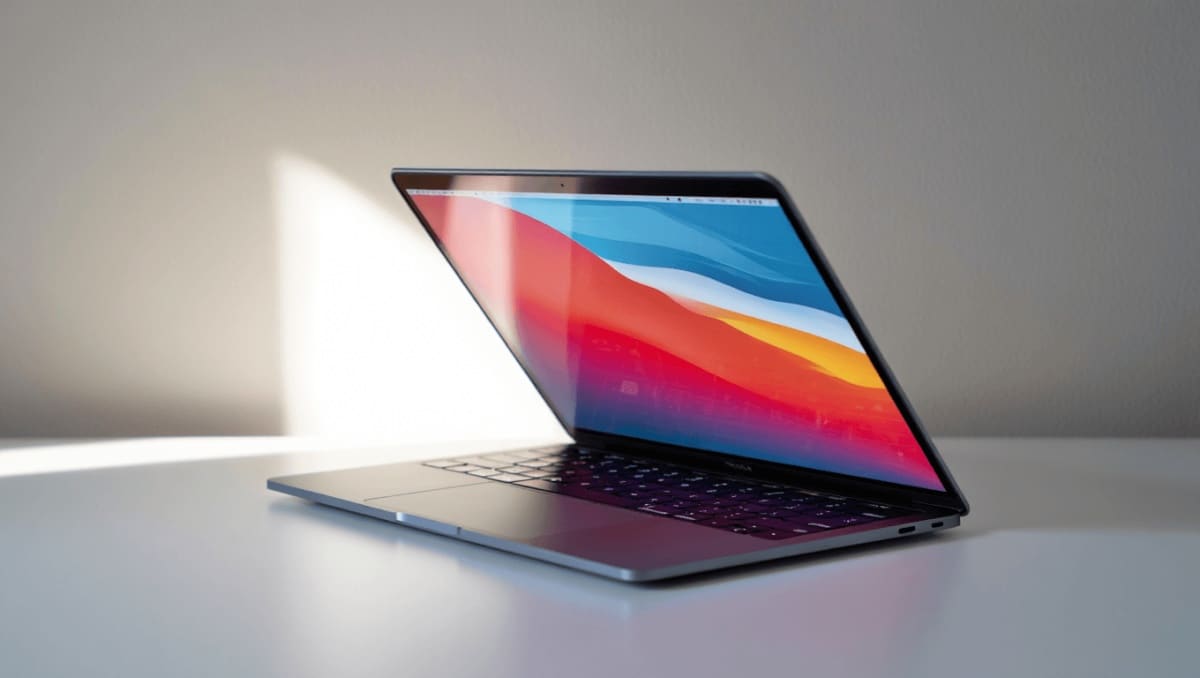
The M5 MacBook Air keeps the slim profile people love, while packing a chip that pushes its capabilities into pro territory. Available in two sizes, the 13.6-inch and 15.3-inch models, it stays light and compact. The aluminum unibody still feels sturdy despite its thin frame.
Nas slams music industry over disrespect: teases new music, vows to address it
1992 vocal performances: 3 jaw-dropping moments that still amaze
Benchmarks show notable gains. On Geekbench 6, multi-core and single-core results place the new Air within range of last year’s M5 MacBook Pro. In everyday use, that means fast app launches, near-instant file exports, and smooth video timelines.
- Design: ultra-thin chassis, premium metal finish, familiar MacBook build quality.
- Display: Liquid Retina clarity that makes photos and video pop.
- Everyday speed: apps feel responsive, multitasking is snappy, and creative tools run well.
Testing was done on the larger 15.3-inch unit, so expect small differences with the 13.6-inch model. But overall, the M5 brings a notably higher ceiling for power users who prize portability.
When more power becomes a problem: the M5 Air paradox
Apple’s M-series evolution—from M1 to M5 and beyond—transformed laptops. Each iteration raised performance expectations and blurred product lines.
The M5 Air now delivers performance close to Pro-class machines, which creates a paradox. The Air was once the go-to for students and casual users. With this update, Apple has packed so much capability into the thin frame that the Air edges into professional workflows most users never needed.
That shift has real implications:
- Pricing climbs alongside specs, changing who the Air is meant for.
- Less distinction between Air and Pro models makes purchasing choices more complex.
- Most casual buyers won’t fully use the added horsepower.
Put simply, the M5 Air is impressively capable, but its power may outstrip the needs of the typical buyer.
Cost and value: what the M5 MacBook Air costs you
The new Air starts at $1,099, which reflects a higher base spec that includes 16GB of RAM and 512GB of storage. Apple raised the baseline configuration compared to earlier models, which affects who the Air is targeted at.
There are two sides to this story. On the one hand, you get generous storage, fast wireless standards, and a top-tier chip for the price. On the other hand, the price increase removes the sub-$1,000 entry point that made the Air a go-to choice.
If budget matters, here are practical options to consider:
- Buy an earlier model. The M4 or M3 Air models still offer excellent performance for most tasks.
- Watch for sales. Retailers often discount new MacBooks within weeks of launch.
- Consider a smaller configuration or refurbished units to save money.
Tip: At the time of testing, the previous-generation M4 MacBook Air was available for $899 at Best Buy. That price makes the older model a compelling bargain.
Real-world use: daily workflow, design and macOS 26
In day-to-day work, the M5 Air excels. The machine boots fast, apps load quickly, and the system rarely stumbles under heavy tab loads. Video editing timelines and complex image exports move along with minimal waiting.
macOS 26 (Tahoe) and interface refinements add polish. The Liquid Retina display and the improved camera system enhance video calls and creative tasks. Touch ID and the Magic Keyboard keep the familiar, productive MacBook formula intact.
- Battery: Full battery testing is ongoing, but early impressions show efficient power use for mixed workloads.
- Thermals: The fanless design keeps the laptop silent. Sustained heavy workloads may result in thermal throttling versus fan-equipped Pros.
- Portability: You get much of the Pro experience in a noticeably lighter package.
Who should buy the M5 Air now—and who should wait
Deciding whether to buy depends on your needs and budget.
Buy now if:
- You want top-tier performance in the lightest possible machine.
- You regularly edit video, run large photo libraries, or use demanding creative apps on the go.
- You value the latest Apple chip and higher base specs.
Consider waiting or buying a previous model if:
- Your tasks are mostly web browsing, office apps, and media streaming.
- You prefer to keep the price under $1,000.
- You want to see how retail discounts and seasonal sales affect pricing.
Retail data suggests early discounts are likely. Amazon and other retailers have already shown modest price cuts. If your use case is typical or budget-sensitive, the M3 or M4 Air remains a strong choice.
How we tested: benchmarks and real-world checks
Testing combined synthetic benchmarks and everyday tasks. Geekbench 6 numbers provided a standardized view of multi-core and single-core performance. We also ran export tests, heavy multitasking scenarios, and creative software workloads.
Hardware tested was a 15.3-inch M5 MacBook Air. Results may vary with the 13.6-inch model and with different storage or memory configurations.
Ongoing tests include a complete battery rundown test. That data will shed more light on how the M5 Air manages power during continuous video playback and mixed productivity use.










