
Show summary Hide summary
- Plot setup: a murder at the heart of friendship
- Who the characters are and why they matter
- Performances: strong actors, uneven choices
- Style and direction: shiny surfaces and curated sorrow
- Narrative choices: perspective shifts and pacing
- Themes: privilege, performance and misplaced empathy
- Where the adaptation succeeds and where it stumbles
- Supporting elements that lift certain episodes
- Questions the series leaves open
Apple TV+’s Imperfect Women lands as another glossy limited series about wealth, friendship and a violent secret. The show adapts Araminta Hall’s novel and leans on a high-profile cast. It aims for tense drama, but often feels like a familiar riff on privilege, grief and performative empathy.
Plot setup: a murder at the heart of friendship
The central mystery is simple. One of three college friends is dead. The other two are left to untangle what happened. Secrets ripple outward and every revelation redefines motive.
Nas slams music industry over disrespect: teases new music, vows to address it
1992 vocal performances: 3 jaw-dropping moments that still amaze
- Source material: Based on Araminta Hall’s novel, adapted into an eight-episode limited series.
- Genre: Prestige murder mystery with social drama trimmings.
- Setting: A glossy, idealized Los Angeles full of curated parties and pristine streets.
Who the characters are and why they matter
The story orbits three women whose shared past matters more than the present.
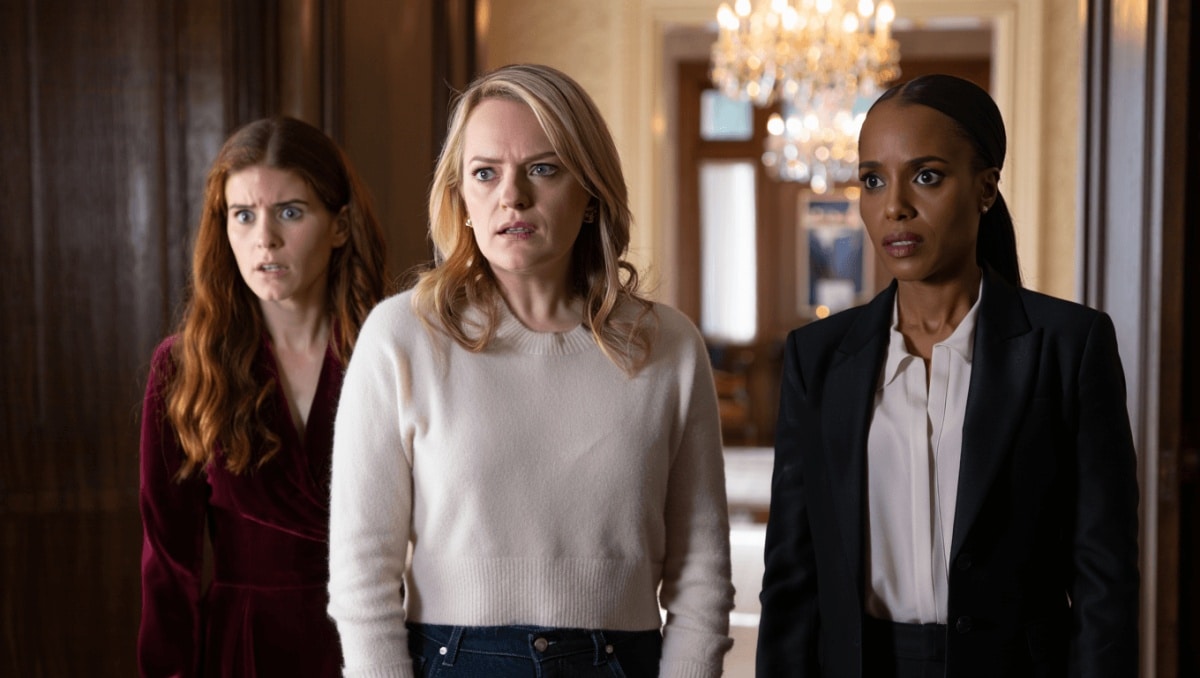
- Eleanor — played by Kerry Washington — runs a well-funded nonprofit. She is wealthy, polished and carrying a messy office romance.
- Mary — played by Elisabeth Moss — sacrificed a career to raise children. Her marriage and finances show signs of strain.
- Nancy — played by Kate Mara — is the woman whose death sparks the investigation. Her background and choices become the mystery’s thread.
Each woman represents a different social quadrant. Their bonds feel both intimate and codependent. The show tries to make these tensions the engine of its suspense.
Performances: strong actors, uneven choices
The cast is one of the series’ main selling points. Many actors give committed work, even when the material pulls them in familiar directions.
- Kerry Washington channels a well-known charisma. At times she reads like a reflection on her past roles.
- Elisabeth Moss brings her gift for rage and grief, and she anchors some of the story’s most painful beats.
- Kate Mara brings nuance to a character whose life becomes a puzzle piece after death.
Supporting turns add texture. Leslie Odom Jr. provides warmth whenever he appears. Keith Carradine nails a slimy, concise menace. Joel Kinnaman is reliably competent.
Style and direction: shiny surfaces and curated sorrow
Directors, including Lesli Linka Glatter, fill the series with slick visuals. Locations and wardrobes appear hyper-curated. Streets look flawless.
This pristine aesthetic serves the story’s social critique and undercuts it at the same time. When privilege is shown as a stage prop, the drama sometimes feels staged too.
- The production values are high. Every gala and fundraiser is impeccably dressed.
- Costume and set design emphasize contrast between wealth and struggling households.
- Visual metaphors, like a kintsugi-inspired opening, are used to suggest fractured emotional lives.
Narrative choices: perspective shifts and pacing
The season arranges episodes around individual viewpoints. Early chapters favor one heroine, then pivot to the others. This creates intimacy but also interrupts momentum.
Clues are doled out predictably. The big reveal is not always hard to foresee. Still, the series uses personal history to complicate motive.
- Episodes focus on character memory and private moments.
- Flashbacks and unreliable recollections are frequent.
- At times the show trades mystery for melodrama.
Themes: privilege, performance and misplaced empathy
Imperfect Women wants to interrogate class and gender. It tries to show how assumptions about women shape blame and sympathy. But the critique often feels obvious.
The series flirts with satire, yet lacks the sharpness required to land as dark comedy. It occasionally veers into caricature when depicting “outsider” places.
- Wealth is presented as curated performance.
- Poverty is sometimes used as shorthand for authenticity.
- The show borrows cultural symbols without fully exploring them.
Where the adaptation succeeds and where it stumbles
The show earns points for craft and for moments of real emotion. But it also suffers from genre fatigue. Longtime viewers of prestige television will find familiar beats.
Strengths
- High production values and visual polish.
- Strong lead performances that ground key scenes.
- Occasional sharp observations about female friendship and public perception.
Weaknesses
- Predictable mystery structure.
- Tendency to fetishize both wealth and hardship.
- A lack of sharper tonal control that would make satire land.
Supporting elements that lift certain episodes
Small scenes and actors often rescue otherwise routine sequences. Quiet interactions reveal more than the plot twists do.
- Leslie Odom Jr.’s scenes add emotional depth.
- Keith Carradine’s brief appearances sharpen the stakes.
- Moments of household strain feel lived-in and empathetic.
Questions the series leaves open
Imperfect Women raises issues around culpability and narrative bias. It nudges viewers to question whose story is centered and why. The show prompts debate even when it fails to shock.
Whether viewers will reward the series’ glossy packaging or push back at its familiar patterns remains unpredictable.










