
Show summary Hide summary
- What Apple showed on March 4 — who this tablet targets
- Looks you already know — design, sizes, and color options
- Under the hood: M4 chip, memory boost, and AI-ready Neural Engine
- Faster cellular: the new connectivity stack and real-world speeds
- Turn it into a laptop — or keep it a tablet
- Liquid Glass UI: a polished look with small trade-offs
- AI work on-device: testing transcription, image tools, and creatives apps
- Photo, audio, and accessories: what stayed the same
- Storage and pricing options: choose what fits your workflow
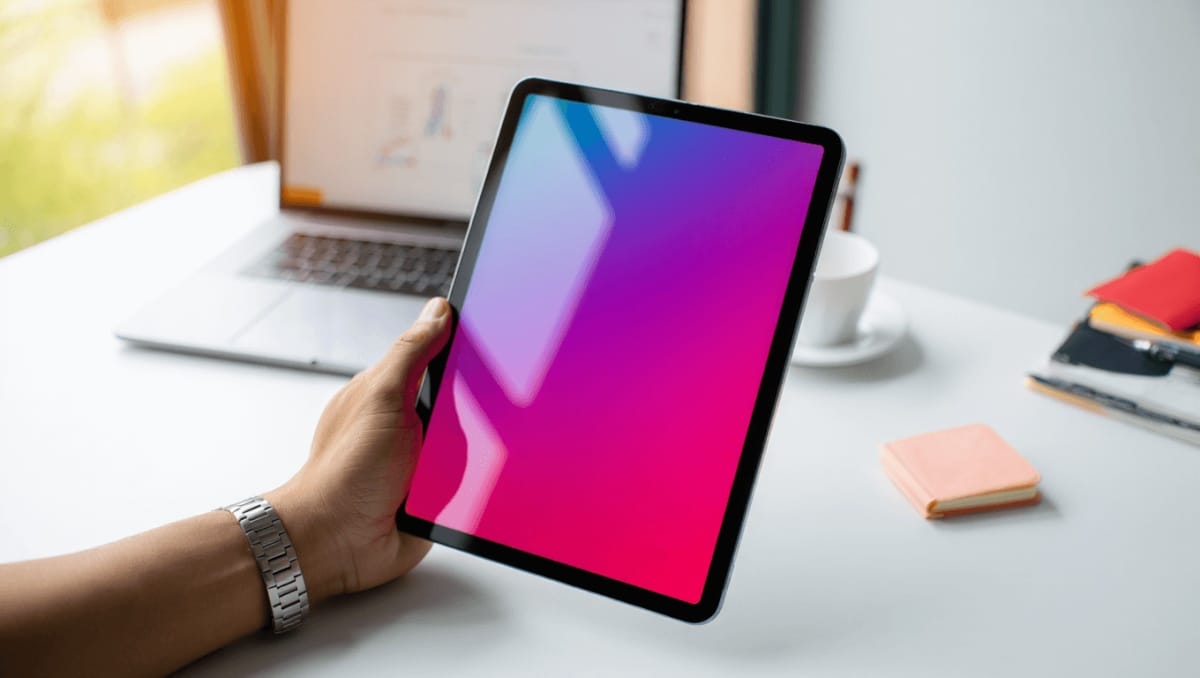
Apple’s March event brought a modest but meaningful refresh to the iPad Air line. The new M4 iPad Air keeps the slim profile and sleek screen of its predecessor while quietly adding faster silicon, beefed-up wireless chips, and improved on-device AI. For creatives, students, and anyone who wants a powerful, portable device, this model refines what made the Air appealing.
What Apple showed on March 4 — who this tablet targets
Apple revealed the updated iPad Air at its March 4 presentation, with the handset shipping on March 11. This release is not a radical redesign. Instead, it aims to serve graphic artists, content creators, and college students who want a powerful yet portable tool.
Nas slams music industry over disrespect: teases new music, vows to address it
1992 vocal performances: 3 jaw-dropping moments that still amaze
- Release window: March 11
- Primary audience: creators, artists, students
- Positioning: mid-range tablet with pro-level features
Looks you already know — design, sizes, and color options
From a distance, the M4 iPad Air is visually identical to the previous model. The chassis is still thin and light, and buyers can choose between 11- and 13-inch displays. Colors remain unchanged.
- Available sizes: 11-inch and 13-inch
- Color finishes: Starlight, Space Gray, Blue, Purple
- Display: Liquid Retina — same panel family as before
The familiar form factor is a plus if you prefer a tried-and-true design. It keeps accessories and cases compatible with the prior Air.
Under the hood: M4 chip, memory boost, and AI-ready Neural Engine
Apple upgraded the processor to the M4, improving on the M3’s capabilities. The company highlights AI performance gains and increased system memory.
- M4 chip for faster CPU and GPU workloads
- 30% faster performance in Apple’s benchmarks versus the M3
- Twice the unified system memory in comparable configurations
That extra memory and the upgraded Neural Engine make heavyweight apps feel snappier. You’ll notice smoother multitasking and faster AI tasks compared with older Air models.
Faster cellular: the new connectivity stack and real-world speeds
Apple swapped out the older Qualcomm modem in favor of the latest connectivity silicon. The iPad Air now uses the N1 wireless chip and a C1X 5G modem derived from recent iPhone launches.
In my tests with a Verizon eSIM, the C1X delivered standout results. Real-world numbers included a download peak of 593 Mbps and uploads near 109 Mbps. Results will vary by carrier and network conditions, but the new modem is clearly competitive.
What those numbers mean for users
- Large file downloads and cloud transfers complete faster.
- Streaming high-bitrate video and collaborative editing are smoother.
- Performance may differ on T-Mobile, AT&T, or international networks.
Turn it into a laptop — or keep it a tablet
Pair the iPad Air with a Magic Keyboard and Apple Pencil, and it becomes a highly capable work machine. iPadOS 26 boosts multitasking with adjustable windows and split view.
- Supports Magic Keyboard for laptop-like typing
- Apple Pencil compatibility for drawing and note-taking
- Runs desktop-grade apps like Final Cut Pro and Pixelmator with ease
During testing I had many apps open at once — editing, chats, and background tasks — and the device held steady. For serious pro workloads, the M5 iPad Pro or the latest MacBook line still deliver higher raw power. But for on-the-go creative work, the Air is compelling.
Liquid Glass UI: a polished look with small trade-offs
Apple’s updated design language, often called Liquid Glass, adds translucency and softer contrasts across iPadOS. It looks modern, but some interface changes cause friction.
- Translucent UI elements give a cleaner appearance
- Some small visual overlaps occur in apps with compact menus
- Overall feel is more contemporary, though not without critics
I found the aesthetic refreshing. Practical issues are occasional, but most users will appreciate the updated visual style.
AI work on-device: testing transcription, image tools, and creatives apps
The M4’s Neural Engine is built for local AI. I ran transcription in Voice Memos, auto-captioning in Final Cut Pro, and image generation in CollaNote and Pixelmator. Tasks completed rapidly, even with wireless off.
- Voice Memos produced accurate transcriptions instantly
- CollaNote converted sketches into cleaner graphics
- Pixelmator handled background removal and upscales quickly
On-device AI felt mature in day-to-day tasks. There’s still room to explore advanced workflows and integrations with Shortcuts and open models.
Photo, audio, and accessories: what stayed the same
Apple did not change the camera hardware. The Air keeps 12MP sensors front and back. For most buyers, these cameras are fine for calls and quick captures.
- Cameras: 12MP front and rear — serviceable for FaceTime and conferencing
- Speakers and controls: unchanged from the last Air
- Recommended extras: Apple Pencil, Magic Keyboard
Accessory pricing adds up. The Apple Pencil Pro and Magic Keyboard increase the total cost considerably, which is worth factoring into your buy decision.
Storage and pricing options: choose what fits your workflow
The lineup covers a range of storage tiers and two displays. Base prices reflect Apple’s mid-range positioning.
- Storage options: 128GB, 256GB, 512GB, 1TB
- Starting prices: $599 for 11-inch, $799 for 13-inch
- Preorders: retailers may offer small discounts at launch
If you mainly browse and stream, the base iPad with the A16 chip will save money. For creative users who need responsive editing and local AI, the M4 Air is a smart pick.










