
Show summary Hide summary
- Fresh take or franchise detour? What the Young Sherlock series tries
- Key plot beats and narrative shape — how the season unfolds
- Performances that stand out — cast and character notes
- Visual style, sound and the Ritchie signature
- Where the adaptation diverges most from Arthur Conan Doyle
- Strengths and weaknesses — what works and what doesn’t
- Final stretch and the promise of another season
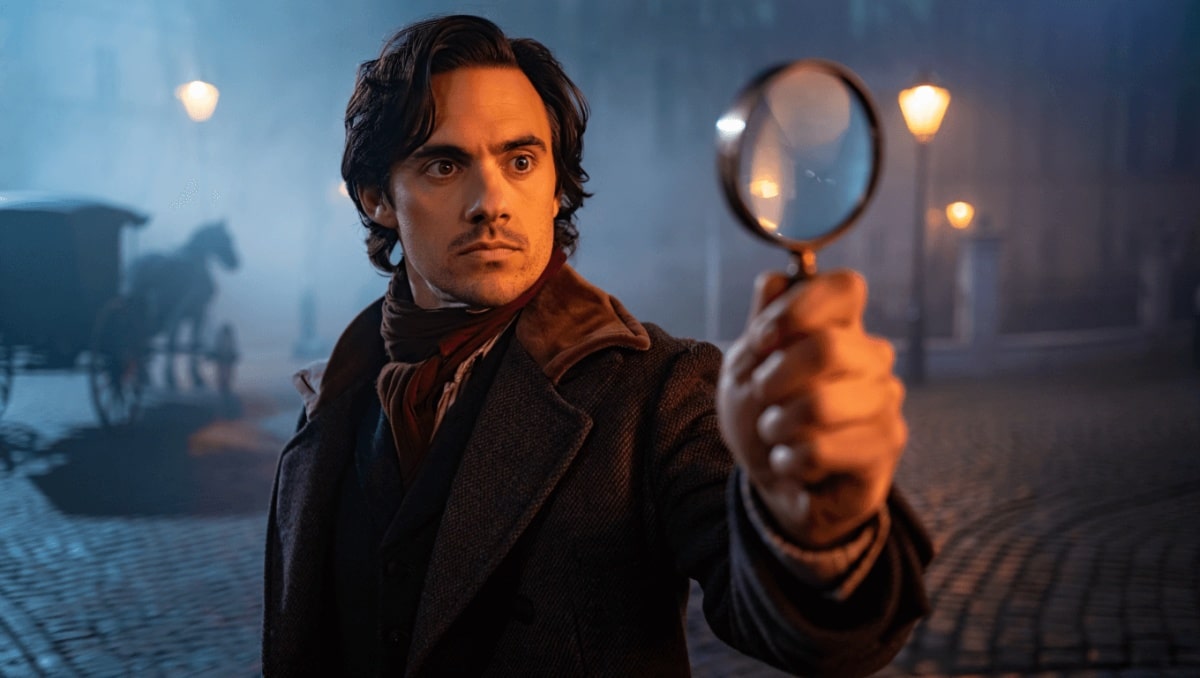
Guy Ritchie’s Young Sherlock arrives on Amazon with swagger, spectacle and a familiar imbalance between style and substance. The series wants to reinvent the detective myth for a younger audience. Instead it often substitutes punchy set pieces and theatrical posturing for the quiet intelligence that made Holmes iconic.
Fresh take or franchise detour? What the Young Sherlock series tries
The show positions itself as an origin story for Arthur Conan Doyle’s most famous detective.
Nas slams music industry over disrespect: teases new music, vows to address it
1992 vocal performances: 3 jaw-dropping moments that still amaze
- It places a 19-year-old Sherlock at Oxford and Newgate Prison.
- It leans hard into action, disguises and physical conflict.
- It reframes the Holmes–Moriarty enmity as an early, uneasy friendship.
Those moves are bold. But they come at the cost of what makes Holmes enduring: method, observation and cerebral deduction. The series substitutes fistfights and flashy choreography for intellectual stakes.
Key plot beats and narrative shape — how the season unfolds
The eight-episode arc begins with Sherlock arrested for theft and rescued by Mycroft.
- Sherlock is placed at Oxford in a modest role rather than as a student prodigy.
- He meets James Moriarty in a late-night math classroom moment that spins into rivalry.
- A season-long mystery mixes a Chinese princess, a shadowy academic cabal and family trauma.
Midseason, the story veers from an urgent manhunt and geopolitical threats into an extended family drama. Momentum often stalls when the show indulges in personal backstory.
Episode pacing and structure
- Opening episodes establish period detail and energetic action.
- Middle episodes stretch the Holmes family saga beyond necessity.
- Final episodes accelerate into globe-hopping twists and faster beats.
Performances that stand out — cast and character notes
The series assembles recognizable faces and new talent in a high-production cast.
- Hero Fiennes Tiffin plays young Sherlock with steady poise but rarely reveals a deeper interior life.
- Dónal Finn makes Moriarty loud and immediate, less simmering rival than brash peer.
- Max Irons fits Mycroft’s formal restraint, leaning into the civil servant role.
- Colin Firth appears as a polished, colonialist academic whose presence feels underused.
- Joseph Fiennes and Natascha McElhone provide family anchors that push the season toward melodrama.
- Zine Tseng and Holly Cattle bring promise in roles that could be expanded.
Strong production values give actors a rich backdrop. But the script often gives little room for subtlety, making many performances feel dialed up to match the show’s kinetic tone.
Visual style, sound and the Ritchie signature
Ritchie’s fingerprints are visible in the series’ kinetic editing and modern musical cues.
- Period Oxford is recreated with high production care.
- Costume and set design are vivid and often inventive.
- Fight choreography and disguised sequences prioritize spectacle.
The director’s preference for action over introspection reshapes Holmes into an adventure protagonist. That can be entertaining, but it also flattens the detective’s intellectual life.
Where the adaptation diverges most from Arthur Conan Doyle
This Young Sherlock is less a faithful prequel and more a loose reimagining.
- The show borrows names and motifs rather than Conan Doyle’s investigative spirit.
- Watson is absent, removing one of Holmes’s essential moral and social counterpoints.
- Moriarty is framed early as a companion rather than the clearly defined adversary fans expect.
When the series resorts to wink-and-nod references — capers about a deerstalker or a Lestrade cameo — those moments feel like brand-checking more than genuine homage.
Strengths and weaknesses — what works and what doesn’t
The series offers moments of genuine fun and some stylistic bravado.
- Strength: High production quality and strong visual design.
- Strength: Energetic set pieces and occasional smart plotting in the finale.
- Weakness: A fuzzy central concept of who Sherlock is at 19.
- Weakness: Overlong middle episodes that dilute the main mystery.
- Weakness: Moriarty’s early loudness overshadows the slow-burn rivalry fans expect.
The show’s biggest problem is a lack of intellectual curiosity at its core. Holmes rarely demonstrates the kind of deductive flair that fans cherish.
Final stretch and the promise of another season
The last two episodes recover some pace, moving the narrative across continents and tightening the plot.
These chapters introduce twists and ramp up stakes. They hint the creative team can land sharper thrills when it prioritizes plot economy.
Whether future seasons will deepen Sherlock’s mind or continue in the action-oriented vein is an open question. The series leaves several arcs unresolved and several performances ripe for expansion.










