Show summary Hide summary
- How Team USA held on for gold in a one-point battle
- Final duel: Ilia Malinin vs. Shun Sato decided the title
- Medal winners and notable moments from Sunday
- Breakout performances and the American debut
- Understanding the Olympic team figure skating format
- Day-by-day highlights: Friday to Sunday
- Strategy and roster choices that shaped the result
- Voices from the rink: reactions after the medal ceremony
- What this means for the rest of the skating schedule
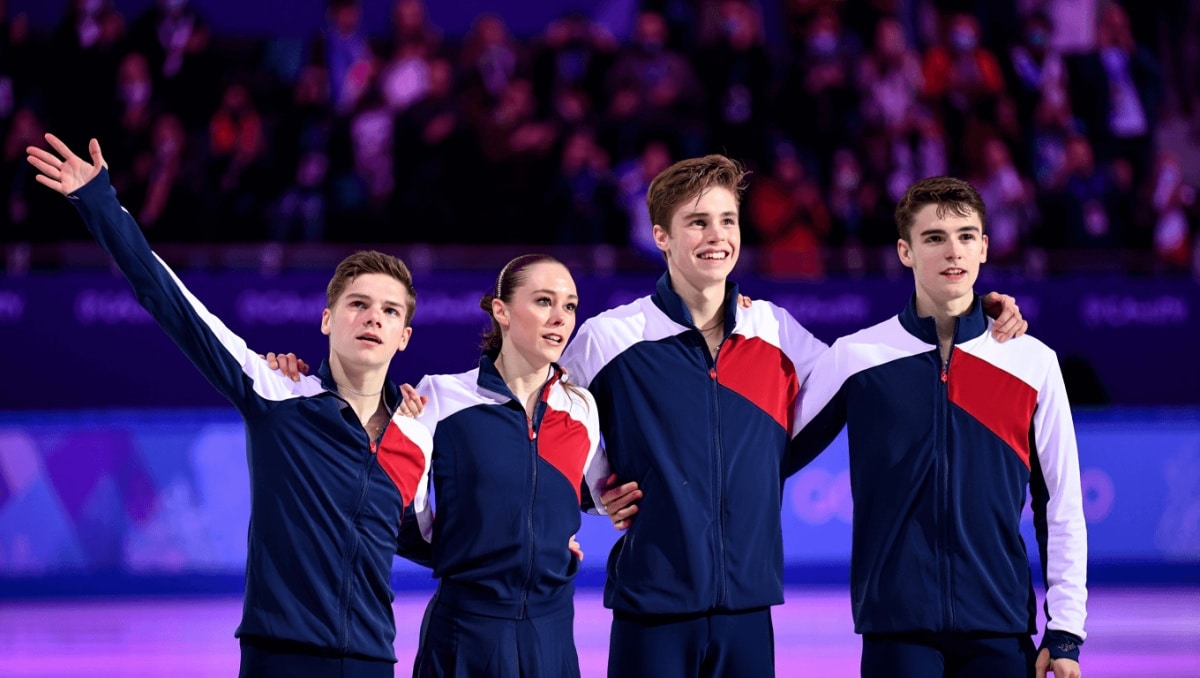
The final night at the Milano Ice Skating Area delivered a classic Olympic thriller. Team USA edged Japan by a single point to win the figure skating team event at Milan Cortina 2026, sealing a dramatic finish that hinged on the last men to skate. The crowd, full of celebrities and local passion, witnessed technical fireworks, a rare legal backflip and the first Olympic medals for several American athletes.
How Team USA held on for gold in a one-point battle
After three days of competition, the team outcome came down to the men’s free skate. The United States and Japan were tied entering the final segment.
KATSEYE postpones another concert: illness details remain undisclosed
Cupertino: a stylish legal drama packed with tech twists
In the end the U.S. outscored Japan by a single point, with Italy taking bronze after energized home performances. The narrow margin underlined how every element across four disciplines mattered.
Final duel: Ilia Malinin vs. Shun Sato decided the title
Ilia Malinin, the U.S. national champion, skated last for Team USA. He delivered five quadruple jumps and landed a single-footed backflip.
Malinin hit a minor stumble but still surpassed the 200-point mark. Japan’s Shun Sato followed with a clean program that emphasized artistry over extreme technical risk.
Malinin’s mix of high-risk quads and the backflip proved decisive. He later said he tried to calm his nerves and get into the zone before stepping on the ice.
Medal winners and notable moments from Sunday
- Gold: Team USA — clinched by strong contributions across all four disciplines.
- Silver: Japan — pushed the U.S. to the last skater and finished one point behind.
- Bronze: Italy — boosted by Matteo Rizzo’s crowd-pleasing skate.
Several Americans collected their first Olympic medals Sunday, including Malinin, Amber Glenn, and pair skaters Ellie Kam and Danny O’Shea. Ice dancers Madison Chock and Evan Bates added a second Olympic medal to their careers.
Breakout performances and the American debut
Amber Glenn made her Olympic debut in the team event. She placed third in the women’s free skate but reacted with visible disappointment at her marks.
Glenn attributed the result to fatigue after long days of practice. She said she would prioritize recovery—”literally just sleeping”—before the women’s individual competition.
Ellie Kam and Danny O’Shea, skating pairs for the U.S., hit a rocky moment early but recovered to complete their program and help the team. O’Shea, who returned from retirement to skate with Kam, praised their ability to regroup under pressure.
Understanding the Olympic team figure skating format
The team event, introduced at the 2014 Olympics, combines results from four disciplines: men’s, women’s, pairs and ice dance.
- Each country fields skaters in short programs and rhythm dance, then the top five nations advance.
- Placement points range from 1 to 10 each segment; cumulative points decide who moves on.
- In the final round, teams skate the free programs and free dance to determine medals.
This year the five finalists were the United States, Japan, Italy, Canada and Georgia. Russia remained barred from the team event due to its suspension tied to geopolitical and prior doping concerns.
Day-by-day highlights: Friday to Sunday
Friday — strong starts and veteran leaders
Team USA seized an early lead on Day One. Madison Chock and Evan Bates topped the ice dance short with a world-leading score.
France’s Guillaume Cizeron and Laurence Fournier Beaudry finished close behind. The British team of Lilah Fear and Lewis Gibson charmed the crowd with a Spice Girls medley.
In pairs, Miura Riku and Kihara Ryuichi of Japan set a high standard, while U.S. pairs Kam and O’Shea made their Olympic debut and battled through a fall to place mid-pack.
Saturday — technical fireworks and a surprise leaderboard shake
Yuma Kagiyama of Japan produced a season-best men’s short program and temporarily moved ahead of Malinin by nearly 10 points.
Malinin downplayed the gap, saying he had planned to limit his effort in the team short program. He also executed a legal backflip, the first such move seen on Olympic ice in five decades.
By the end of Day Two, the scoreboard tightened. The U.S. led with strong rhythm dance results, chiefly from Chock and Bates’ flamenco-inspired routine to “Paint It Black.”
The Day Two standings put the U.S. at 44 points, with Japan and Italy trailing on 39 each.
Strategy and roster choices that shaped the result
Picking who skates in each segment is tactical. Nations must balance short-term gains with athletes’ energy for upcoming individual events.
- Each country can substitute up to two skaters midway through the team event.
- Some teams preserve top names for individual competition, while others use them to chase team medals.
- The U.S. benefited from a large delegation of 16 athletes, offering flexibility.
Ultimately, the U.S. made one swap late in the competition, replacing Alysa Liu with Amber Glenn on the final day.
Voices from the rink: reactions after the medal ceremony
Malinin reflected on the team’s collective effort and the pride of winning together. “I’m proud of my team for all the work they put in,” he said.
Glenn accepted responsibility for a lost lead in her segment but vowed to support teammates and focus on her individual events. “There’s nothing I can do about it now except try to do the best I can,” she said.
O’Shea praised the pair’s comeback after a mistake and spoke about the honor of representing the U.S. Chock expressed strong confidence in her squad and faith in their capabilities heading into the final day.
What this means for the rest of the skating schedule
With team medals awarded, many of the same skaters will return to compete for individual Olympic honors in the coming days.
The team event served as both a showcase and a warm-up. Expect technical systems, program choices and psychological momentum to carry into the singles, pairs and dance competitions.