
Show summary Hide summary
- Rotten discovery: the grisly hook that launches the plot
- Lead players: Dove Cameron and Avan Jogia’s risky romance
- Sex, danger, and the limits of erotic suspense
- Secrets held back: the series’ structural gamble
- Supporting cast: detectives and the parallel investigation
- Twists, moral shading, and characterization
- Production tone: glossy sheen vs. raw nastiness
- Where the show succeeds and where it stalls
Prime Video’s 56 Days opens with a shocking image that sticks: a corpse left to dissolve in a luxury bathtub. The series promises a dark, erotic mystery built on Catherine Ryan Howard’s bestseller, but the show often trades depth for glossy twists and pulpy thrills.
Rotten discovery: the grisly hook that launches the plot
The story kicks off when Boston police uncover a body so decomposed it’s barely human. Detectives Karl and Lee survey a scene described as a floating mass of flesh in chemical runoff. That visceral moment sets a grim tone.
Nas slams music industry over disrespect: teases new music, vows to address it
1992 vocal performances: 3 jaw-dropping moments that still amaze
The corpse-in-a-tub tableau becomes the engine for an investigation that alternates between the present and a timeline of 56 days earlier. Executive producer James Wan’s horror pedigree is visible in how the show stages the grotesque.
Lead players: Dove Cameron and Avan Jogia’s risky romance
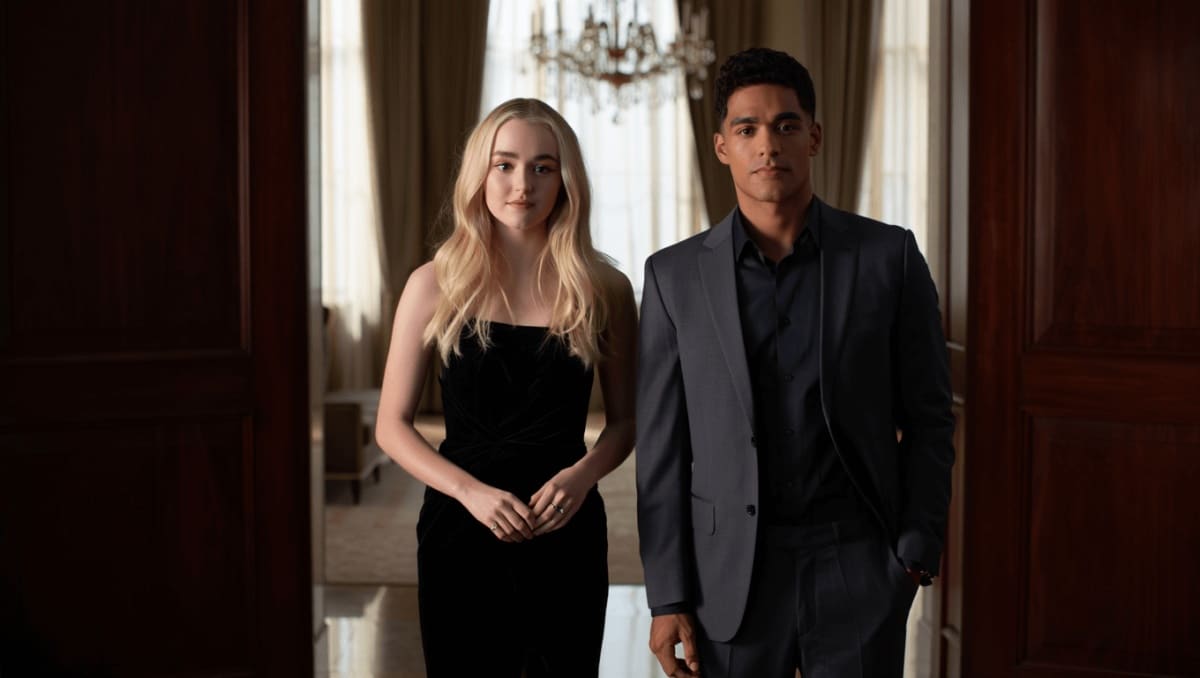
At the center are Ciara, played by Dove Cameron, and Oliver, played by Avan Jogia. Both are newcomers to Boston, and their meet-cute begins over a NASA tote in a boutique grocery store.
- Ciara: an IT worker in a shabby studio, pragmatic but mysterious.
- Oliver: an architect with access to a luxury corporate flat that later becomes the crime scene.
Their attraction escalates fast. A successful first date is followed by more intimacy, and she soon spends nights at his place. The pace is dizzying by design.
Sex, danger, and the limits of erotic suspense
56 Days leans into erotic-thriller tropes. Many early episodes center on physical encounters—cars, beds, alleyways—designed to titillate.
Jogia and Cameron have screen chemistry, but those scenes rarely resist feeling surface-level. The series tries to sell their relationship as dangerously intoxicating, yet it does not always explain why.
Secrets held back: the series’ structural gamble
The narrative frequently flashes back to the 56-day courtship to reveal motives gradually. The show hoards key revelations until late in the run.
- This creates steady cliffhangers and many red herrings.
- It also delays deeper character work, making motives unclear for too long.
For viewers who want emotional layering early, that withholding can feel frustrating. The suspense works for pacing, but it sacrifices intimacy.
Supporting cast: detectives and the parallel investigation
Dorian Crossmond Missick and Karla Souza play Boston detectives Karl and Lee. Their investigation provides the procedural spine to the erotic plotline.
Yet the police storyline struggles with tone. One detective frequently complains about his job, which undercuts urgency. The other is given a subplot that mirrors the leads’ troubled romance but lands less convincingly.
Twists, moral shading, and characterization
The show piles on surprises meant to complicate who we root for. When secrets are finally exposed, the result often feels transactional.
- Instead of nuanced psychology, the series distributes cruelty to certain characters.
- That makes other figures appear sympathetic by contrast, rather than through real development.
56 Days sometimes reads like an airport thriller: fast, consuming, and built for immediacy rather than depth.
Production tone: glossy sheen vs. raw nastiness
Visually, the series is slick. Costume choices, urban interiors, and moody lighting give it a polished look. The grotesque set pieces underscore that production value.
But styling can only go so far. When emotional stakes are vague, the sheen risks feeling like surface-level seduction.
Where the show succeeds and where it stalls
There are definite strengths. The central mystery is lurid and attention-grabbing. The leads can carry intimacy on screen. The tempo of reveals keeps episodes moving.
- Strengths: compelling premise, strong visuals, engaging plot twists.
- Weaknesses: underdeveloped motives, delayed character depth, uneven supporting arcs.
Ultimately, the series offers moments that are both thrilling and unsatisfying. Whether the ride works depends on how much you value atmosphere over emotional truth.










