
Show summary Hide summary
- San Siro as center stage — and part of a wider host network
- What the audience saw behind the scenes
- Why stadium screens mattered: the split-stage Parade of Nations
- Bracing for the cold: temperatures and atmosphere in the stands
- Italy on full display: culture, fashion and playful icons
- Global stars and standout musical moments
- Politics in the crowd: cheers, boos and cautious speeches
- Athletes’ energy: theatrical entries and memorable stunts
- Visual peaks that captured the audience
The Winter Olympics arrived in Italy with a burst of color, noise and theatrical flourish that filled Milan’s San Siro and echoed across mountain towns. Fireworks lit the sky, opera and pop stars shared the stage, and a dancing stovetop espresso maker became an unexpected emblem of Italian flair. Below the spectacle, the ceremony balanced live pageantry with taped segments from Cortina, Livigno and Predazzo, creating a sprawling show that rewarded both TV viewers and those in the stands.
San Siro as center stage — and part of a wider host network
The opening night used Milan’s iconic San Siro stadium as its main stage. Yet organizers intentionally spread the ceremony across multiple venues. Cortina d’Ampezzo, Livigno and Predazzo hosted simultaneous segments.
Nas slams music industry over disrespect: teases new music, vows to address it
1992 vocal performances: 3 jaw-dropping moments that still amaze
This multi-site approach allowed the Games to showcase alpine scenery and mountain traditions. It also meant the event felt less like one big show and more like several linked performances.
What the audience saw behind the scenes
Sitting in the stands offered a different view than TV cameras provide. Volunteers hustled props, technicians zipped cameras along overhead rigging, and singers, dancers and extras spent stretches waiting out of sight.
- Stagehands moved large set pieces between numbers.
- Performers peeked from wings while the crowd focused on the center.
- DJ Mace and other musicians kept energy alive off-camera.
The live audience witnessed the logistics that make a modern opening ceremony tick.
Why stadium screens mattered: the split-stage Parade of Nations
San Siro featured multiple large screens. They were crucial because parts of the procession and several performances were pre-recorded or happening elsewhere.
TV monitors showed delegations marching from mountain venues. Without them, fans in Milan would have missed backflips, choreographed entries and many of the flagbearer moments.
Bracing for the cold: temperatures and atmosphere in the stands
The stadium’s partially open roof let in a steady breeze. Sitting on plastic seats for hours amplified the chill. Team outfits included parkas, hats and gloves for a reason.
Many in the crowd wore layers. Journalists and press-area guests kept hand warmers and hot drinks close.
Italy on full display: culture, fashion and playful icons
The production leaned into national imagery. Opera composers, classical sculptures and fashion references appeared in bold visuals and costumes.
- Performers embodied figures like Rossini, Verdi and Puccini through oversized, whimsical costumes.
- A runway moment nodded to Italian haute couture and honored Giorgio Armani’s legacy.
- A dancing moka pot and colorful architectural motifs celebrated everyday Italian life.
These moments fused high culture and popular symbols to create a distinctly Italian tapestry.
Global stars and standout musical moments
International artists raised the spectacle to a new pitch. Andrea Bocelli’s tenor carried the Olympic torch into the stadium. Laura Pausini performed the Italian national anthem.
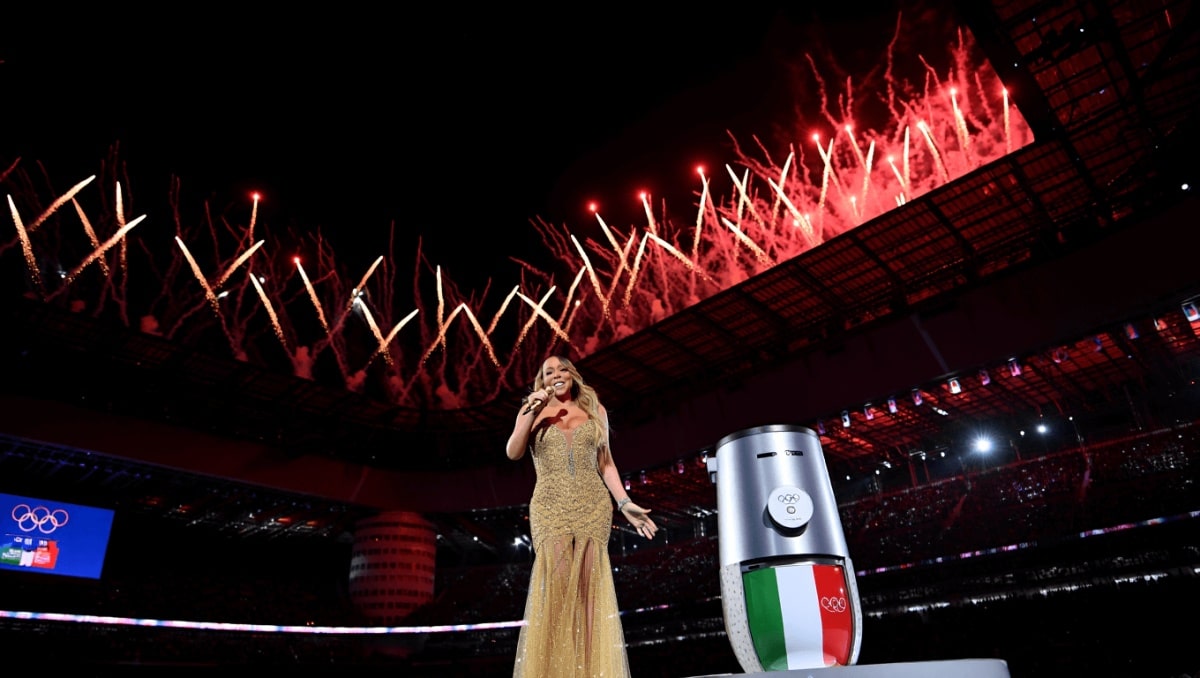
Mariah Carey made a surprise appearance. She sang part of her set in Italian and hit a dramatic high note that drew sustained cheers. Her entrance was a viral-ready moment that blended glamour and showmanship.
Politics in the crowd: cheers, boos and cautious speeches
Organizers largely steered clear of naming global conflicts directly. Speeches emphasized unity and the power of sport to bridge divides.
The crowd’s reactions were mixed. Support for certain delegations was loud and warm. Other moments drew boos when political figures or contentious issues appeared onscreen.
Overall, politics hovered at the edges rather than dominating the night.
Athletes’ energy: theatrical entries and memorable stunts
The Parade of Nations felt livelier than the last Winter Olympics. Many teams marched with choreography, smiles and high spirits.
- Brazilian athletes performed an athletic backflip in the snow sequence.
- Austria’s flagbearer was carried on a teammate’s shoulders.
- Greek and Czech delegations used coordinated dances and bold outfit designs.
Competitors appeared thrilled to parade before hometown crowds and visiting fans. The mood echoed a return to big, in-person celebrations after quieter Games during the pandemic.
Visual peaks that captured the audience
Some images landed harder than others. Fireworks bursting from the Olympic rings created a universal gasp. Andrea Bocelli’s sustained notes and the arrival of the home team drew some of the loudest cheers.
Even viewers in the upper tiers felt the impact of these moments. From the nosebleeds, the show still read as grand and unmistakable.










