
Show summary Hide summary
- Built for repeat viewing: production and performance highlights
- High-profile guests: Lady Gaga and Ricky Martin’s moments
- A real wedding in the middle of the show
- Politics and perception: where the halftime landed in today’s culture wars
- Audience reaction and social media ripple effects
- What this means for live music and halftime expectations
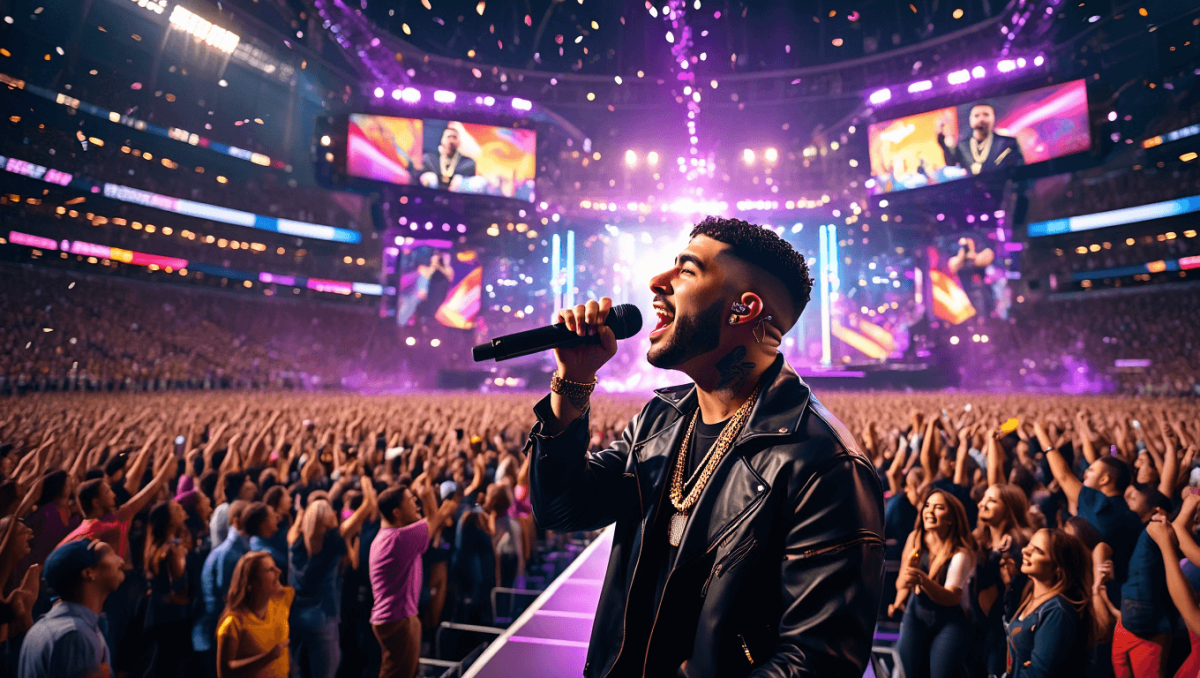
Bad Bunny turned the Super Bowl halftime into a cultural moment that kept viewers watching and talking. His set mixed high-energy hits, cinematic staging, surprise guests and a genuine on-field wedding — all while threading in pointed reminders of the political debates swirling around him.
Built for repeat viewing: production and performance highlights
The show balanced huge stadium visuals with intimate moments. Lighting, camera work and choreography kept the pace relentless. Costume changes and quick set shifts made each minute feel like a new scene.
Nas slams music industry over disrespect: teases new music, vows to address it
1992 vocal performances: 3 jaw-dropping moments that still amaze
- Fast edits and wide shots emphasized scale.
- Close-ups captured the artist’s stage charisma.
- Transitions between songs were seamless, keeping momentum.
This was clearly designed to be replayed online and shared across platforms. Short clips circulated instantly, amplifying the halftime’s reach far beyond the stadium seats.
High-profile guests: Lady Gaga and Ricky Martin’s moments
Two major names joined Bad Bunny on stage, providing both musical contrast and star power. Their appearances added texture and surprise.
How each cameo worked
- Lady Gaga delivered a vocal flourish that contrasted with Bad Bunny’s lean, rhythmic delivery.
- Ricky Martin offered nostalgic resonance and Latin pop pedigree.
These guests did more than boost headlines. They anchored parts of the set and widened its appeal to different audiences.
A real wedding in the middle of the show
Midway through the performance, a couple exchanged vows on the field. The ceremony felt spontaneous yet choreographed to fit the show’s arc.
- The officiant and guests blended into the staging.
- The wedding moment created a human pause amid spectacle.
- Viewers debated its authenticity and symbolism across social threads.
The marriage became one of the most replayed clips, sparking talk about performance and reality in live events.
Politics and perception: where the halftime landed in today’s culture wars
Bad Bunny’s set did not dodge the broader political climate. Elements of the performance touched on identity, visibility and artistic freedom.
- Some viewers read the show as a statement of Latinx pride.
- Others framed elements as provocative within ongoing culture debates.
- Critics and supporters used clips to argue competing narratives online.
The halftime show therefore functioned both as entertainment and as cultural commentary. That dual role intensified reactions from both sides of the discourse.
Audience reaction and social media ripple effects
Within minutes, hashtags, memes and commentary dominated feeds. The performance spawned parodies, remixes and think pieces across outlets.
- Streaming spikes for Bad Bunny’s catalog followed the broadcast.
- Clips of the wedding and guest turns went viral.
- Opinion threads debated whether the show pushed a political agenda.
Streaming numbers and social metrics confirmed a simple fact: the halftime did its job as a cultural amplifier.
What this means for live music and halftime expectations
Networks and artists now face higher stakes. Audiences expect spectacle, guest stars and moments that travel beyond the broadcast.
- Future halftime acts will likely chase viral moments.
- Live events must balance artistry with instant-shareability.
- Artists from diverse backgrounds may be invited more often.
Bad Bunny’s performance pushed the bar for both production and cultural impact. The questions it raised about art, politics and audience will keep the conversation going.










