
Show summary Hide summary
- When Pop Stars Spoke Out: A Night of Political Statements
- Memorable Speeches That Resonated Beyond Music
- Host and Telecast: Tone, Humor, and the Limits of Safety
- Big Stages and Intimate Moments: The Best Performances
- Best New Artist: A Focus on Emerging Voices
- In Memoriam: A Prolonged, Star-Studded Tribute
- Production Choices and the Rhythm of a Long Show
- Moments of Levity: Cher, Live TV, and Human Error
The 2026 Grammys felt like a night caught between two worlds: explosive spectacle and earnest protest. Performances dazzled. Acceptance speeches cut deep. Between political declarations and show-stopping production numbers, viewers often didn’t know whether to cheer or to think. The result was a ceremony that felt alive, messy, and utterly of the moment.
When Pop Stars Spoke Out: A Night of Political Statements
Several artists used the Grammys as a platform to address recent deportation raids and immigration policy. What began as subtle signals on the red carpet quickly became forthright onstage remarks. Fans and critics alike noticed the shift from entertainment to engagement.
Nas slams music industry over disrespect: teases new music, vows to address it
1992 vocal performances: 3 jaw-dropping moments that still amaze
- Buttons and slogans appeared across the carpet, acting as visual gestures before the speeches began.
- Singers and presenters referenced communities under stress, asking viewers to consider the human impact of federal actions.
- Networks watched nervously. This was the Grammys’ last year on CBS before the move to ABC in 2027.
Memorable Speeches That Resonated Beyond Music
Bad Bunny’s acceptance for album of the year was one of the evening’s most talked-about moments. He used his win to urge compassion for immigrants and to push back against dehumanizing rhetoric. His message landed with clarity and heartfelt conviction.
Others followed. Artists such as Billie Eilish, Kehlani, SZA, Olivia Dean and Shaboozey each offered brief but pointed remarks. Some used blunt profanity; others chose measured appeals. Together they created a throughline that threaded politics into an awards night.
Host and Telecast: Tone, Humor, and the Limits of Safety
Trevor Noah delivered his final Grammys monologue in a familiar, warm register. He leaned into celebration more than provocation. The jokes skimmed topical subjects without delving into deep critique.
At times Noah’s approach felt calculated to avoid controversy. Yet even mild barbs triggered social media pushback. It underscored how fraught live awards shows have become when public sentiment is so polarized.
Big Stages and Intimate Moments: The Best Performances
Large-scale numbers that stopped the show
- Sabrina Carpenter’s carousel-themed set turned the stage into a cinematic spectacle. The choreography and visuals were unapologetically grand.
- Lady Gaga staged a rock-leaning rendition of a nominated song, complete with a dramatic headpiece that challenged camera operators to be inventive.
- Tyler, the Creator embraced theatrical chaos, ending his medley with a flourish both comic and cinematic.
Smaller, emotionally rich turns
- Justin Bieber returned to live singing after years away, performing in a pared-back loop-guitar style.
- Olivia Dean’s short set hinted at major star potential, even without a long spotlight.
- Some artists favored lo-fi textures over glitz, giving balance to the night’s bombast.
Best New Artist: A Focus on Emerging Voices
The Grammys devoted a long sequence to the eight nominees for Best New Artist. Each performer got a compact showcase. The result felt like a concentrated talent sampler.
- The segment opened with the Marias’ dreamlike set.
- Addison Rae appeared in a pre-taped moment that contrasted with the live auditorium pieces.
- Acts such as Katseye, Leon Thomas, Alex Warren and Lola Young each brought distinct energy.
- Olivia Dean and Sombr stood out for charisma and stage presence.
The extended spotlight was a deliberate choice. It signaled a renewed commitment to putting new artists center stage.
In Memoriam: A Prolonged, Star-Studded Tribute
The ceremony gave an unusually long and elaborate In Memoriam segment. It included a mix of country, rock, and neo-soul tributes and leaned heavily on star collaborations.
- Reba McEntire, Brandy Clark and Lukas Nelson opened with a somber country-inflected tribute.
- Post Malone led a raucous take on an Ozzy Osbourne classic, complete with one of the evening’s most unexpected props.
- Ms. Lauryn Hill anchored a neo-soul revue honoring artists like D’Angelo and Roberta Flack.
The lineup featured many brief cameo performances by major names, from Leon Bridges to Chaka Khan. The segment felt cinematic and sprawling, a deliberate choice to honor legacy in full force.
Production Choices and the Rhythm of a Long Show
Producers stretched the telecast past its scheduled end. Two marathon segments — Best New Artist and In Memoriam — claimed a large share of airtime. Some viewers praised the depth. Others wanted more concise pacing.
Technical and creative choices were on display throughout. Robot cameras made sudden moves to capture Gaga’s headpiece. A few sections used pre-taped footage, a reminder of pandemic-era practices still in play.
Moments of Levity: Cher, Live TV, and Human Error
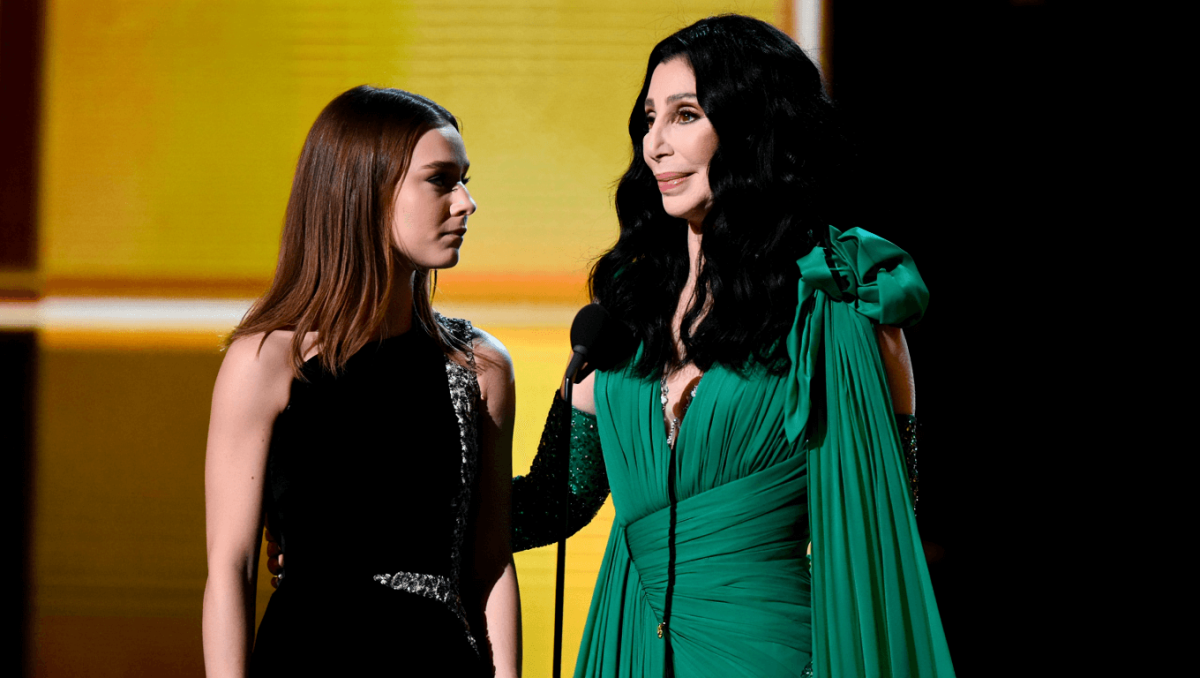
Cher provided one of the evening’s lighter, most human sequences. She mixed up an award but recovered with warmth. The crowd laughed with her rather than at her.
Those flubs reinforced a simple truth about live television: imperfection can be endearing. The host echoed that sentiment onstage, reminding viewers why live broadcasts still hold a special place in culture.










