
Show summary Hide summary
- First impressions and the gap between promise and reality
- Where the images betray the engine
- Script, pacing, and the hollow center
- The creative pedigree vs. the outcome
- Business models, attention metrics, and design intent
- Ethical and ecological dimensions
- Politics, aesthetics, and the risk of bland narratives
- What this experiment reveals about AI in filmmaking
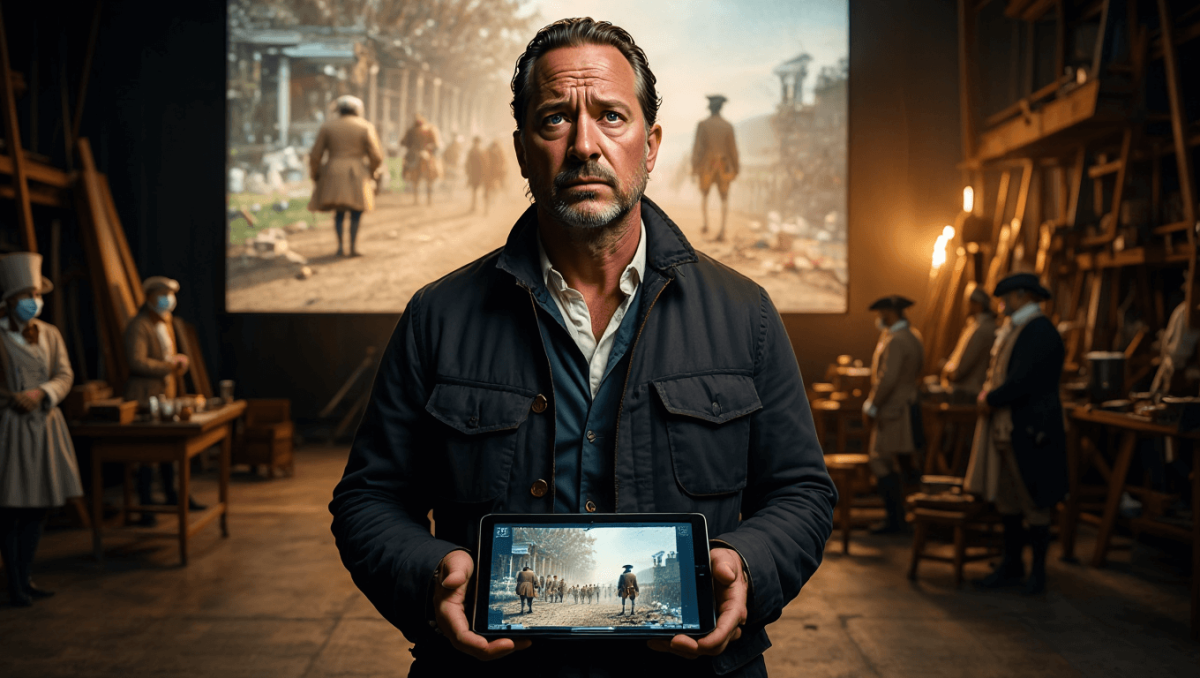
Darren Aronofsky’s brief YouTube series, created with Google DeepMind visuals and actors’ voices, arrived with high expectations. It promised a fresh way to visualize Revolutionary-era moments, but the pieces released so far force viewers to reckon with what AI can’t yet deliver to cinema.
First impressions and the gap between promise and reality
The project looks grand at a glance. Thumbnails suggest period detail and cinematic scope. But that gloss fades within seconds.
Nas slams music industry over disrespect: teases new music, vows to address it
1992 vocal performances: 3 jaw-dropping moments that still amaze
- Visual texture often reads as artificial rather than authentic.
- Motion and facial behavior fall into uncanny territory.
- Detail mistakes — like props not interacting properly — break immersion.
These problems are not small glitches. They are the kinds of errors that signal a synthetic process, even when the surface polish seems high.
Where the images betray the engine
Technical artifacts dominate the viewing experience. Characters sometimes move without the proper weight. Faces can appear too smooth, then showed up with odd distortions.
Common visual failings
- Plastic-looking skin and glossy surfaces that feel lifeless.
- Jerky limbs or weightless gestures that defy physics.
- Prop animations that clip or float rather than interact naturally.
These issues make it obvious an algorithm stitched the frames together instead of hands and eyes shaping a scene.
Script, pacing, and the hollow center
Beneath the images, the narrative framework is thin. Dialog reads like generic exposition. Scenes often reduce to loud proclamations and predictable poses.
- Characters introduced with blunt captions and a recurring sting.
- Little contextual depth or fresh interpretation of historical moments.
- Short runtimes that feel engineered for quick social viewing.
The result is content that aims to occupy attention, not to invite reflection.
The creative pedigree vs. the outcome
Aronofsky’s name suggests auteur ambition. In practice, the installments lack the meticulous craft his films usually show.
Even with a team of designers, editors, and performers, the output resembles an experiment in format more than a considered artistic statement.
Business models, attention metrics, and design intent
This series seems tailored for feed consumption. Short length and striking thumbnails make it ideal for scrolling audiences.
- Designed to retain eyeballs for ad impressions.
- Polish appears optimized for glanceability, not depth.
- Inconsistent quality between chapters suggests iterated production on a tight timeline.
When creative choices prioritize metrics, craft often suffers.
Ethical and ecological dimensions
Beyond aesthetics, the project raises questions about labor and climate costs.
- AI can replace traditional craft roles in sets, costumes, and effects.
- Large-scale model training consumes significant energy.
- Public-facing projects backed by major tech companies amplify these impacts.
These factors complicate claims that such work simply “expands possibilities.”
Politics, aesthetics, and the risk of bland narratives
The series’ sanitized, idealized view of history pairs uneasily with an aesthetic that flattens nuance.
That combination can echo broader trends where glossy, simplified media reshapes public understanding.
Visual fidelity without critical perspective can become a subtle form of persuasion.
What this experiment reveals about AI in filmmaking
At present, generative tools can produce striking frames and rapid prototypes. They still struggle to reproduce the small, meaningful choices humans make.
- Human direction and intention remain central to storytelling.
- AI excels at replication but not at inserting genuine surprise.
- Attention-focused formats risk prioritizing form over substance.
For viewers and creators, the key is to distinguish between technological novelty and artistic value.










