
Show summary Hide summary
- Why this new Star Trek matters to streaming audiences
- Setting the scene: a broken Federation and an Academy on the move
- Cast and characters driving the drama
- Genre mix: academy drama meets space opera
- Standout episodes and production values
- Fan service and franchise connections
- Emerging themes: what values are being taught?
- Where the series stands after the initial episodes
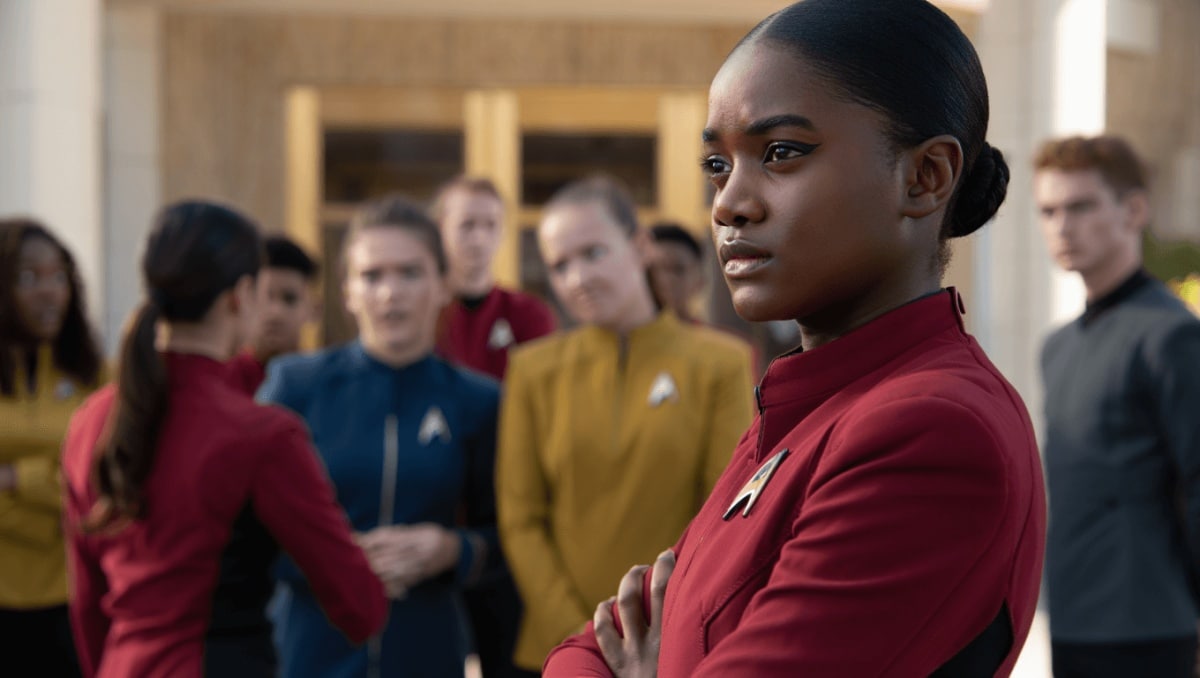
A bold new chapter of Star Trek has arrived on Paramount+, one that skips the familiar faces of Kirk and Spock and instead bets on a generation of cadets to sell the franchise’s future. Starfleet Academy aims to bridge nostalgia and reinvention, mixing high-stakes space action with coming-of-age drama set after the catastrophic event known as “The Burn.”
Why this new Star Trek matters to streaming audiences
Paramount+ has quietly reshaped the franchise over the past six years. Discovery expanded the timeline and the stakes. Starfleet Academy pushes that expansion further, planting its flag in the franchise’s 32nd century.
Nas slams music industry over disrespect: teases new music, vows to address it
1992 vocal performances: 3 jaw-dropping moments that still amaze
Rather than retread classic adventures, the show leans into a modern streaming mindset. Episodes aim for cinematic scale and serialized arcs. The result is a program that often feels both familiar and experimental.
Setting the scene: a broken Federation and an Academy on the move
The series arrives in a post-Burn galaxy. The once-dominant Federation is fractured. Nations and species are trying to rebuild trust and infrastructure.
The Academy itself is presented as a traveling institution — a school that is also a starship with a warp drive. On its voyage back to San Francisco, the vessel encounters trouble that forces cadets and staff into urgent, shipboard crises.
Cast and characters driving the drama
The show mixes veteran actors and fresh faces to populate its roster of cadets, instructors, and antagonists.
- Holly Hunter stars as Nahla Ake, the Academy chancellor and captain. She is centuries old and carries memories of the Federation’s heyday.
- Paul Giamatti portrays Nus Braka, a vengeful criminal with a personal history tied to Ake.
- Sandro Rosta plays Caleb Mir, a tough young cadet searching for his mother.
- Tatiana Maslany appears as Caleb’s mother, adding emotional weight to the search plot.
- Supporting fan-favorite cameos include Robert Picardo as the aged Doctor, and Tig Notaro as Jett Reno, now an instructor.
- Gina Yashere brings comic timing as Lura Thok, a cadet master who blends two combative lineages.
How the characters are used
The series juggles multiple arcs: Ake’s attempts at restitution, Caleb’s personal quest, and a diverse group of cadets learning Starfleet’s code. The show moves between large-scale threats and intimate character beats.
Genre mix: academy drama meets space opera
Starfleet Academy sometimes reads like a spaceborne college drama. At other times it swings into full-blown adventure.
- There are coming-of-age beats, rivalries, and mentorship moments.
- Action sequences deliver the franchise’s expected spectacle and special effects.
- Humor and character interplay try to balance the darker questions about the Federation.
That tonal blend can feel uneven. Early episodes are crowded with new faces, subplots, and callbacks. The show seems to be deciding whether to foreground youthful drama or episodic exploration.
Standout episodes and production values
Visually, the series is ambitious. Sets are large and detailed. Effects are often film-level in scope.
The opening episode moves fast and features intense conflict, establishing stakes and rivalries. A later standout pits cadets against an enemy trying to seize a derelict ship. Those sequences highlight teamwork and tactical problem-solving.
Scenes between Hunter and Giamatti provide gripping tension. Their cat-and-mouse confrontations are among the season’s strongest moments.
Fan service and franchise connections
The show delivers deliberate nods to Trek history without relying solely on nostalgia.
- Robert Picardo returns in a role that acknowledges decades of franchise lore.
- References to Benjamin Sisko and Deep Space Nine provide rare callbacks to a series often sidelined in franchise memory.
- Familiar names and species appear, but the story also introduces new races and hybrids.
Emerging themes: what values are being taught?
Starfleet Academy places moral instruction at its narrative center. The program repeatedly asks what lessons cadets inherit about leadership, justice, and expansion.
Is the Federation a force for cooperative progress, or a myth used to justify expansion? That question surfaces in speeches and confrontations, especially when villains critique Federation hubris.
The series appears poised to probe these ideas in future episodes, though much of the early season feels like setup.
Where the series stands after the initial episodes
Reviewers saw the first six of ten episodes as a mix of promise and overload. The show introduces a large ensemble, numerous subplots, and frequent franchise references.
At its best, Starfleet Academy is an invigorating team adventure. At its most uncertain, it struggles to choose between adolescent drama and galaxy-spanning exploration.










