
Show summary Hide summary
- From reality TV host to presidential emcee: a new kind of hosting
- Late-night rivalries land on a national stage
- Comedy, insult and political theater
- MAGA’s cultural playbook: take, buy, or compel
- When cancel culture becomes a state instrument
- Support base, subcultures, and the limits of cultural acceptance
- Why the Oscars weren’t an option, and the irony of taking an institutional seat
- Pressure, prestige and the unresolved question of acceptance
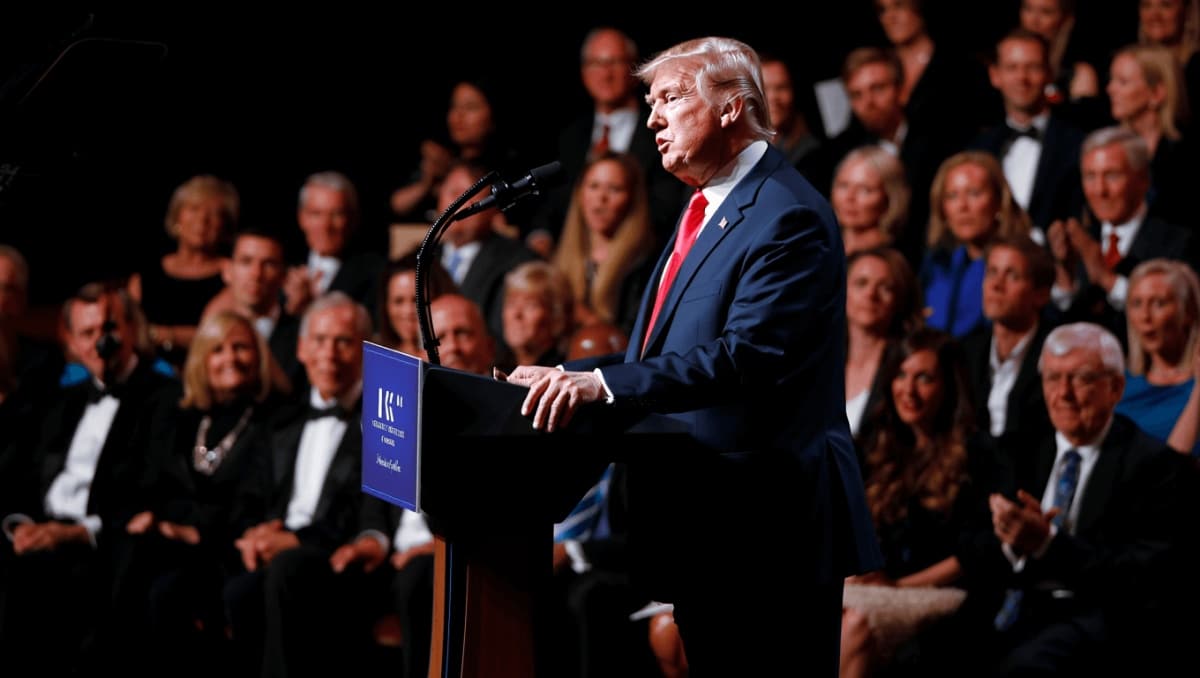
President Donald Trump took a high-profile role at the Kennedy Center Honors in Washington, D.C., turning a cultural ceremony into a display of personal brand and political signaling. His appearance marked a break with recent tradition and underscored a larger Republican push to reclaim cultural institutions. The event mixed showmanship, rivalry with late-night comics, and a broader strategy to shift influence from social persuasion to political power.
From reality TV host to presidential emcee: a new kind of hosting
Trump’s media past is central to why his presence at the Kennedy Center felt theatrical. He rose to fame on reality TV and has long cultivated an entertainer’s persona. Skipping the ceremony during his first term, he returned this year after reshaping the Center’s leadership.
Nas slams music industry over disrespect: teases new music, vows to address it
1992 vocal performances: 3 jaw-dropping moments that still amaze
By replacing board members and positioning himself as the institution’s figurehead, Trump blurred lines between the White House and cultural institutions. The move made him the first sitting president to take on a hosting role at the Honors.
Late-night rivalries land on a national stage
Trump’s performance at the Honors carried a clear subtext: settle scores with late-night critics. He has publicly dismissed personalities such as Jimmy Kimmel, comparing their skills to his own television credentials.
Although Kimmel has never been the Honors’ host, he has an Oscar hosting credit and a long record of mocking Trump. Their feud escalated last year when a controversial on-air claim by Kimmel led to a temporary suspension at his network.
Why the feud matters
- Late-night hosts shape narratives for wide audiences.
- Trump views visibility and punchlines as measures of cultural power.
- Disputes with prominent comedians let politics play out as entertainment.
Comedy, insult and political theater
Trump leaned into both offense and self-promotion. His barbs at the audience and his jabs at cultural gatekeepers read like a late-night monologue. Some moments landed as jokes. Others felt like deliberate challenges.
What stands out is the combination of personal vindication and institutional control. Hosting a nationally symbolic event let him claim cultural legitimacy while exercising official authority.
MAGA’s cultural playbook: take, buy, or compel
The event at the Kennedy Center is part of a broader pattern in conservative strategy. Rather than waiting to win hearts through persuasion, some leaders are using power to reshape cultural terrain.
That strategy takes three general forms:
- Seizing institutional control — replacing boards and officials governing cultural bodies.
- Purchasing platforms — acquiring or transforming social networks to change norms.
- Leveraging state tools — using regulation, fines, or legal threats to deter speech.
Elon Musk’s acquisition and rebranding of Twitter as X is one visible example. Instead of creating a new mainstream alternative, the logic was to buy an existing platform and alter its rules and tone.
When cancel culture becomes a state instrument
Conservative activists often describe the left’s influence as driven by social pressure and canceling tactics. Facing a weaker grassroots cultural reach among elites, they have sought to replicate such effects via government action.
That approach swaps soft persuasion for harder measures. Threats of legal penalties and regulatory pressure become tools to enforce cultural norms rather than relying on audience approval.
How this plays out in practice
- Media executives feel pressure from political leaders and can act preemptively.
- Networks may suspend hosts to avoid controversy amid political scrutiny.
- New laws or enforcement priorities can chill certain speech or content.
Support base, subcultures, and the limits of cultural acceptance
The movement backing Trump is large and energized. It has won elections and drawn in popular podcasters and comedians who appeal to massive audiences outside elite circles.
Still, that energy does not always translate to the kind of endorsement sought from mainstream cultural arbiters. Hollywood, major awards shows, and established critics remain skeptical of a rightward takeover of cultural status symbols.
Figures like Joe Rogan and Theo Von attract massive followings. Yet their fame sits largely outside the traditional corridors of cultural prestige. What Trump appears to want most is not just mass attention but the blessing of cultural elites.
Why the Oscars weren’t an option, and the irony of taking an institutional seat
Even with a history in entertainment, Trump was never likely to be invited to host Hollywood’s top ceremonies. Studios and award organizers worry about unpredictable remarks and bad headlines.
So he used presidential power to reshape the structures that confer cultural honor. By changing the board and asserting influence, he turned a civic ceremony into a platform for his persona.
Pressure, prestige and the unresolved question of acceptance
The Kennedy Center appearance is a test case for a wider political gamble: can influence imposed from the top substitute for organic cultural embrace? The answer is unclear.
What’s certain is that the effort combines spectacle with statecraft. It treats cultural validation like a prize to be claimed rather than earned. That approach changes how politics and culture intersect, and raises new questions about who decides what counts as mainstream taste










