
Show summary Hide summary
- What viewers were promised — and what they get
- Setting and central mystery: Dahlonega’s staged crime
- Main players: performances that nearly rescue the show
- How the plot handles point of view and suspense
- Direction and visual tone: pretty but hollow
- Pacing problems and the finale’s gambit
- Characters who could have been deeper
- Adaptation choices: where the book’s strengths were lost
- Who might still enjoy the series
- Small bright spots amid the flaws
- Final thoughts on adaptation and ambition
The new Netflix thriller His & Hers arrived with pedigree: a respected director making a TV debut, a bestselling source novel, and two charismatic leads. What unfolds, however, is a moody Southern whodunnit that struggles to turn intrigue into momentum. By the time the final episode lands, the show’s promise feels mostly unfulfilled.
What viewers were promised — and what they get
William Oldroyd, known for intimate, unsettling films, seemed an intriguing fit for a small-town murder drama. The series trades those sharper instincts for a glossy, conventional procedural. Instead of tension that deepens, the plot flattens into familiar beats.
Nas slams music industry over disrespect: teases new music, vows to address it
1992 vocal performances: 3 jaw-dropping moments that still amaze
- High expectations from source material and director.
- Visual polish that rarely adds emotional weight.
- A narrative structure that dilutes the novel’s original tension.
Setting and central mystery: Dahlonega’s staged crime
His & Hers opens with a brutal, staged killing in a Georgia town. The tableau shocks a community unaccustomed to violent crime. That setup should spark a feverish investigation and layered motives.
Instead, the mystery becomes a vehicle for predictable plot turns. Key details feel engineered to connect characters rather than to complicate the case.
Main players: performances that nearly rescue the show
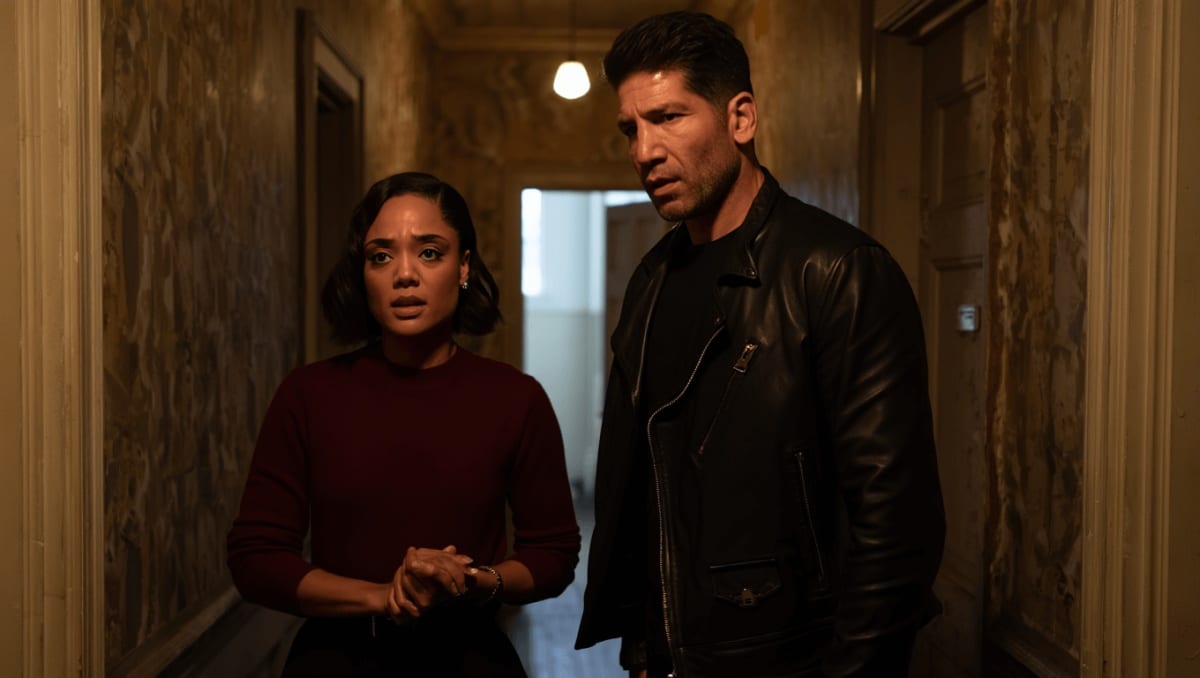
Tessa Thompson and Jon Bernthal headline as a reporter and a detective. Both actors bring charisma and experience, but chemistry is inconsistent. Their portrayals hint at depth that the script rarely supports.
- Tessa Thompson: conveys a fracturing reporter wrestling with past trauma.
- Jon Bernthal: plays a hometown cop whose instincts are unevenly written.
- Supporting cast includes Pablo Schreiber, Rebecca Rittenhouse, and Sunita Mani.
Standouts among the ensemble
- Chris Bauer brings a strange, memorable energy as a grieving husband.
- Marin Ireland cuts through with raw emotional moments.
- Sunita Mani’s partner offers a grounded, relatable reaction to the chaos.
How the plot handles point of view and suspense
The source novel plays with multiple perspectives to keep readers guessing. The series attempts a similar device but loses the tight subjectivity that made the book gripping.
Voiceover narration recurs across episodes, but it often reads like a handbook of crime-drama tropes. Instead of enhancing mystery, the narration flattens it.
Narrative missteps
- Contrived coincidences tie characters together too neatly.
- The show never truly forces the audience to choose sides.
- Spoiler-like reveals stack without building genuine doubt.
Direction and visual tone: pretty but hollow
Oldroyd and co-director Anja Marquardt favor careful composition and a polished palette. The result is cinematic television, but the look sometimes feels detached from the story.
Scenes are often lit and framed for effect rather than emotional truth. The series is stylish, yet it rarely earns its aesthetics.
Pacing problems and the finale’s gambit
Five episodes move through set pieces and clues with a steady, undemanding pace. Then the finale attempts a twisty payoff and lands awkwardly. The show delivers two different endings, neither of which satisfies.
- One ending is obvious and blunt.
- The other aims for surprise but reads as contrived.
- Both choices undermine earlier ambiguity.
Characters who could have been deeper
Many supporting roles feel reduced to a single trait: grief, dementia, addiction, or rivalry. This shorthand undercuts the possibility of genuine suspicion or empathy.
When secondary characters are one-note, the mystery lacks a rich field of plausible culprits. That limitation weakens engagement.
Adaptation choices: where the book’s strengths were lost
The novel’s shifting vantage points invite the reader to distrust narrators. The series moves toward omniscient TV storytelling, removing the participatory thrill.
Converting the book’s structure for television required risk; the show opts for safety, and the tension erodes.
Who might still enjoy the series
If you favor mood-driven crime dramas and scenic Southern settings, there are pleasures here. The production design, some strong supporting moments, and a few effective scenes offer value.
- Fans of polished Netflix mysteries may find it watchable.
- Viewers drawn to character-driven interrogations will be less satisfied.
Small bright spots amid the flaws
Several performances and brief emotional beats stand out. The show occasionally hints at deeper psychological textures, suggesting what could have been.
Sunita Mani’s grounded reactions and Chris Bauer’s oddball energy provide welcome relief from the show’s meandering attempts at suspense.
Final thoughts on adaptation and ambition
His & Hers arrives with the elements of a compelling limited series but fails to assemble them convincingly. The director’s signature touches show up, yet they don’t cohere into a satisfying mystery.
The series is more a stylish exercise than a gripping thriller.










