
Show summary Hide summary
- How Gehry changed the look of cities: signature projects
- Early influences and the moment that shaped his style
- Design approach: materials, movement and emotion
- A public figure who loved a reaction
- Awards, recognition and the label “starchitect”
- Criticism, budgets and creative risk
- Legacy: what Gehry left behind
- Voices on Gehry: peers and commentators
- Projects in process and continuing work
- Public response and the future of Gehry’s buildings
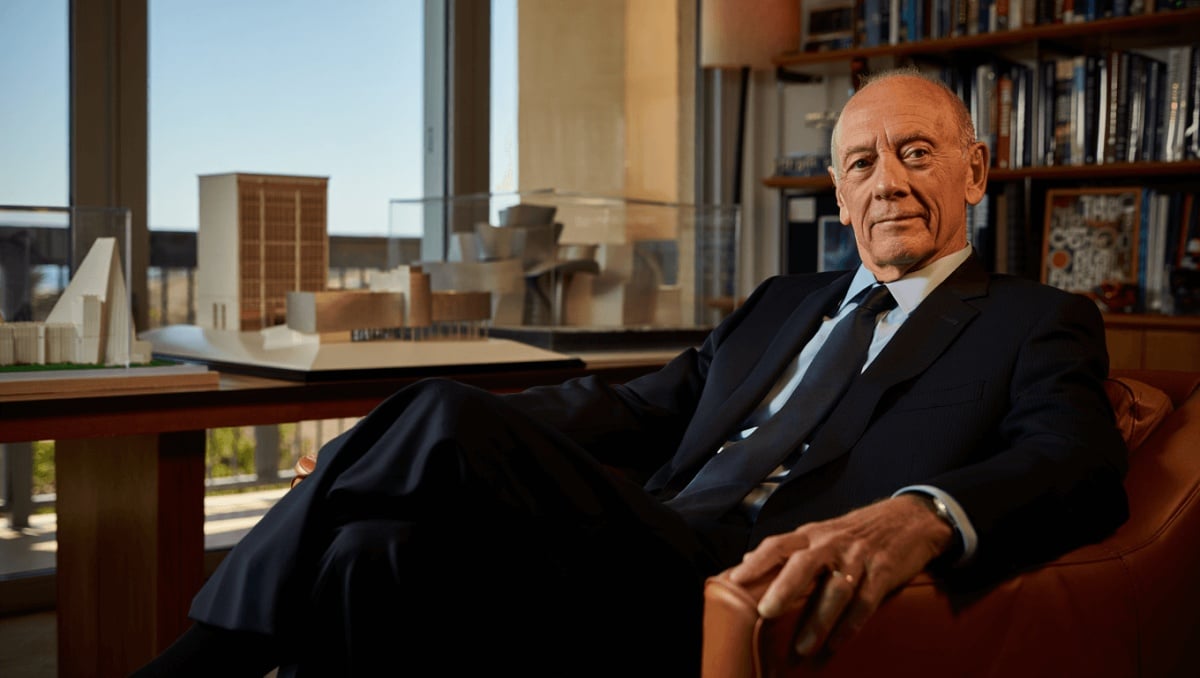
Frank Gehry, the visionary architect whose sweeping, metallic forms reinvented public buildings worldwide, has died at 96. His family and office say he passed at his Santa Monica home after a short respiratory illness. Gehry’s daring shapes — from the Guggenheim in Bilbao to the Walt Disney Concert Hall — altered how cities, critics and everyday people imagine architecture.
How Gehry changed the look of cities: signature projects
Gehry’s work became shorthand for exuberant, sculptural architecture. He turned industrial materials into lyrical forms. His projects often became instant landmarks and tourist magnets.
Nas slams music industry over disrespect: teases new music, vows to address it
1992 vocal performances: 3 jaw-dropping moments that still amaze
- Guggenheim Museum, Bilbao — A titanium-clad swirl that helped transform a postindustrial port city into a cultural destination.
- Walt Disney Concert Hall, Los Angeles — A stainless-steel ensemble designed to house music and create an uplifting public space.
- Louis Vuitton Foundation, Paris — Light, glass “sails” set among trees in the Bois de Boulogne.
- Fred and Ginger building, Prague — Two leaning towers nicknamed after dancers for their playful silhouettes.
- Gehry House, Santa Monica (1978) — An early experiment using humble, everyday materials.
Early influences and the moment that shaped his style
Gehry said his earliest visual memories came from watching fish in a bathtub at his grandmother’s home. Those flowing, organic lines reappeared throughout his career.
He rejected the cold, rectilinear modernism of the postwar era. Instead, he sought ways to make buildings feel alive. Aerospace advances and new fabrication techniques gave him the tools to realize complex curves and reflective skins.
Design approach: materials, movement and emotion
Gehry treated structures like compositions in motion. He aimed for buildings that suggested breath, rhythm and dance rather than static boxes.
- He experimented with plywood, chain-link fencing and corrugated metal early on.
- Later works used titanium and thin stainless steel to capture light and color.
- He believed architecture should be an enjoyable, almost theatrical experience for visitors.
A public figure who loved a reaction
Gehry relished public response to his work. In many cities people greeted him warmly, sometimes embracing him in the street. His projects often produced strong, immediate reactions — awe, delight, and occasionally controversy.
Biographers and critics note that he cared deeply about how people felt in and around his buildings. That humanistic strand set him apart from architects who prioritized theory over public feeling.
Awards, recognition and the label “starchitect”
Gehry received nearly every top honor in the field. His work earned global praise and formal distinctions alike.
- Pritzker Architecture Prize
- American Institute of Architects Gold Medal
- National Medal of Arts
- Presidential Medal of Freedom
With fame came a new industry nickname: “starchitect.” Gehry resisted the trappings of celebrity and tried not to let popularity dictate his choices.
Criticism, budgets and creative risk
Not every review was admiring. Critics sometimes questioned costs and practicality. Clients and city officials argued over budgets and timelines.
Yet Gehry persisted. He turned constraints into opportunities, often finding elegant solutions in inexpensive materials when budgets were tight.
Legacy: what Gehry left behind
Gehry reshaped public expectations about what architecture can do. His buildings encouraged the public to see design as a source of joy and civic pride.
His influence extended beyond individual projects. Younger architects borrowed his willingness to experiment with form and finish. City officials and developers began to see bold architecture as a tool for cultural and economic renewal.
Voices on Gehry: peers and commentators
Architects, writers and curators described Gehry as a rare figure who combined advanced art with broad public appeal. Some called his Bilbao museum a turning point for contemporary architecture.
People remembered him as both a relentless experimenter and a designer who wanted buildings to connect emotionally with users.
Projects in process and continuing work
At the time of his death, Gehry’s practice remained active on projects around the world. Many of those designs will proceed under his firm and collaborators.
- Large cultural commissions that extend his interest in performance spaces.
- Urban projects that integrate public plazas and pedestrian life.
- Commissioned works that continue to explore sculptural façades and new materials.
Public response and the future of Gehry’s buildings
Cities that host Gehry buildings must balance preservation with evolving urban needs. Many of his structures are already protected as cultural assets.
Conservationists, engineers and local communities will now face the task of maintaining the complex surfaces and mechanical systems that make his buildings unique.
Gehry’s passing marks the end of a career that fused craftsmanship, technology and theatricality. His forms remain visible across skylines and in public imagination as invitations to look at cities differently.










