
Show summary Hide summary
- Premise and setting: a frontier standoff in the Washington Territory
- Who’s who: principal cast and the roles they play
- Pacing problems and narrative gaps
- Plot beats that stumble or disappear
- Direction and production values: beauty and rough edges
- Tone and themes: ambition versus restraint
- Religion, identity and the underdeveloped heart of the show
- Supporting players: familiar faces in small windows
- Violence and stakes: impact depends on attachment
- How The Abandons compares to other female-led Westerns
- Structural choices that raise questions about intent
- Open threads and the unresolved finale
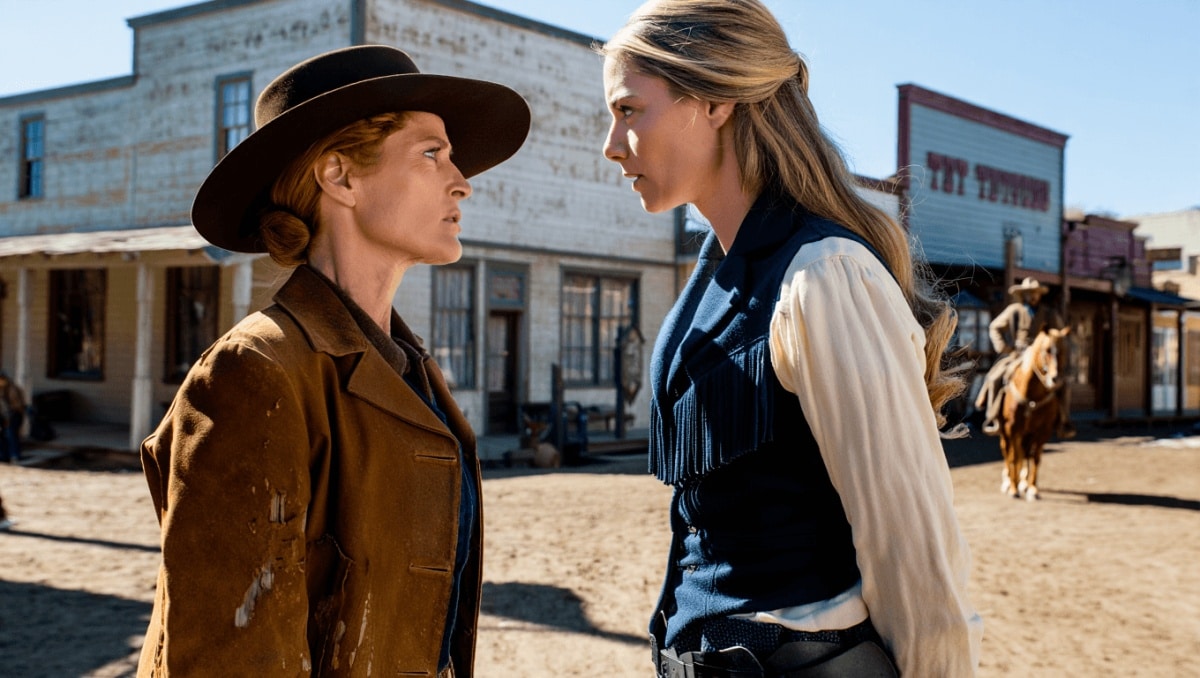
Power, land and two determined women collide in The Abandons, a Netflix Western that promises high drama but delivers a patchwork of strong acting and puzzling omissions. The series sets a fierce matriarchal duel in a dusty frontier town. It showcases notable stars yet often feels rushed and underbuilt.
Premise and setting: a frontier standoff in the Washington Territory
The show unfolds in 1854 Washington Territory. Angel’s Ridge is a mining town clinging to life. Constance Van Ness controls the mines. Fiona Nolan protects a neighboring valley called Jasper Hollow.
Nas slams music industry over disrespect: teases new music, vows to address it
1992 vocal performances: 3 jaw-dropping moments that still amaze
Conflict boils around a rumored silver vein in Jasper Hollow. Constance wants access to the ore. Fiona refuses to sell or exploit the land. That standoff drives most of the early episodes.
Who’s who: principal cast and the roles they play
This is an ensemble with familiar faces. Some performances cut through the script’s shortcomings. Others feel underused.
- Gillian Anderson as Constance Van Ness — the powerful mine owner who radiates control.
- Lena Headey as Fiona Nolan — a Celtic, devout rancher who adopted four children.
- Nick Robinson and Diana Silvers as two of Fiona’s adopted offspring, Elias and Dahlia.
- Lamar Johnson and Natalia del Riego as Albert and Lilla, the other adopted children.
- Supporting names include Aisling Franciosi, Lucas Till, Toby Hemingway, Michiel Huisman, Patton Oswalt, Katey Sagal, Ryan Hurst, and Brian F. O’Byrne.
Standouts and missed chances
Anderson gives the series its strongest magnetism. Her presence keeps many scenes grounded. Headey is volatile and commanding at times. Yet the show rarely explains Fiona’s spiritual arc or its impact.
The younger actors show sparks of promise. Still, their arcs feel fragmentary. Important relationships are hinted at, then neglected.
Pacing problems and narrative gaps
The Abandons began life as a larger project. Netflix reportedly ordered ten episodes. The version released is seven episodes long. Kurt Sutter, the creator, left before production wrapped.
Those production facts show on screen. Many threads open and never find closure. Subplots appear briefly and then evaporate.
- Family dynamics lack depth. Scenes that should build bonds feel clipped.
- Religious motivation and confessional moments are introduced but rarely followed through.
- Side characters show up, register, then exit without consequence.
Plot beats that stumble or disappear
Examples recur across the run. A traumatic incident in the pilot goes underexplored. Albert receives a late, small arc that reads like an afterthought. Lilla, present in scenes, vanishes from crucial conversations.
At times it feels as if the editors excised connective tissue. The result is a show heavy on premise but light on emotional scaffolding.
Direction and production values: beauty and rough edges
The series was shot in Alberta. The landscapes can be striking. Wide, open frames hint at classic Western grandeur.
But execution sometimes falters. CGI cattle are noticeable. Night sequences are often dim and muddy. Several violent set pieces lack clarity or punch.
Directors such as Otto Bathurst and Gwyneth Horder-Payton deliver moments of visual flair. Yet the staging often feels constrained. Grand gestures exist, but they rarely cohere into memorable sequences.
Tone and themes: ambition versus restraint
Kurt Sutter’s work is known for excess. Here, the series curiously trims where it might have expanded. Language, brutality and character depth are not dialed up as one might expect.
The result is a leaner show, but not necessarily a better one. The brisk pace can be a virtue, but it also sacrifices nuance and context.
Religion, identity and the underdeveloped heart of the show
Fiona’s Catholic faith is foregrounded early. That religious identity should anchor much of her behavior. Instead, spiritual threads are often sidelined.
Questions about the origins and ages of Fiona’s adopted children are left deliberately vague. The racial and cultural dynamics of Albert and Lilla receive little sustained attention.
Supporting players: familiar faces in small windows
Sutter brings in actors he’s worked with before. They supply punch with minimal screen time. That casting strategy seems intended to let veterans carry weight quickly.
- Ryan Hurst and Brian F. O’Byrne give layered, compact turns.
- Katey Sagal brings texture to a brothel madame role.
- Patton Oswalt appears as the town mayor in an oddly perfunctory part.
Violence and stakes: impact depends on attachment
When the series aims for cruelty, it lands unevenly. The final episode escalates the brutality. But the emotional impact is muted.
Violence hits harder when viewers care about the victims. The show often fails to build enough care into the cast’s relationships. That makes later shocks feel aesthetic rather than devastating.
How The Abandons compares to other female-led Westerns
Netflix has showcased revisionist Westerns with strong female centers. Godless and American Primeval set a high bar.
The Abandons tries to join that conversation. It offers big ideas about land, power and motherhood. It lacks the narrative cohesion and depth those peers achieve.
Structural choices that raise questions about intent
Was the aim to pare the story to pure spectacle? Or did editing and behind-the-scenes changes shrink the ambition?
Clues point to both possibilities. Some sequences seem built for character study. Others aim for set-piece drama. The balance never settles.
Open threads and the unresolved finale
The season ends without closure. Storylines are left dangling. The show also ends on a clear cliffhanger.
Netflix initially ordered more episodes. Sutter’s exit and the shorter run suggest a production pulled in new directions. Viewers are left with a mix of polished performances and unresolved narrative promises.










