
Show summary Hide summary
- Why a mediocre bird still rules the Thanksgiving table
- How the modern Thanksgiving turkey is bred and raised
- Life inside crowded turkey barns
- How slaughter works on industrial lines
- Waste, outbreaks, and the seasonal toll
- Rethinking tradition: why swap the turkey for plants
- Practical steps to make your Thanksgiving less turkey-centric
- The cultural case for updating Thanksgiving
Every November, millions of Americans gather around a ritual centerpiece few actually rave about: the Thanksgiving turkey. Despite widespread complaints that the meat is dry or bland, households nationwide buy, cook, and carve tens of millions of birds. The dish survives less because of taste than because of habit, symbolism, and the pressure to keep holiday customs intact.
Why a mediocre bird still rules the Thanksgiving table
Turkey’s hold on the holiday goes beyond flavor. The bird stands for shared history, family rituals, and a sense of abundance. Saying no feels like refusing an invitation to belong.
Nas slams music industry over disrespect: teases new music, vows to address it
1992 vocal performances: 3 jaw-dropping moments that still amaze
- Ritual and identity: Food shapes group identity. A turkey signals “this is Thanksgiving.”
- Social pressure: Guests often eat what hosts serve to avoid awkward conversations.
- Perceived authenticity: Many see turkey as what Thanksgiving “should” look like.
- Convenience and industry supply: The market is built to make turkey the easy choice each November.
So when people say taste is why meat persists, they are only half right. The cultural web around holiday meals plays a larger role.
How the modern Thanksgiving turkey is bred and raised
The birds sold in most grocery stores are far removed from wild turkeys. Decades of selective breeding created animals optimized for large breasts. That engineering affects their health and behavior.
The Broad Breasted White and its problems
- These turkeys are bred to bulk up quickly and carry enormous breast meat.
- They reach market size far faster than birds did in previous generations.
- Because of their shape, many cannot walk comfortably.
- Natural mating is often impossible, so breeding is done artificially.
What artificial reproduction looks like
To maintain production, commercial operations often rely on human intervention. Male birds are handled to collect semen, and hens are inseminated mechanically or manually. This is routine labor on huge farms.
Life inside crowded turkey barns
Factory-farmed turkeys typically live in dense flocks with little room to express natural behaviors. Their daily life is a cycle of confinement, human handling, and stress.
- Birds are raised in sheds with thousands of others.
- They seldom see mothers or the outdoors.
- Mutilations such as beak trimming or toe trimming are common.
- High density increases disease risk and behavioral trauma.
How slaughter works on industrial lines
Slaughterhouses operate at speed to meet holiday demand. The process often involves rough handling, shackling, and a quick, conveyor-driven killing method. Stunner failures and other lapses can leave birds conscious when shackled.
These are systemic risks tied to scale and profit-driven efficiency.
Waste, outbreaks, and the seasonal toll
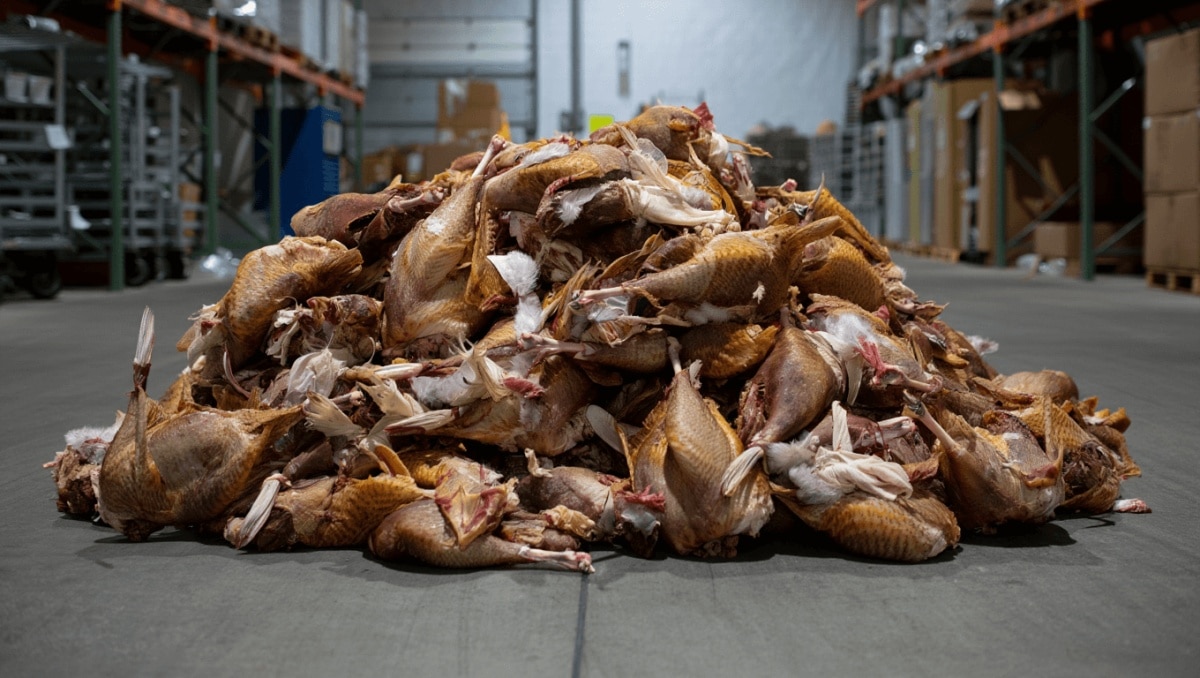
The Thanksgiving economy produces both abundance and waste. Every year a large share of purchased food goes uneaten. At the same time, disease outbreaks reshape supply and cause mass culling.
- Estimates show millions of turkeys are discarded around the holiday season.
- Recent years have seen repeated avian flu outbreaks.
- Infected flocks are sometimes culled with brutal methods to contain the virus.
- The environmental and ethical costs are substantial.
Rethinking tradition: why swap the turkey for plants
Thanksgiving values—gratitude, community, and stewardship—can align with meals that cause less harm. Plant-centered feasts offer tasty, creative options that fit the season.
Host a menu that makes vegetables the centerpiece and the turkey optional.
- Mushroom Wellington with savory layers.
- Lentil- and nut-stuffed squash for a hearty main.
- Creamy cashew-lentil bakes in place of heavy casseroles.
- Roasted Brussels sprout salads with bright dressings.
- Pumpkin or miso tarts that rethink dessert traditions.
- Commercial vegan roasts (brands like Gardein or Field Roast) for a familiar focal point.
Plants can be festive, satisfying, and less harmful.
Practical steps to make your Thanksgiving less turkey-centric
Changing what’s served is also about changing expectations. Small, practical moves can shift the social momentum.
- Bring a bold dish: Offer a plant-based main that steals the show.
- Host the meal: If you lead the gathering, you set the menu.
- Share recipes in advance: Send a menu or recipe to guests to reduce surprise.
- Portion better: Buy less meat or skip it to cut waste and cost.
- Frame the change: Explain that new dishes honor the holiday’s spirit.
These steps help avoid awkward confrontations while nudging traditions toward less destructive practices.
The cultural case for updating Thanksgiving
Holidays evolve. If culture is a conversation, then food is one of the quickest ways to steer it. Adapting a menu can reaffirm shared values without erasing memory.
Replacing or reducing turkey does not erase Thanksgiving’s meaning. It can renew it by aligning the feast with modern concerns about animal welfare and sustainability.
Update, November 27, 2025, 7:30 am: This article was originally published in 2024 and has been revised for 2025.










