
Show summary Hide summary
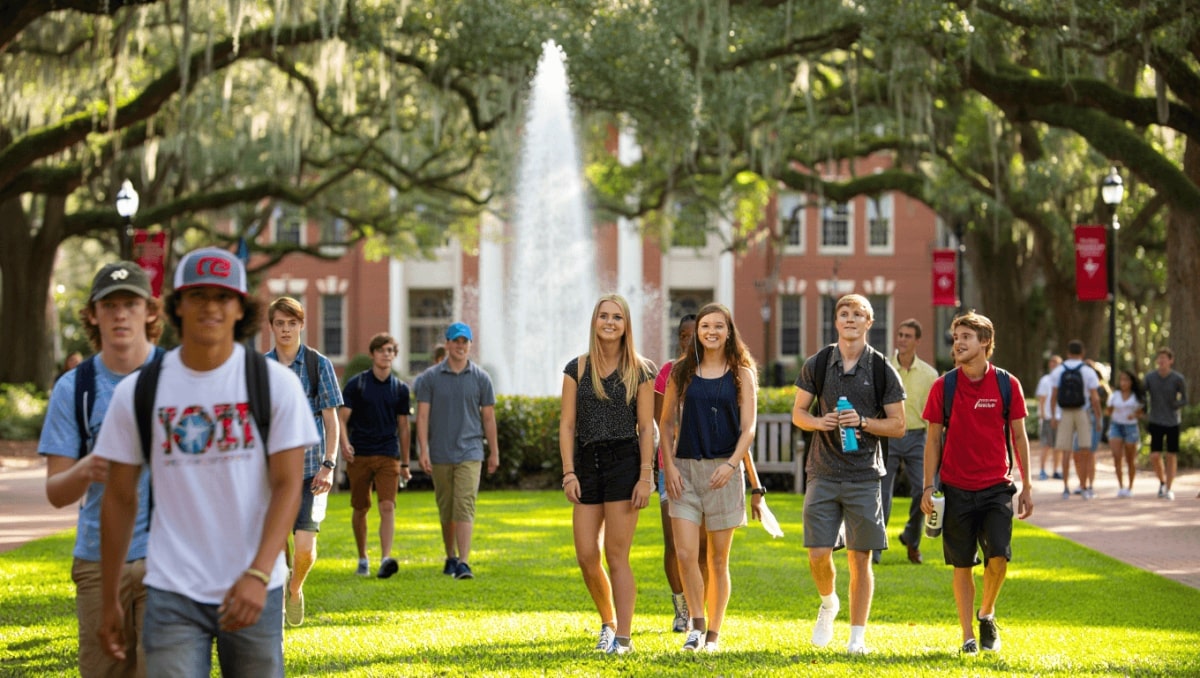
College campuses across the United States are seeing a steady southward shift. From football towns to sunlit quad life, more students are choosing Southern universities, with moves from Northern states rising roughly 30% between 2018 and 2022. The trend reflects a mix of lifestyle, economics, and culture that is reshaping how Americans think about the region.
Why students are choosing Southern campuses
Several clear forces are drawing students below the Mason-Dixon line. Some seek the energetic campus culture tied to big sports and active Greek life. Others are chasing lower costs or fewer pandemic restrictions. Still others are drawn by weather and scenery.
Nas slams music industry over disrespect: teases new music, vows to address it
1992 vocal performances: 3 jaw-dropping moments that still amaze
- Campus life: Large-state schools offer visible social scenes and tradition.
- Affordability: Tuition and living costs can be lower, easing student budgets.
- Public health timing: Southern campuses often relaxed Covid limits earlier.
- Change of scene: Warm climate and outdoor access appeal to many.
The migration is part lifestyle choice, part economic calculation. Students weigh social life, college costs, and postgrad networks when picking a school.
Long-term forces that remade the South
The South’s rise in national prominence didn’t happen overnight. Three long arcs converged in the mid-20th century and set a new course.
- Political change: Civil rights reforms altered legal and social structures.
- Infrastructure: Federal highway projects connected Southern markets to the rest of the country.
- Comfort tech: Air conditioning made hot summers livable for industry and residents.
Together, these shifts encouraged migration, business investment, and more cultural exchange. Over decades, the region grew into a major center for population and industry.
How states lured companies and jobs
Southern governors and economic development agencies began marketing their states to major employers. They built incentive packages aimed at cutting costs and easing operations for firms.
Auto plants and union dynamics
Carmakers were a major target. States promoted lower labor costs and less union presence to attract assembly lines. Foreign manufacturers found Southern locations appealing for both logistics and wage structures.
Entertainment hubs and tax breaks
Another playbook centers on film and television incentives. Georgia and Louisiana, for example, offered tax credits and infrastructure that turned Atlanta and parts of Louisiana into production hotspots.
- Tax incentives for studios and producers.
- Diverse landscapes that double for many settings.
- Large local workforces and production facilities.
These offers rewired local economies and seeded cultural industries. Film, TV, and manufacturing brought jobs and national attention.
Southern sounds remaking American music
The South has long been a music engine. In recent decades, Southern hip-hop exploded onto the mainstream. Country music also surged into new audiences.
Some of the renewed attention on white Southern traditions is a response to the dominance of Black Southern creativity in charts and culture. But the musical landscape is not monolithic.
- Artists from the South blend genres and push boundaries.
- Some performers embrace traditional themes while others critique them.
- Cross-pollination between Black and white Southern styles is constant.
Artists like Beyoncé have reimagined Southern themes, while others provoke debate about what Southern music should represent. The result is a complex cultural conversation, not a single narrative.
What Southerners think about newfound popularity
Many people from the region have mixed feelings about the attention. It feels good to be treated as a central part of national life. It also feels awkward when outsiders adopt Southern aesthetics without understanding the history.
Living in the South often requires engaging with a complicated past. For locals, that engagement is ongoing. Outsiders sometimes skip that work.
That contrast creates tension: appreciation without context can feel like a costume to longtime residents.
Where reporters and podcasts fit in
Journalists are taking note of these shifts. Bloomberg reporter Amanda Mull has explored the broader pull of Southern culture. Her reporting and conversations on Vox’s Explain It to Me podcast trace how social change, industry strategy, and creativity combined to elevate the region.
Interviews and episodes help unpack causes and consequences. They also surface personal stories that explain why people move, invest, and tune in to Southern culture.
Key takeaways for students and movers
- Consider cost, campus life, and job markets when choosing a school.
- Industry incentives change local economies quickly.
- Culture travels with people and businesses; it evolves as it spreads.
Decisions to relocate or attend college in the South reflect both practical and cultural factors. For many, the region now offers opportunity and identity in new ways.










