
Show summary Hide summary
- How the series opens and why it undercuts suspense
- Lead performances: charm, menace, and missed depths
- Plot choices that frustrate instead of intrigue
- Family dynamics and social satire that never fully land
- Structure and pacing: too many detours, too few answers
- Where the show borrows from and how it compares to recent hits
- Moments that work and those that falter
- Technical surface: visuals, tone and genre signals
- Who should watch and what to expect
Amazon Prime Video’s Malice arrives with sunlit villas, wealthy hosts and a smiling interloper, but the series seldom generates real dread. The premise is immediate and plain: a charming stranger insinuates himself into a rich family’s holiday, and trouble follows. Yet the show worries less about mounting suspense than about nudging viewers toward expected beats.
How the series opens and why it undercuts suspense
The premiere uses a forward flash to signal a crime has happened. That technique usually primes curiosity. Here it mostly tells you the destination and removes much of the suspense in between.
Nas slams music industry over disrespect: teases new music, vows to address it
1992 vocal performances: 3 jaw-dropping moments that still amaze
- Viewers are shown an interrogation scene early on.
- The suspected perpetrator appears composed and unsurprised.
- The narrative rarely circles back to fully explain the initial hint.
That structural choice robs moments of urgency. Instead of building puzzle pieces, the show often drops hints and moves on.
Lead performances: charm, menace, and missed depths
Jack Whitehall plays Adam, the magnetic outsider who quickly earns the household’s trust. Opposite him, David Duchovny portrays Jamie, the blunt, powerful family patriarch. Both actors deliver clear impressions.
- Whitehall leans into unsettling ease, selling Adam’s duplicity.
- Duchovny embodies an entitled, abrasive businessman.
- Carice van Houten, Harry Gilby and the younger cast populate the household with recognizable archetypes.
But performances rarely complicate the viewer’s view of who is right or wrong. Adam is written as plainly dangerous. Jamie is written as plainly unlikeable. That binary leaves little room for surprising character development.
Plot choices that frustrate instead of intrigue
Malice hints at elaborate scheming, then withholds the mechanics. Crucial moves occur offscreen or are narrated after the fact. The show depends on implication more than demonstration.
- Key incidents that should feel clever are described rather than shown.
- Attempts to unmask Adam’s murky history become intermittent digressions.
- Investigative threads begin, then fade without payoff.
For a thriller, the joy often lies in watching plans unfold. Here, the pleasures of a slow-burn reveal are frequently denied.
Family dynamics and social satire that never fully land
The Tanners are a fertile target for class and power commentary. The show seeds moments of satire — material support for a spouse, performative leisure, brittle marriages — but doesn’t always follow through.
- Jamie funds his partner’s business, keeping her financially dependent.
- Small moments of comic cruelty and vanity suggest sharper satire.
- Yet these moments don’t add up to sustained critique.
Without sharper stakes or deeper emotional texture, the social commentary registers as background noise rather than a driving force.
Structure and pacing: too many detours, too few answers
The six-episode arc flits between Greece and London and between present threats and past mysteries. Mobility could add tension, but here it scatters focus.
- Scenes in exotic locales create atmosphere but not escalating peril.
- Subplots about Adam’s past produce teasing fragments and no cohesive backstory.
- Investigative impulses appear, then dissipate without clear resolution.
This episodic roam prevents a single, escalating throughline. The result is a thriller that often reads like a string of vignettes.
Where the show borrows from and how it compares to recent hits
Malice sits in a crowded field of stories about social climbers and parasitic outsiders. Comparisons are inevitable and revealing.
- There are echoes of Patricia Highsmith’s Tom Ripley: a charming grifter invading privileged circles.
- Contemporary titles like Ripley, Saltburn and The White Lotus have sharpened audience expectations.
- Those predecessors often pair moral ambiguity with meticulous plotting. Malice keeps the moral certainties but loosens the plotting.
Because the cultural appetite for sun-drenched dysfunction is high, a new entry must either add a twist or refine craft. Malice does neither consistently.
Moments that work and those that falter
Not everything misses. The setting and production design evoke luxury and isolation effectively. Some exchanges land as sly social barbs. Yet many sequences end up repetitive.
- Effective beats: tight domestic friction and a few darkly comic moments.
- Weak beats: offscreen violence and unexplained leaps in logic.
- Most frustrating: the show hints at vindication and revenge, then moves on too quickly.
Small pleasures exist, but they never coalesce into sustained suspense.
Technical surface: visuals, tone and genre signals
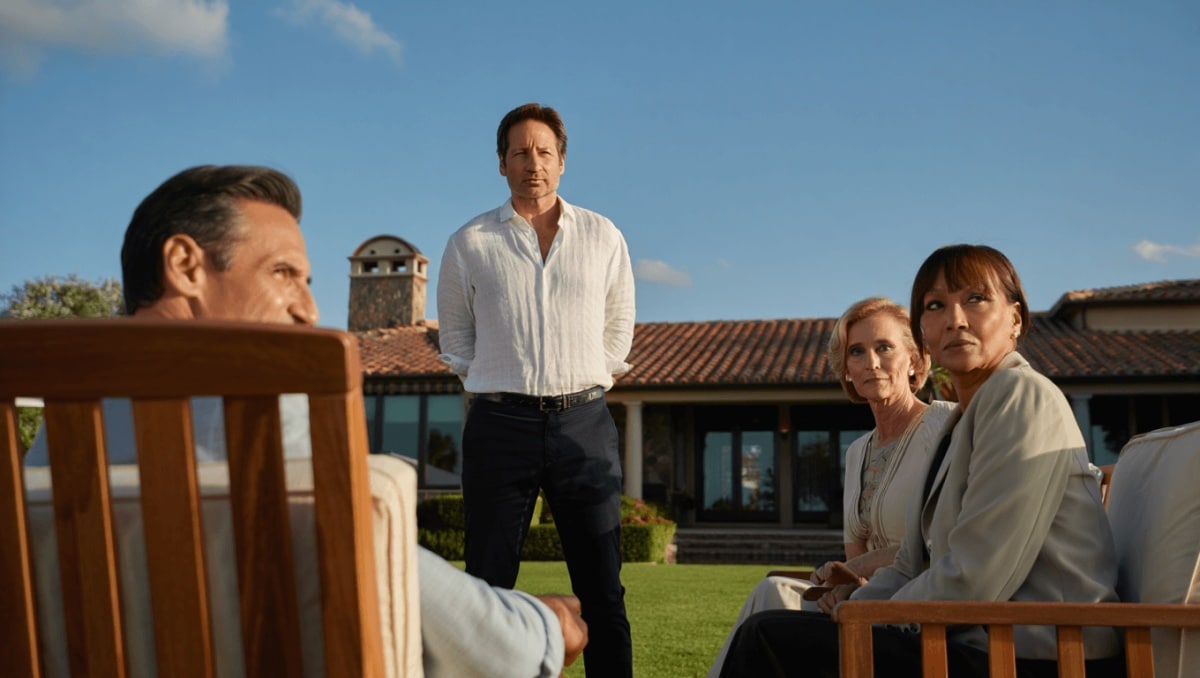
Cinematography favors bright palettes and spacious compositions. The contrast between seaside leisure and underlying menace is visually clear.
- Sunlit pools and sleek interiors create an alluring veneer.
- Occasional nocturnal scenes try to suggest danger, but the editing seldom heightens peril.
- Sound design and pacing generally keep the tone calm, even when a character is menaced.
That mismatch — attractive imagery paired with muted momentum — is part of why the series rarely feels urgent.
Who should watch and what to expect
Viewers drawn to character-driven moral dramas may find elements to enjoy. Fans of seaside-set prestige television may also appreciate the cast and location work.
- Expect solid performances rather than startling revelations.
- Expect stylistic polish but sparser narrative payoff.
- The series spans six episodes on Amazon Prime Video.
Malice offers mood and setup more often than surprise and resolution.










