
Show summary Hide summary
- Scope and timeline: A revolution that starts long before 1776
- How the past is visualized: Cinematic tools and storytelling choices
- Personal stories and multiple perspectives
- Depicting combat: Close quarters and harsh realities
- Technique, research and the filmmaker’s touch
- Who appears on screen: Experts and performers
- Framing the revolution globally and locally
- Why the series matters for modern audiences
- Viewing details and episode highlights
Ken Burns’ new PBS series revisits the violent, messy beginnings of the United States. The six-part documentary digs into decades of conflict, maps shifting loyalties, and amplifies voices that rarely appear in sweeping national narratives.
Scope and timeline: A revolution that starts long before 1776
The filmmakers trace the revolution across three decades and two continents. Benjamin Franklin’s early calls for a colonial union appear years before the Declaration of Independence.
Nas slams music industry over disrespect: teases new music, vows to address it
1992 vocal performances: 3 jaw-dropping moments that still amaze
Key triggers are shown in sequence: the French and Indian War, heavy British taxation, the Boston Massacre and the Tea Party. These events pushed colonists to rethink union and resistance.
- Benjamin Franklin’s early union plan and its rejection
- Economic strains and British taxation policies
- Escalating street violence and political protest
How the past is visualized: Cinematic tools and storytelling choices
The series compensates for the lack of period photography with inventive visuals. Animated battle maps, painted portraits and layered narration recreate the 18th century.
Voice actors and historians lend the series a dramatic and scholarly balance. The result is a textured historical portrait, not a single, triumphant narrative.
Voices that shape the series
- Peter Coyote narrates with steady, familiar cadence.
- Actors deliver primary-source readings to humanize letters and proclamations.
- Historians and scholars add context and challenge myths.
Personal stories and multiple perspectives
Rather than viewing the conflict solely through Continental Army dispatches, the filmmakers include a wide cast of experiences. Loyalists, enslaved people, Indigenous nations and women appear throughout.
This approach makes the war feel lived-in and contested. It shows how the upheaval affected entire communities, not just political elites.
Depicting combat: Close quarters and harsh realities
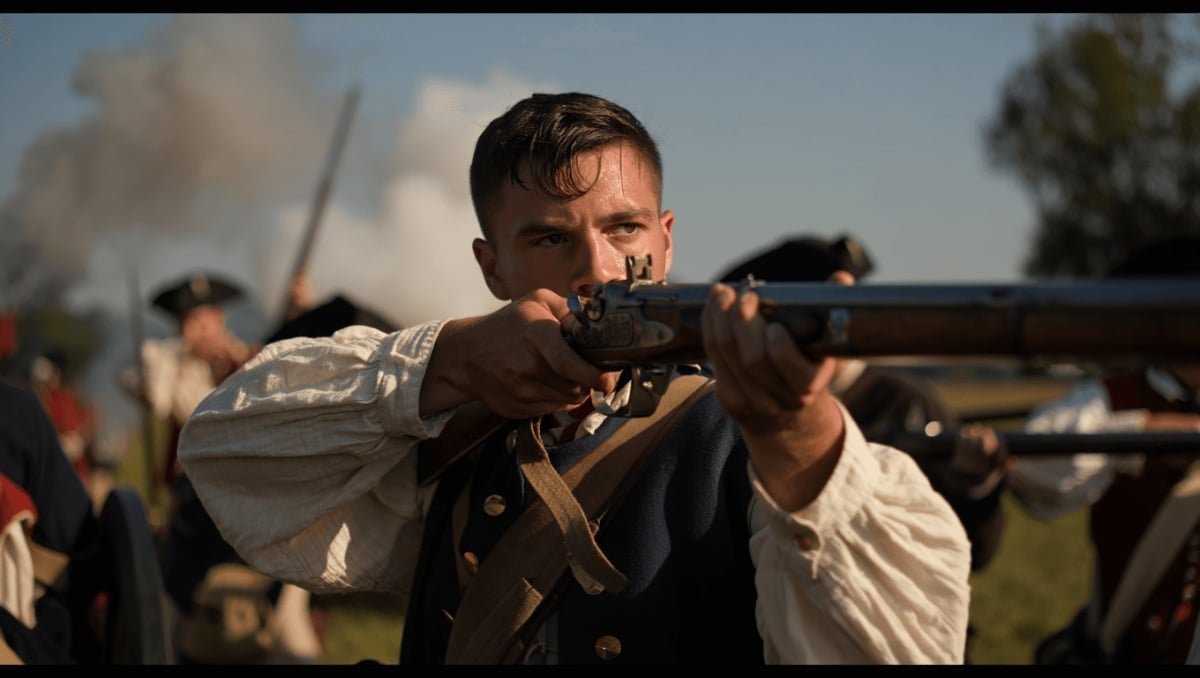
Battle scenes feel raw. Men fought face-to-face with muskets and bayonets. Supply shortages and disease compounded battlefield danger.
Notable episodes and moments
- Early confrontations and sieges that set the tone for the coming years.
- A decisive late-1776 victory that revived American morale.
- Hardship in the ranks: unpaid soldiers, exposure and smallpox outbreaks.
George Washington’s leadership is shown as complex. He won critical victories but also made errors that cost men and morale. One striking thread follows his decision to require inoculation for troops.
Technique, research and the filmmaker’s touch
Ken Burns and his co-directors spent nearly a decade shaping this project. The work combines meticulous archival research with narrative pacing familiar to Burns viewers.
- Animated maps clarify troop movements and strategy.
- Portraits and readings preserve the era’s voice and tone.
- Interviews with scholars challenge simplified myths.
Who appears on screen: Experts and performers
The series pulls from both performance and scholarship to build credibility and drama. That mix aims to engage casual viewers and history buffs alike.
- Seasoned narrators provide cohesion across episodes.
- Well-known actors read firsthand accounts.
- Academics and authors supply critical analysis.
Framing the revolution globally and locally
The filmmakers resist a purely American nationalist lens. Instead, they place the conflict within a wider imperial and global context.
Allied and rival powers, colonial commerce, and transatlantic politics shaped local decisions. The result is a portrait of a revolution influenced by forces beyond the 13 colonies.
Why the series matters for modern audiences
The documentary connects early American contradictions to contemporary debates about freedom, inclusion and national identity. It highlights both the ideals pursued and the exclusions that persisted.
By showing a plural set of experiences, the series prompts viewers to reassess familiar founding myths and consider the costs of independence in human terms.
Viewing details and episode highlights
The six-episode series runs roughly 12 hours and debuts on PBS. Episodes unfold night-to-night, allowing viewers to follow the arc from rising tensions to full-scale war.
- Episode focusing on late 1776 to early 1777 features a morale-boosting victory.
- Other episodes examine diplomatic reach and the war’s global stakes.
- Scholarly commentary threads through each installment.










