Show summary Hide summary
- Major projects altering Washington’s public spaces
- Why these changes are controversial
- Legal battles and administrative pushback
- Congressional options to stop or slow construction
- Which projects Democrats are prioritizing
- Political limits and strategic trade-offs
- Following the money and public accountability
- Long-term reforms to prevent repeat behavior
President Trump has spent much of his second term reshaping the capital’s landscape. His push includes high-profile changes to parkland, alterations inside the White House and proposals for monuments that have provoked lawsuits and sharp partisan pushback.
Major projects altering Washington’s public spaces
Across federal land in and around Washington, the administration has moved quickly on a series of visible projects. The list includes renovations at East Potomac Park, removal of hundreds of trees, a newly declared national monument around the Oval Office, and interior remodeling at the White House that added a large ballroom and helipad.
KATSEYE postpones another concert: illness details remain undisclosed
Cupertino: a stylish legal drama packed with tech twists

- Plans for a triumphal arch near Memorial Circle have drawn legal challenges.
- The Kennedy Center faces proposals for extensive reconstruction and possible demolition of parts of the building.
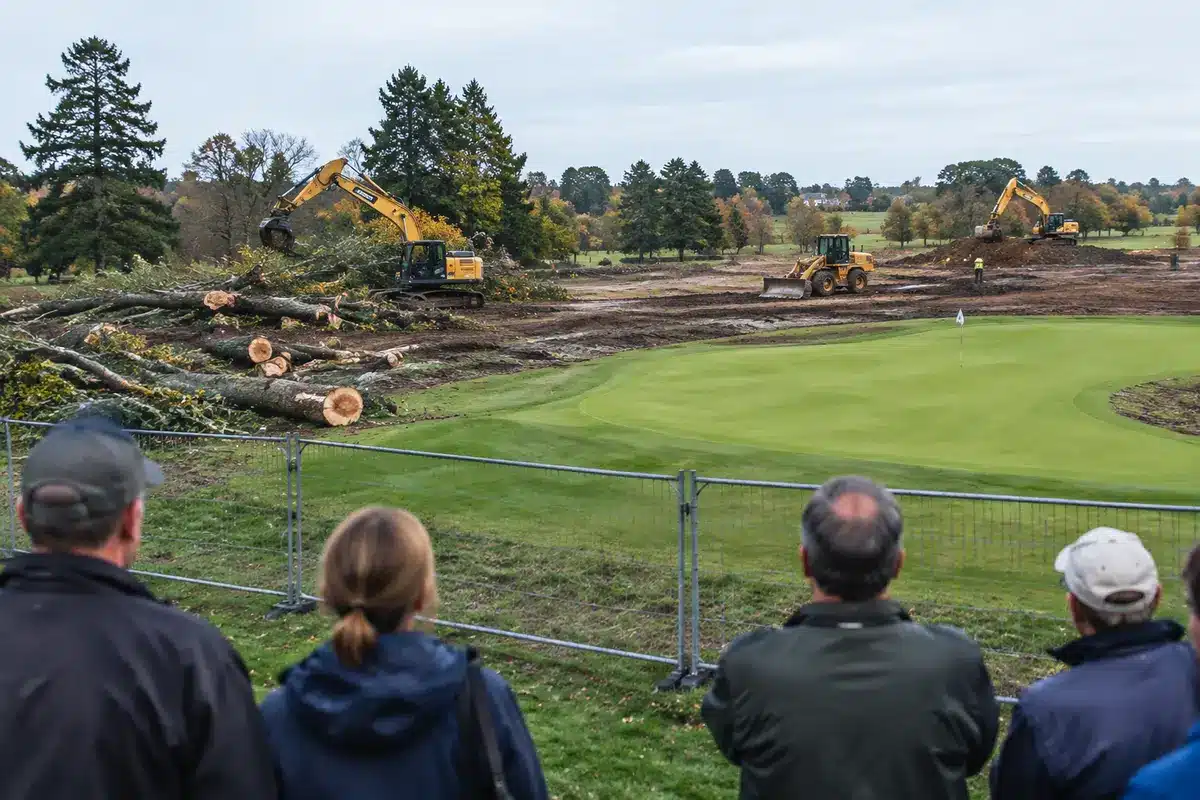
- East Potomac golf course work has already involved heavy tree cutting and equipment on sensitive parkland.
Much of the work has proceeded without explicit approval from Congress. The administration has also placed allies on regulatory boards and moved projects forward through executive actions.
Why these changes are controversial
Critics say the projects bypass longstanding review processes. They argue that federal laws meant to protect historic and parkland sites were ignored or sidestepped to hurry construction before the end of the term.
Supporters in the White House have described the work as beautification and restoration. Opponents see a pattern of rushed decisions, with many initiatives now tied up in litigation.
What was intended as fast action has left several projects waiting on court rulings and regulatory disputes.
Legal battles and administrative pushback
Courts are already being asked to decide the fate of multiple projects. Some lawsuits challenge the process used to approve work. Others focus on environmental and historic-preservation statutes.
Experts say judges will weigh whether federal rules were followed and whether officials misrepresented facts in filings and hearings.
Congressional options to stop or slow construction
Democrats returning to the majority say they will use legislative and oversight tools to intervene. Lawmakers have several levers to exert control.
Cutting or restricting funding
One practical route is to use appropriations language. Congress controls federal spending, and lawmakers can insert limits to block money from going to specific projects. That approach is likely to be more feasible than passing bills that would be vetoed.
- Power of the purse: Appropriations can bar federal funds from paying for renovations or new builds.
- Short-term funding deadlines create near-term opportunities to add restrictions.
- Capping how national park fees are redirected could prevent local projects from drawing funds meant for national parks.
Oversight, subpoenas and record preservation
Another major tactic is oversight. Committees can issue subpoenas, hold hearings, and require officials and contractors to preserve documents and communications.

Lawmakers have already sent preservation letters to agencies and private firms connected to work around the capital. Subpoenas could follow if voluntary cooperation is limited.
Which projects Democrats are prioritizing
Officials say they will focus on the most consequential and irreversible changes. That likely means targeting projects that carry significant physical or symbolic weight, or those moving so rapidly courts can’t stop them in time.
- East Potomac Park renovations and golf course alterations.
- Plans for the triumphal arch and related traffic circle work.
- Major alterations at the Kennedy Center and high-profile White House changes.
Congressional leaders have proposed specific language to block spending for some efforts. They also plan to press for clear documentation of who approved what, and how decisions were financed.
Political limits and strategic trade-offs
Even with control of the House, Democrats face obstacles. The president can veto legislation, and narrow majorities limit the range of actions members can take without bipartisan support.
Some experts warn that lawmakers may accept certain completed projects as the cost of pursuing higher priorities, like economic relief or foreign policy goals.
Still, oversight can produce tangible results: hearings and reports can expose decision-making, create public pressure, and set the stage for future legal or legislative reforms.
Following the money and public accountability
Investigations will likely center on funding streams and private donations tied to construction. Lawmakers expect that corporations and donors may be more forthcoming in testimony than current administration officials.
Congress can also place findings into the official record, providing a lasting account of how projects were planned and executed. That record can shape both public judgment and future statutory changes.
Long-term reforms to prevent repeat behavior
Some legal scholars predict a push for new laws to reduce reliance on trust and increase legal constraints on executive action. Those reforms would aim to make sure future administrations cannot pursue similar work without clear congressional authorization.
Legislation and oversight together can change the incentives and rules that govern how federal lands and historic sites are altered.