
Show summary Hide summary
- How the story unfolds: a museum discovery and a backward jump through time
- Casting and characters: who brings these historical figures to life
- A campaign pushed by chance: Garfield’s reluctant rise and the political machine
- Two ambitions, different trajectories: reformer vs. fanatic
- Visual style, tone, and relevance to today’s politics
- Strengths: acting, detail, and empathy for a forgotten leader
- Where the pacing falters: the focus on Guiteau’s spiral
- Narrative choices: adaptation, episode count, and audience impact
- Key themes and moments worth noting
- Viewing guide: who will appreciate Death by Lightning
Netflix’s new four-part limited series, Death by Lightning, revives a neglected chapter of American history. Based on Candice Millard’s book, the drama tracks President James A. Garfield and his assassin, Charles Guiteau. With Mike Makowsky at the helm and David Benioff and D.B. Weiss as executive producers, the show blends political intrigue, personal obsession, and the unsettling echoes of 19th-century America.
How the story unfolds: a museum discovery and a backward jump through time
The series begins with an eerie artifact discovery in a government medical collection. Workers find an aged specimen that belonged to the man who killed a president. From there, the narrative rewinds to the late 1870s and early 1880s.
Nas slams music industry over disrespect: teases new music, vows to address it
1992 vocal performances: 3 jaw-dropping moments that still amaze
Viewers meet Charles Guiteau as he exits another stretch behind bars. He is restless, erratic, and desperate to matter. At the same time, the show follows James Garfield, a Civil War veteran turned congressman, as party leaders drag him into the Republican National Convention.
Casting and characters: who brings these historical figures to life
- Michael Shannon plays James Garfield, conveying a quiet intellect and moral urgency.
- Matthew Macfadyen portrays Charles Guiteau, a man whose instability drives the plot.
- Betty Gilpin appears as Garfield’s wife, Crete, offering a grounded view of family life amid political chaos.
- Nick Offerman and Shea Whigham fill key roles as political allies and power brokers.
The cast anchors the series in human detail. Performances are measured, often letting small gestures reveal inner turmoil.
A campaign pushed by chance: Garfield’s reluctant rise and the political machine
Garfield never sought the presidency. A rousing speech meant for a colleague changes that. He becomes the compromise candidate in a fractious convention. The series examines how factional deals and personal ambition shape the highest office.
Garfield’s running mate and party elders exert pressure. Alliances are transactional. The show highlights the interplay of patronage, influence, and backroom negotiation that defined Gilded Age politics.
Two ambitions, different trajectories: reformer vs. fanatic
The heart of Death by Lightning is the parallel lives of its principals. Garfield fights to reform the civil service and expand rights for freed people and immigrants. Guiteau craves recognition and imagines himself pivotal to the new administration.
- Garfield’s goal: dismantle corruption and create openings for marginalized citizens.
- Guiteau’s obsession: insert himself into power by any means, rational or delusional.
These opposing drives send both men toward a fatal intersection at a train station months into Garfield’s term.
Visual style, tone, and relevance to today’s politics
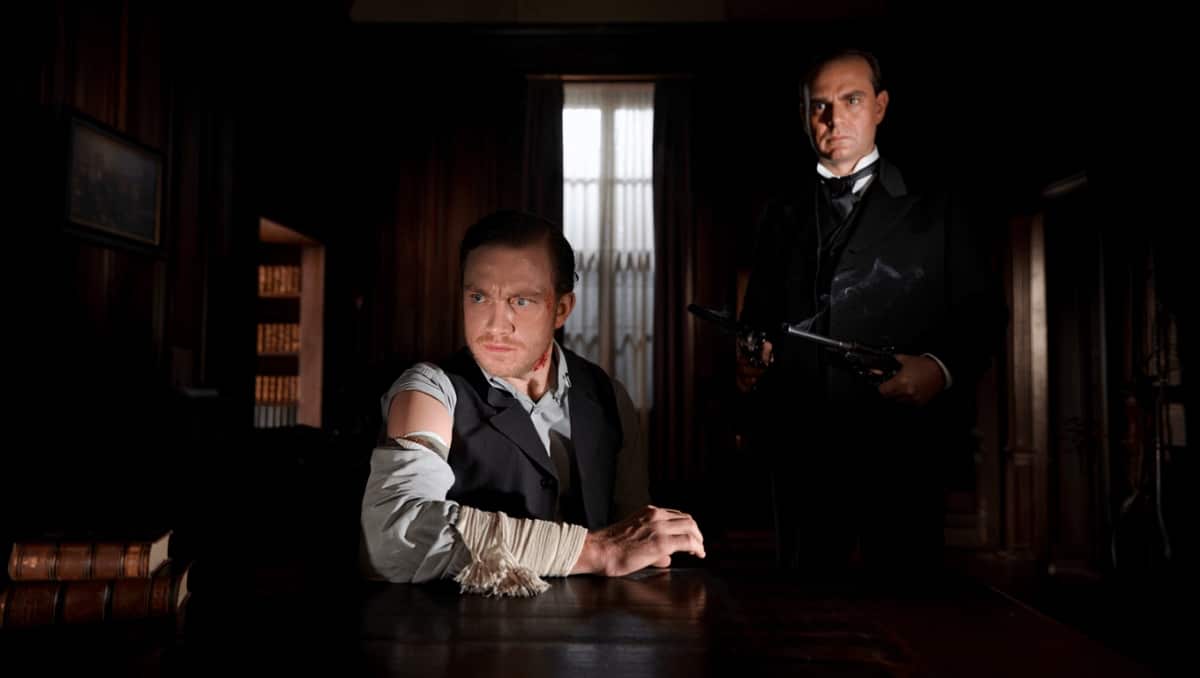
The series paints a gritty portrait of post–Civil War America. The filmic palette and production design evoke a nation still raw from war and wrestling with inequality.
At its best, the show feels topical. Scenes of patronage and elite self-interest resonate against current debates about institutional decay and political dysfunction. The series suggests that 19th-century power struggles are not merely historical curiosities but echoes that matter now.
Strengths: acting, detail, and empathy for a forgotten leader
There is clear care in recreating the era. Costumes, sets, and small historical touches give the story texture. Michael Shannon’s Garfield emerges as a sympathetic reformer, a man who might have altered the nation’s path.
- Strong period detail that grounds political scenes.
- Committed lead performances that humanize public figures.
- Story choices that center civil rights and the fight against patronage.
Where the pacing falters: the focus on Guiteau’s spiral
Despite its virtues, the series sometimes dwells too long on Guiteau’s mania. Macfadyen’s portrayal is meticulous, but extended sequences of furtive break-ins and forged documents repeat the same beats.
The show hints at traumatic backstory—cult involvement and family scars—but often prefers present-tense obsession to fully dramatizing those earlier episodes. As a result, some episodes feel lopsided.
Narrative choices: adaptation, episode count, and audience impact
Adapting a detailed nonfiction book into four episodes invites trade-offs. The series unspools with a deliberate tempo. For viewers seeking brisk political drama, this can feel slow.
At the same time, the format allows the creators to linger on character and mood. The result is a historical drama that privileges atmosphere and interior life over nonstop action.
Key themes and moments worth noting
- Institutional rot: The series scrutinizes how systems protect privilege.
- Personal delusion vs. civic duty: Two men’s inner convictions produce wildly different outcomes.
- Alternate history questions: The show asks what America might have become had Garfield survived.
Viewing guide: who will appreciate Death by Lightning
History buffs, political drama fans, and viewers who favor character studies will find much to admire. Those expecting a taut thriller may be frustrated by the measured pace.
The series is now streaming on Netflix, offering a chance to reassess a presidency cut tragically short and the man who ended it.










