
Show summary Hide summary
- Price, release timing and headline specifications
- Design tweaks and day-long comfort
- Active noise cancellation: refined but not revolutionary
- Audio performance and personalization limits
- Biggest updates from the first generation
- Who should consider Bose’s new QuietComfort Ultra
- How the headphones were evaluated
Bose’s updated QuietComfort Ultra headphones return with subtle but meaningful upgrades. The second generation aims to keep the model’s hallmark comfort while refining battery life, connectivity, and listening options. This hands-on look breaks down what changed, what stayed the same, and who might prefer these over rival premium cans.
Price, release timing and headline specifications
The new QuietComfort Ultra (2nd Gen) landed in stores in October 2025 at a $449 price point. That positions them against other high-end over-ears from Sony, JBL, and Bowers & Wilkins.
Nas slams music industry over disrespect: teases new music, vows to address it
1992 vocal performances: 3 jaw-dropping moments that still amaze
- Battery: up to 30 hours (45 hours with ANC off, 23 hours with Immersive Audio)
- Listening modes: Quiet, Aware, Immersive
- New: Cinema Mode for movies
- ANC: adjustable levels via the Bose app
- EQ: three-band adjustable equalizer in app
- Wired playback: USB-C lossless and analog auxiliary support
- Codecs: SBC, AAC, aptX Adaptive
- Bluetooth: 5.4, with Google Fast Pair and Spotify Tap
- Hardware: removable ear cups, 10 microphones, lay-flat low power mode
- Weight: 0.583 pounds
- Colors: Black, desert gold, driftwood sand, midnight violet, white
Design tweaks and day-long comfort
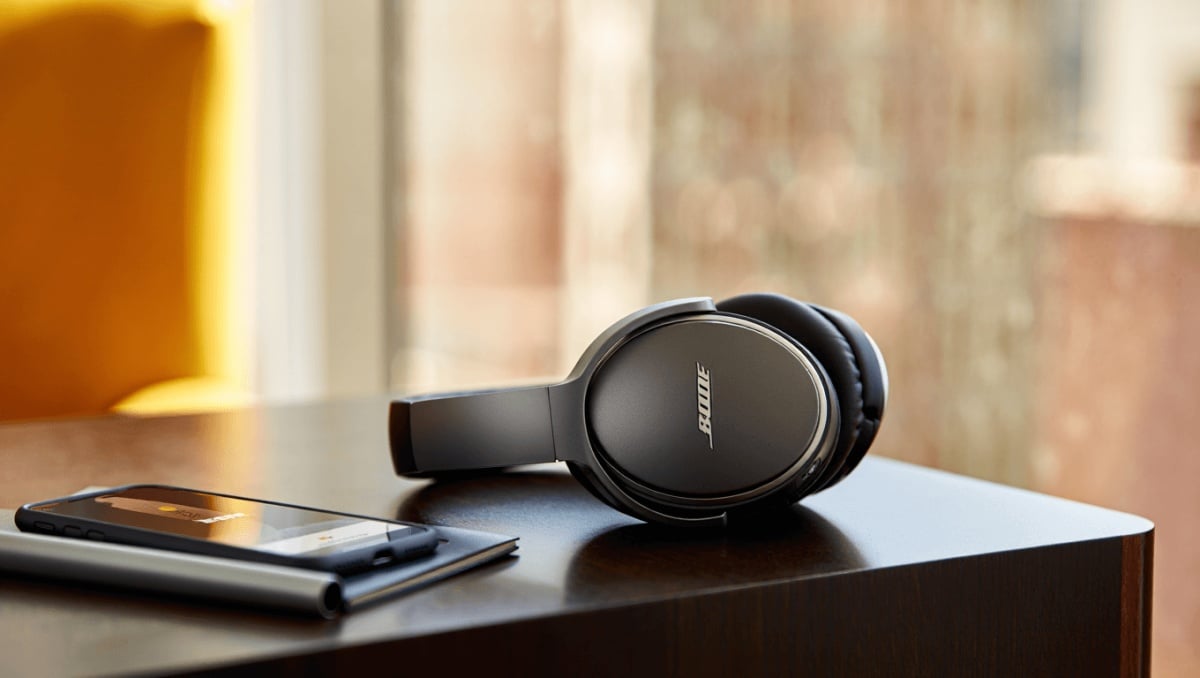
Comfort remains the QuietComfort line’s calling card. The new cushions feel a touch firmer while staying soft. That slight change reduces fatigue on long sessions.
Removable ear pads make replacements easy. That extends the useful life of the headphones.
Controls are familiar: a power/Bluetooth button, a multifunction key, and a volume strip. They’re functional, not flashy. A metal accent elevates the look and helps distinguish them from cheaper models.
Active noise cancellation: refined but not revolutionary
Bose still delivers strong ANC. In many environments the silence is impressive. But compared with the latest Sony WH-1000XM6, Bose feels slightly different.
Sony can edge out Bose on handling sudden, high-pitched spikes. Bose answers with an advantage of its own: an adjustable ANC slider in the app. That control lets you fine-tune how isolated you want to be.
I used lower ANC when I wanted situational awareness, and the top setting to block leaf blowers and vacuums. Barking and very sharp sounds sometimes poke through. That’s expected for over-ear models in real-world use.
Audio performance and personalization limits
Sound tuning is mostly enjoyable. Tracks reveal detail across lows and highs. Genres from pop to orchestral scored well in testing.
That said, Sony still leads on pure audio refinement. The QC Ultra 2nd Gen sounds excellent, but not quite at the very top for critical listeners.
Part of that feeling stems from the app’s limited EQ. A three-band equalizer and four presets offer basic shaping. At this price, some buyers may expect a deeper suite of tuning tools.
The three listening modes work as advertised. Quiet was my go-to. Aware improved over the previous model, with less background hiss. Immersive Audio is broader and more atmospheric, but it can add an echoey quality.
Cinema Mode: does it improve movies?
Bose added a Cinema Mode tuned for film sound. I tested scenes from Jaws, Interstellar, and Star Wars. The mode boosts presence and feels louder, but it doesn’t always add meaningful depth. Fans of more straightforward cinematic spatialization may feel underwhelmed.
Biggest updates from the first generation
Some of the most practical changes focus on playback and connectivity.
True wired playback and USB-C support
The first-gen model could play over an aux cable only while powered on. The second gen fixes that oversight. You can now use an analog cable for passive playback and a USB-C cable for wired lossless audio.
USB-C also charges the headphones while in use. Note: a tiny amount of battery must remain for some wired modes to activate.
More reliable Bluetooth and smarter wear detection
Bose has long struggled with inconsistent multipoint connections. These headphones improved that behavior dramatically in testing. I kept multipoint enabled without hearing choppy audio or forced reconnects.
Wear detection now includes two modes: on-head sensing and a lay-flat low-power state. Both behaved reliably. Music paused when I removed the cans, and reconnecting after laying them down was seamless.
Battery improvements and quick charge
Battery life rose from 24 to 30 hours compared with the prior model. It’s a modest but useful gain. A 15-minute charge provides roughly three hours of playback.
Who should consider Bose’s new QuietComfort Ultra
- Comfort-first users who wear headphones all day.
- Travelers who value adjustable ANC and a reliable lay-flat low-power mode.
- Buyers wanting wired options like USB-C lossless playback.
If you are an audiophile chasing the last detail, other flagship models may be worth auditioning. For comfort, practical features, and balanced noise cancellation, Bose remains a strong contender.
How the headphones were evaluated
Testing included daily wear across workdays, walks, and commuting. Music selections ranged from pop and synth-heavy tracks to orchestral scores. I compared ANC and sound to contemporaries like the Sony WH-1000XM6. Battery and connection behavior were measured through real-world use and repeated reconnection cycles.










