
Show summary Hide summary
- How a single TV moment reshaped political television
- A friendship that crossed professional boundaries
- Performances, design, and the storytelling approach
- What the series explores well — and what it skirts
- Context: politics, media and changing public habits
- Key themes the drama raises for modern audiences
- Where the drama lands on its central questions
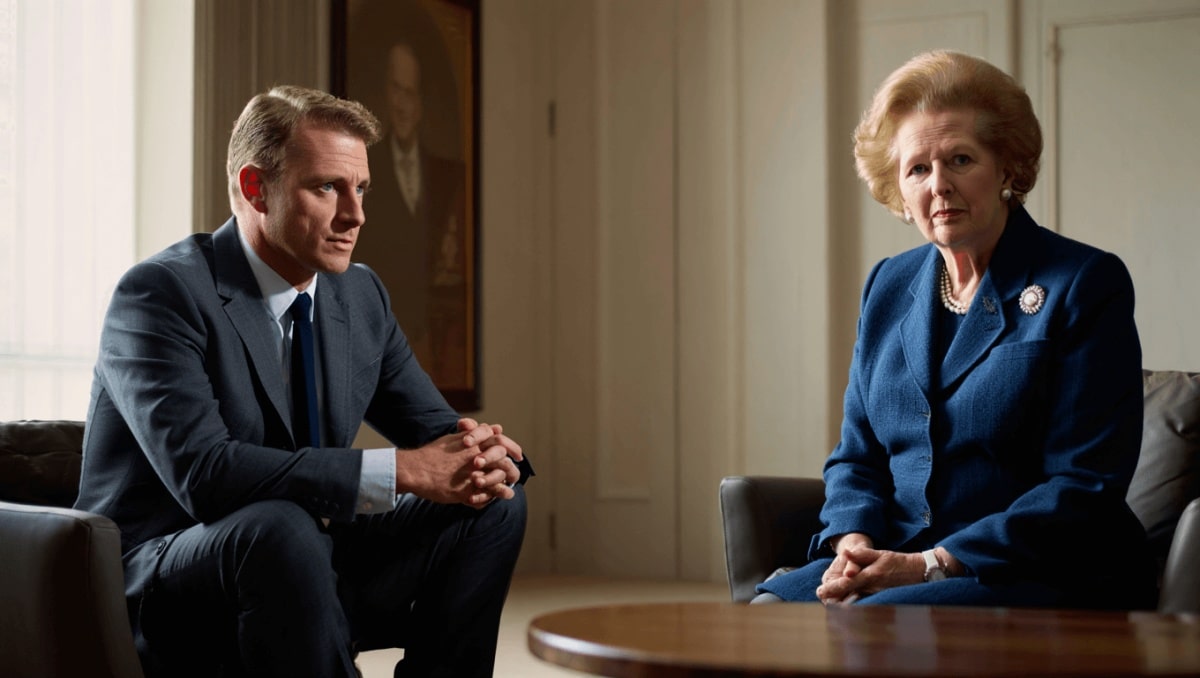
Stephen Frears’s two-part drama Brian and Maggie revisits a notorious 1989 television encounter between Margaret Thatcher and journalist Brian Walden. The series probes how a public clash became a private unraveling, and asks what has been lost as in-depth political interviews faded from broadcast screens.
How a single TV moment reshaped political television
The centerpiece of the miniseries is the live, combative interview that aired days after the resignation of Chancellor Nigel Lawson. The scene is staged as a public confrontation that many believe accelerated Thatcher’s political decline. In the show, the exchange is less a single performance and more a turning point for both participants.
Nas slams music industry over disrespect: teases new music, vows to address it
1992 vocal performances: 3 jaw-dropping moments that still amaze
- The on-air standoff: Walden presses for explanations about the chancellor’s departure. Thatcher repeats rehearsed lines and deflects responsibility.
- Broadcast impact: The episode dramatizes how that interview altered public perception, and suggested a modern era in which lengthy political grilling became rarer.
- Legacy question: The series posits that the era of durable, sustained political interviews has dwindled.
A friendship that crossed professional boundaries
Rather than a strict political biography, Brian and Maggie centers on an ambiguous, decade-long rapport between interviewer and prime minister. Their relationship moves between admiration and rivalry, and sits uncomfortably between public duty and private complicity.
From early encounters to mutual influence
The drama traces their first meetings in the late 1970s, when Walden pivots into television and Thatcher rises in Conservative ranks. They find common ground in upbringing and belief in merit. Over time, that common ground morphs into a quid pro quo of access and favorable coverage.
- Walden’s working-class tone makes him appealing to producers seeking a different voice on air.
- Thatcher values interviews that treat her seriously, and borrows language that enhances her public image.
- At one point Walden crosses a line, shaping a speech for the prime minister without full disclosure.
Performances, design, and the storytelling approach
Steve Coogan portrays Brian with a mix of ambition and moral tension. Harriet Walter embodies Thatcher, making her resolute yet human in fleeting moments. The production choices reinforce the era and the personalities at the center.
- Acting: Coogan captures a journalist growing sharper with purpose. Walter anchors the role with understated ferocity.
- Visuals: Period detail in sets and costumes evokes the 1980s convincingly.
- Pacing: At under two hours total, the drama compresses events and focuses on intimate scenes.
What the series explores well — and what it skirts
The drama excels in showing the chemistry that sustained the pair, and how proximity produced ethical blind spots. Yet it leaves some deeper threads underexamined.
- It effectively dramatizes the emotional give-and-take behind interviews.
- It hints at misogyny around critiques of a female leader, but doesn’t dig deeply.
- Broader policy consequences of Thatcher’s era are suggested by montage, not explored in depth.
Context: politics, media and changing public habits
James Graham’s script places individual behavior against a shifting media landscape. Scenes alternate between newsroom debates and private conversations, tracking how television both shaped and reflected political fortunes.
Culture and consequence
The show briefly sketches the cultural shifts of the decade. It presents glimpses of punk, markets, and militarized moments as background texture. These moments hint at societal change without anchoring a cohesive argument about cause and effect.
Key themes the drama raises for modern audiences
Brian and Maggie nudges viewers to consider the trade-offs between intimacy and accountability. It asks whether closeness helps truth or blinds reporters to conflicts of interest.
- Proximity risk: Personal rapport can become professional compromise.
- Public scrutiny: Rigorous interviews once held power to account in ways that feel rare today.
- Media evolution: The series implies that short-form, personality-driven media has replaced complex political interrogation.
Where the drama lands on its central questions
Frears’s miniseries neither sanctifies nor vilifies its subjects. It allows admiration and criticism to coexist. Some scenes celebrate the craft of long-form questioning; others reveal the moral ambiguity of a journalist who becomes politically involved.
The result is a portrait that invites debate rather than resolving it. Viewers are left to weigh whether the real loss is the decline of rigorous interviews or the blurring of personal loyalty and professional duty.










