
Show summary Hide summary
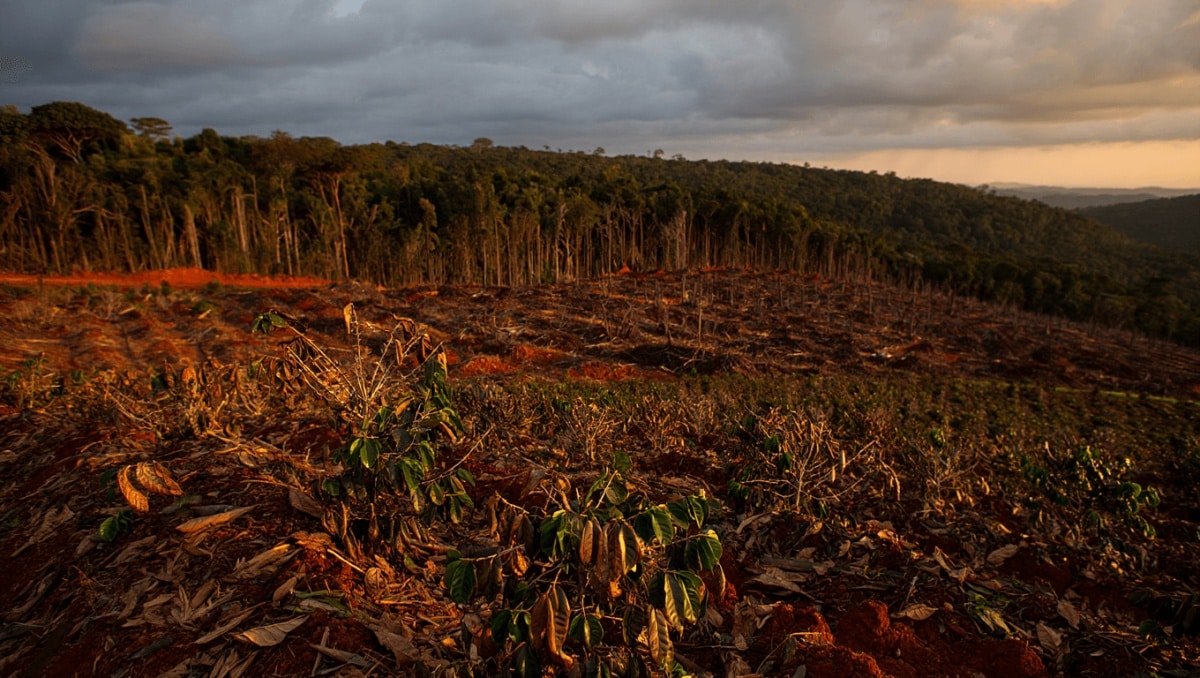
Demand for coffee keeps rising, yet the ways producers chase higher yields are undercutting the crop’s future. In Brazil, expanding coffee farms are eating into forests, and that loss is already making the climate less favorable for growing beans.
Where coffee has pushed into the forest
New analysis from the advocacy group Coffee Watch mapped land-use changes across Brazil’s coffee regions from 2001 to 2023. The findings show significant forest loss tied to coffee cultivation.
Nas slams music industry over disrespect: teases new music, vows to address it
1992 vocal performances: 3 jaw-dropping moments that still amaze
- More than 1,200 square miles were cleared specifically to grow coffee during that period.
- Across zones dense with coffee farms, the total forest area lost exceeds 42,000 square miles. That includes both direct clearing and indirect loss from roads and related development.
- Researchers relied on satellite imagery, official land-use records, and forest-loss alert systems to build the picture.
While cattle ranching remains the top driver of deforestation in Brazil, experts warn coffee’s role has not received enough attention.
How losing trees makes coffee harder to grow
Tropical forests play a central role in local rainfall. Trees absorb water from soil and release moisture into the air through evapotranspiration.
When forests are removed, that moisture loop weakens. The region receives less rain, soil dries out, and drought risk rises—conditions that reduce coffee yields and stress plants.
Reduced rainfall in Brazil’s main coffee zones has been a recurring pattern in recent years, according to the report. That trend raises questions about the long-term viability of expanding coffee into cleared land.
Market forces and policy pressures behind expansion
Global appetite for coffee drives producers to find more land. As one researcher put it, meeting growing demand often comes down to acquiring more acreage.
Other factors contributing to expansion:
- Higher prices and volatile markets incentivize rapid scale-up.
- Infrastructure—roads and new settlements—opens remote forest areas to farming.
- Regulatory enforcement varies by region, influencing how easily forests can be converted.
Some observers note that recent government efforts in Brazil have curbed deforestation in parts of the country. Still, the coffee industry may require stronger safeguards to avoid further forest loss.
Practical methods that reduce harm—and why they lag
There are agroecological practices that keep trees in the landscape while producing coffee. But they face economic and technical hurdles.
Promising approaches
- Shade-grown coffee, where canopy trees shelter coffee plants.
- Agroforestry systems that mix coffee with timber and other crops.
- Crop diversification to reduce reliance on single-crop income.
Key barriers to wider adoption
- These systems usually yield less coffee per hectare than industrial monocultures.
- Farmers need financial incentives, technical support, and market access.
- Supply chains and buyers rarely pay premiums large enough to offset lower yields.
What buyers and consumers can do now
Experts urge coffee companies to stop purchasing beans grown on recently cleared forest land. They also call for stronger traceability in supply chains.
- Buyers can adopt strict sourcing policies that screen for deforestation.
- Certifiers and traders can raise standards for agroforestry and shade-grown coffee.
- Consumers can look for verified sustainability labels and support brands that reward good practices.
Researchers say shifting purchasing habits and building incentives for sustainable producers could help slow the conversion of forests to coffee farms.
How incentives could tip the balance toward sustainability
To make sustainable coffee economically viable, experts recommend combining market signals with policy tools.
- Payments for ecosystem services to reward farmers for preserving trees.
- Access to low-interest loans and technical training for transitioning farms.
- Government enforcement to prevent illegal clearing and to protect remaining forest.
Ultimately, change depends on coordination among producers, corporations, governments, and consumers to align short-term profits with long-term climate and crop security.










