
Show summary Hide summary
- A single exchange that changed the conversation about Mansfield Park
- Why this book feels stranger than Austen’s other novels
- Plantation money and name-dropping: the book’s colonial fingerprints
- How critics have framed the silence: the Said intervention
- Alternative readings: satire, coded protest, or compromise?
- Arguments for a coded critique
- Arguments for a pragmatic or centrist stance
- Names, echoes, and the case for satirizing the plantation elite
- What the novel clearly insists on: the test of character
- How Mansfield Park helps us read historical moral compromise
- Four questions the novel forces us to keep asking
- Ongoing debates and why they matter for readers and historians
- Practical ways to approach the novel today
- Austen’s careful phrasing leaves room for interpretation
- Questions that remain open in Austen studies
Jane Austen’s fiction sits at an odd crossroads: beloved for its wit, yet shadowed by the empire that enriched its world. One moment in Mansfield Park pulls this tension into the foreground. A modest question at a dinner table opens a debate that still divides scholars. What did Austen think about slavery? And how should we read a novel whose comforts rest on colonial profit?
A single exchange that changed the conversation about Mansfield Park
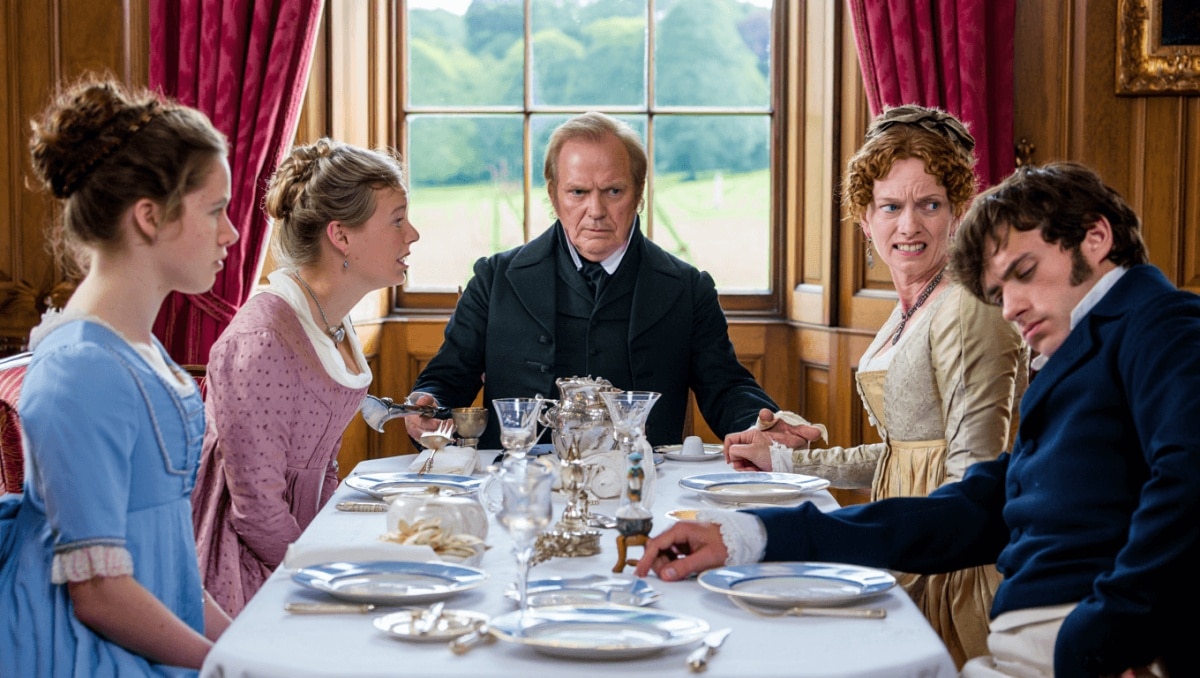
There is a brief but charged scene in Austen’s third published novel that critics return to again and again. A young woman of limited means asks about the slave trade. The room responds with silence. That hush has been read as avoidance, guilt, or a symptom of a culture that would rather not name the source of its luxury.
Nas slams music industry over disrespect: teases new music, vows to address it
1992 vocal performances: 3 jaw-dropping moments that still amaze
The characters involved are telling. Fanny Price, quietly moral and socially meek, raises the subject. Edmund Bertram, her cousin and moral confidant, listens. Sir Thomas Bertram, the family patriarch, is the absent center whose wealth has come from plantations in the West Indies. The scene is short. But its implications are long and knotty.
Why this book feels stranger than Austen’s other novels
Mansfield Park sits out of step with its more popular siblings. Readers often find it stern and earnest. Its heroine is not witty, but cautious. She resists charm and theatricality. Early readers were puzzled. Critics have alternately dismissed and defended it across two centuries.
- Fanny Price: inward, modest, morally firm.
- Other heroes: lively, clever, joyous.
- Plot energy: moral testing rather than social satire.
Part of the novel’s difficulty is the way prosperity is presented. The estate’s comforts rescue Fanny from poverty. Yet those comforts derive from a plantation economy. Austen never turns the book into a treatise about empire. Still, the presence of colonial wealth is constant and quietly influential.
Plantation money and name-dropping: the book’s colonial fingerprints
When you follow the money in Mansfield Park, you end up in Antigua. Sir Thomas travels there. He tends to problems that are never fully described. The narration assumes readers will recognize the significance without spelling it out.
Austen also scatters names and echoes that literate readers of her day would notice. Some of these names point toward famous legal and commercial figures tied to West Indian plantations and the politics around slavery. That layering suggests the novel is not blind to the broader world beyond English country seats.
How critics have framed the silence: the Said intervention
Edward Said’s influential essay reframed the debate. He argued that Austen’s fiction reflected an imperial worldview so natural it went unremarked in the novels. In Mansfield Park, Said saw a gap where the realities of plantation life should be. For him, that gap was meaningful. It signaled cultural avoidance.
Said’s reading helped create a field of postcolonial literary study. His claim was not that Austen was openly pro-slavery. Rather, he suggested that empire shaped values and tastes in ways Austen’s irony rarely exposed. The novel’s polite omissions, he argued, are part of its architecture.
Alternative readings: satire, coded protest, or compromise?
Since Said, other scholars have pushed back. They offer at least three broad alternatives.
- Satire of new money — Austen mocks the manners and soft morals of families who bought status with colonial fortunes.
- Hidden abolitionism — Some propose Austen encoded anti-slavery signals to avoid censure while still critiquing empire.
- Moderate reformer position — Others think Austen likely opposed the slave trade but accepted the existing institution of slavery as an economic reality.
Each view reads the same textual hints in a different light. Details such as property names, character foibles, and offstage plantations become evidence for opposing theories.
Arguments for a coded critique
Several modern commentators argue Austen used symbolism and subtle reference to critique slavery and the institutions that supported it. They point to recurring images and wordplay as deliberate signals. In this model, Austen is cautious but morally committed.
Proponents highlight Austen’s reading habits and family connections. She read contemporary history and was connected to relatives sympathetic to abolitionist causes. Those facts strengthen the case that she may have wished to rebuke exploitation without turning her fiction into a polemic.
Arguments for a pragmatic or centrist stance
Other scholars urge caution about labeling Austen a covert radical. Public debate about the West Indies was common in her time. Fiction that treated the subject was not necessarily dangerous. Many writers addressed colonial topics openly.
One persuasive middle-ground theory is that Austen criticized the slave trade while accepting the existing practice of slavery. That position was widespread then. It allowed genteel readers to denounce the horrors of kidnapping and trafficking while tolerating slavery in colonies already built on the system.
Names, echoes, and the case for satirizing the plantation elite
Another strand emphasizes Austen’s satire. The Bertrams can be read as figures of ridicule. Their complacency, moral laxity, and social pretensions align with stereotypes of the newly wealthy planter class. In this reading, Austen exposes moral rot by showing how a genteel household thrives on remote violence.
Details that support this reading include:
- Character traits that echo public critiques of planter families.
- Allusions to prominent legal and commercial actors of the period.
- Narrative emphasis on the consequences of self-indulgence and vanity.
What the novel clearly insists on: the test of character
Regardless of the anti-slavery reading you favor, Mansfield Park delivers a strong moral point. The novel asks readers to decide who counts as truly good. Is it the charming flatterer or the quietly resolute person who refuses to profit from misfortune?
Fanny’s refusal to accept easy pleasure frames Austen’s ethical demand. She chooses duty and integrity over social reward. That refusal creates the book’s highest dramatic charge. It also functions as a critique of apparent kindness that masks complicity.
Why charm can be deceptive
One of Austen’s sharper lessons is that charm is not a reliable moral guide. The most magnetic characters may lack steady conscience. The narrative shows how social allure can obscure cruelty and selfishness.
How Mansfield Park helps us read historical moral compromise
Mansfield Park offers a way to study how people accommodate horrors woven into their prosperity. The novel does not hand modern readers an answer. But it does map how ordinary sensibilities can normalize injustice.
That mapping has value for today. It helps us ask how societies justify systems that benefit many at the cost of others. It also warns about the seductive power of comfort and reputation.
Four questions the novel forces us to keep asking
- Can moral people live comfortably on wealth built by others’ suffering?
- When is silence about wrongdoing complicity?
- How do charm and sympathy distract from structural harm?
- What does it take, in private and in public, to push against an entrenched system?
Ongoing debates and why they matter for readers and historians
Scholars still sift Austen’s sentences to find clues. They cross-reference letters, contemporary reviews, and legal history. Some see echoes of public cases and political anxieties. Others emphasize Austen’s literary craft and her habit of moral ambiguity.
The debate is not merely academic. It shapes how we teach literature, how cultural institutions frame the past, and how readers reconcile admiration for art with discomfort about its circumstances. A novel like Mansfield Park becomes a testing ground for larger questions about national memory and responsibility.
Practical ways to approach the novel today
Readers approaching Mansfield Park can try several strategies to keep the text alive and relevant.
- Read contextually. Pair the novel with historical accounts of West Indian slavery.
- Notice absences. Ask why certain events are named and others left offstage.
- Track language. See how words of taste and refinement mask economic realities.
- Compare characters. Note how moral strength shows up in restraint rather than wit.
Austen’s careful phrasing leaves room for interpretation
Austen chose a restrained voice. Her novels rarely issue direct political manifestos. Instead, they stage moral situations and invite judgment. That restraint frustrates modern readers looking for clear answers about slavery.
Still, restraint is itself a rhetorical choice. The novel’s silences, indirect allusions, and domestic focus all count as part of its argument. They force readers to look beyond the drawing-room to the sources of comfort that sustain those rooms.
Questions that remain open in Austen studies
- Did Austen personally support abolition in all its forms?
- Was Mansfield Park written to shield a covert radical voice or to mirror the tolerances of its day?
- How much should we judge literature by the politics of its author’s milieu?
- Can we separate aesthetic achievement from moral complicity?
Those are not the sort of questions that end with neat closure. They are better understood as prompts for continued reading, teaching, and debate. The novel keeps returning to us precisely because it refuses to make the easy moral move. It demands that readers decide, again and again, what counts as courage when comfort is at stake.










