
Show summary Hide summary
- Four personal dramas anchored to one day
- How the series frames violence and restraint
- Performances that hold the narrative
- Storycraft: focus, limits and moral questions
- Structure, runtime and viewer experience
- Choices about realism and ethical responsibility
- Technical approach and visual language
- Where Red Alert lands in the aftermath genre
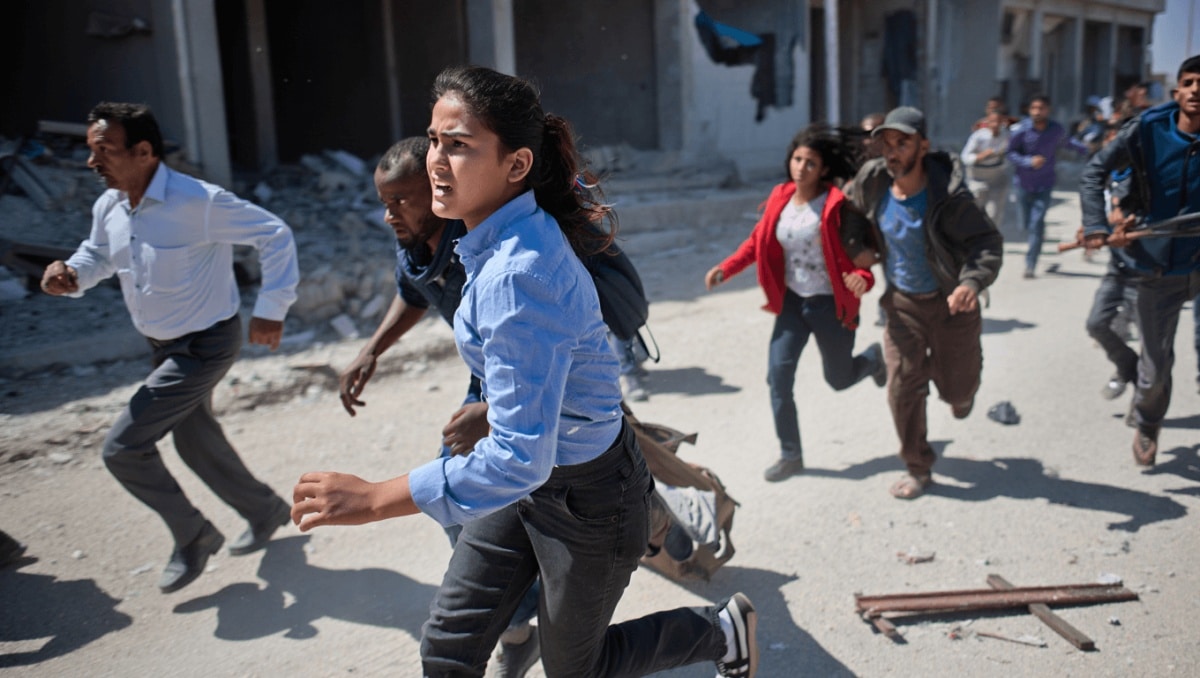
Lior Chefetz’s new limited series Red Alert drops viewers into the chaos of October 7 with an insistently close lens. The show forgoes big-picture questions and instead traces a few raw, immediate human stories. The result is intense, sentimental, and crafted to provoke a strong emotional response.
Four personal dramas anchored to one day
Red Alert concentrates on a handful of lives during the Hamas assault on Israel. The timeline covers a tight span of hours. Flashbacks appear sparingly. Each episode stays rooted in a small radius of action.
Nas slams music industry over disrespect: teases new music, vows to address it
1992 vocal performances: 3 jaw-dropping moments that still amaze
- Festival security and a fractured marriage: A counterterrorism officer working undercover at a music festival separates from his partner before the attack. She remains inside the festival when chaos erupts.
- A car at Ma’On Junction: A Gazan man driving his family across a junction encounters an armed convoy. The encounter becomes catastrophic.
- Nir Oz under siege: A kibbutz family rushes into a shelter room. A broken door turns their refuge into a site of brutal choices.
- A mother and a soldier-son: In a nearby village a mother seeks to protect her grown children as her soldier son runs toward danger.
How the series frames violence and restraint
Chefetz largely avoids graphic spectacle. Much of the horror is felt rather than shown. Scenes rely on sound and reaction to build dread.
- Explosions, gunfire and interceptors are distinguished by audio cues. Viewers learn to read fear through these differences.
- On-screen gore is limited. Brief, stark images hint at brutality without indulging in lurid detail.
- There are moments that verge on voyeuristic. One shot lingers on a violent aftermath longer than necessary.
The series chooses to minimize Hamas footage. It uses a little archival surveillance video, but not the propaganda streams circulated by the attackers.
Performances that hold the narrative
Red Alert depends on actors to sustain tension in confined spaces. The cast delivers in ways that often offset uneven writing.
- A lead pair sell a separated-but-connected partnership with brief, charged exchanges. Their bond drives much of the emotional weight.
- A veteran actor playing a Gazan living in Israel elevates a thinly sketched role. His presence resists tokenism.
- Child and adolescent performers contribute crucial, heartbreaking moments. One young actress stands out with a transformative arc.
Small, contained scenes let performers do heavy lifting. Close-ups, whispered lines and panicked silences become the show’s emotional engine.
Storycraft: focus, limits and moral questions
The series deliberately narrows its scope. It refuses to answer big strategic questions about intelligence failures, political causation, or moral aftermaths. Instead, it asks the viewer to bring context from outside the show.
- There is no effort to humanize the attackers. They remain mostly anonymous and dehumanized.
- Only one militant gets a name and lines. The choice underlines the series’ refusal to give the perpetrators a full narrative.
- Some plot beats feel engineered for maximum effect. Suspense sometimes hinges on predictable moments, like whether an infant will cry.
Structure, runtime and viewer experience
Four episodes, each about 45 minutes, keep the storytelling compact. The limited format helps maintain intensity. It avoids sprawling subplots.
- The pacing alternates between frantic movement and claustrophobic waiting.
- Sequences switch between characters in action and those hiding in shelters.
- Sound design plays a major role in sustaining tension throughout.
Choices about realism and ethical responsibility
Chefetz balances faithful detail and narrative shaping. Real people inspired the characters. The series closes with footage of the actual individuals behind the dramatized threads.
That final turn grounds the drama in documented reality. It underlines that the painful scenes reflect events that happened on October 7, 2023.
At the same time, the show is unabashedly designed to elicit sympathy. It is a product meant to move viewers, and it does so with calculated techniques.
Technical approach and visual language
Cinematography shifts to match tone. Handheld cameras heighten intimacy in action. Drone shots are used frequently to suggest scale.
- Handheld setups lend immediacy to chase and combat moments.
- Drone footage occasionally becomes overused but aims to show broader movement across landscapes.
- Sound editing separates types of gunfire and explosions to teach viewers what characters are hearing.
Where Red Alert lands in the aftermath genre
Scripted works made soon after mass trauma face scrutiny. Many such efforts risk misreading the emotional calendar of audiences.
Red Alert chooses not to wait. It aims for urgency. For some viewers, that will feel necessary. For others, it may be too raw.
Within its chosen constraints, the series often succeeds at making an immediate human toll feel real. It is designed to be felt more than debated.










