
Show summary Hide summary
- Drone Awards 2025: the winning image that stunned judges
- Dhaka revealed: an aerial panorama of river and city
- Boli Khela from above: tradition, tension and crowds
- Fujian’s seaweed fields: aerial patterns on the coast
- Lake Urmia’s crisis: a ship stranded on salt
- Ganges aarti from above: devotion, flame and crowd
- Italian hot springs: people as a miniature landscape
- What judges prize in aerial photography
- About the reporter
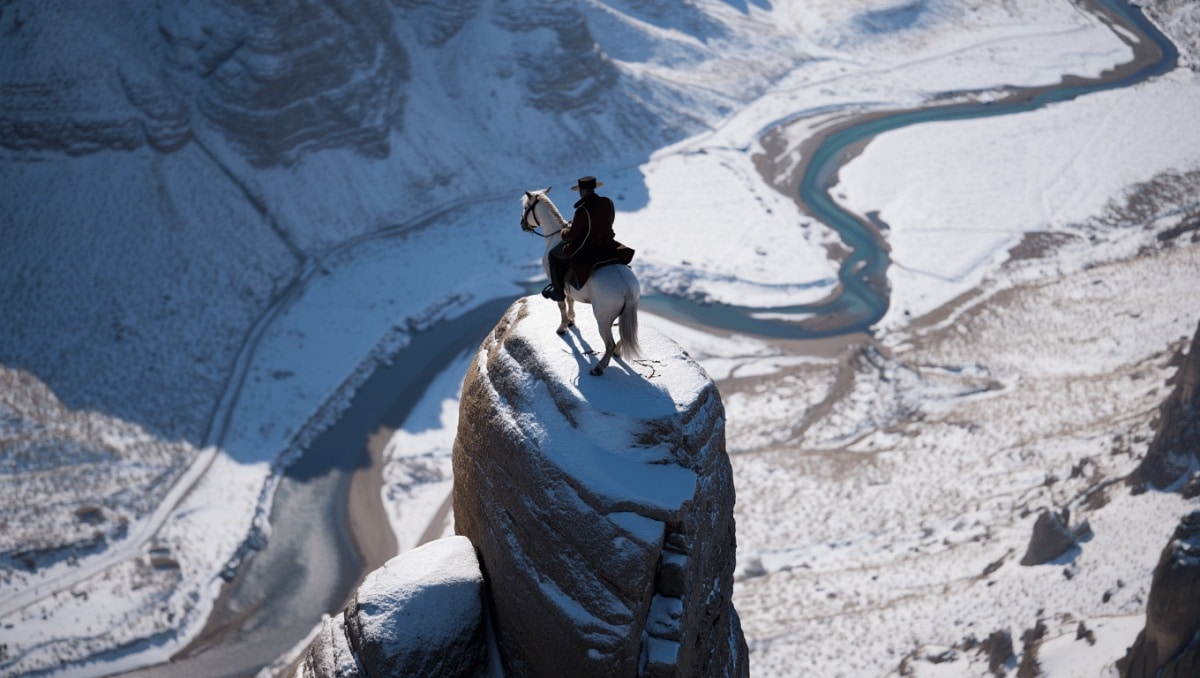
A striking photograph of a lone rider bathed in light on snowy rock spires has captured global attention — and it wasn’t shot from a hilltop. The image, and several others from around the world, reveal how drones are changing visual storytelling. These aerial frames win awards by blending technical skill with new ways of seeing familiar places.
Drone Awards 2025: the winning image that stunned judges
The top prize went to a German filmmaker for an image titled “The Lone Horseman”. Shot in Cappadocia, Turkey, the picture replaces the region’s usual summer crowds with a quiet winterscape. Snow, jagged rock chimneys and a single horseman create an almost surreal tableau.
Nas slams music industry over disrespect: teases new music, vows to address it
1992 vocal performances: 3 jaw-dropping moments that still amaze
How the shot was created
- Photographer: Dennis Schmelz, filmmaker based in Germany.
- Location: Cappadocia’s iconic rock formations, at sunset in winter.
- Technique: two vertical drone frames stitched into a panorama.
- Visual trick: the angle makes the plateau appear to float; a concealed path gives access in reality.
Schmelz sought a quiet mood rather than tourist bustle. From above, he arranged the rider at the visual center and used light and composition to transform the landscape into a stage.
Dhaka revealed: an aerial panorama of river and city
A panoramic drone mosaic reframes Dhaka as a study in urban contrast. The Buriganga River bisects the scene: dense neighborhoods on one bank and boatyards on the other.
Details behind the frame
- Photographer: Fran Arnau, creative director based in Barcelona.
- Method: 12 drone images merged into one wide panorama.
- Lighting: early morning glow emphasized textures and lines.
From the air, the city’s chaotic density patterns meet the ordered geometry of lined-up vessels. The stitched panorama highlights Dhaka’s link to the river and its layered urban life.
Boli Khela from above: tradition, tension and crowds
A century-old wrestling festival in Chittagong was immortalized in a single aerial frame. The photo captures the ring, the athletes and the swarm of spectators packed around the contest.
Context and composition
- Photographer: Mohammad Shahriar Foisal, businessman and drone enthusiast.
- Event: Abdul Jabbar’s Boli Khela, founded in 1909 during anti-colonial times.
- Focus: action in the ring and the festival’s collective energy.
Foisal positioned his drone to capture both the physical intensity of the match and the cultural weight of the gathering. He calls the photo a tribute to a living tradition.
Fujian’s seaweed fields: aerial patterns on the coast
From above, seaweed farms near Xiafu trace elegant S-shapes along bamboo stakes. The geometry is visible only from a high vantage point.
Technical note
- Photographer: Sarah Wouters, Dutch travel photographer based in Bangkok.
- Subject: long bamboo poles used for seaweed cultivation.
- Challenge: sudden rain arrived minutes after the shot.
Wouters says the interlaced stakes create flowing lines that drones can reveal. Timing and weather turned a routine flight into an award-winning image.
Lake Urmia’s crisis: a ship stranded on salt
A drone frame of a grounded ship on a dried lakebed makes a powerful environmental statement. White salt ridges surround the vessel like a fossilized shoreline.
Meaning and methods
- Photographer: Mohammad Ataei Mohammadi, Iranian documentary photographer.
- Journey: an 870-mile drive to document Lake Urmia’s drought.
- Causes highlighted: water mismanagement, heavy agricultural extraction, dams and climate change.
Mohammadi uses aerial imagery to layer beauty with alarm. The composition turns the ship into a symbol of industry diminished by environmental decline.
Ganges aarti from above: devotion, flame and crowd
A nighttime aerial view of the Ganges shows thousands gathered for aarti, the ritual offering of light. Boats and banks glow with clustered candles and movement.
Category winner
- Photographer: Thibault Gerbaldi, based in Miami.
- Setting: the Ganges River at dusk, people and boats participating in prayers.
- Award: first place in the People category.
Gerbaldi aimed to convey the ritual’s scale — the dense human presence, the floating boats, and a collective moment of faith visible only from overhead.
Italian hot springs: people as a miniature landscape
A sunset drone shot captures bathers in thermal pools at Cascate del Mulino. From above, the scene resembles a small, warm oasis amid cool surroundings.
Photographer and moment
- Photographer: Gilad Topaz, drone photographer from Israel.
- Scene: visitors unwinding in natural hot springs at twilight.
- Atmosphere: contrast between cold air and warm water amplified by soft sunset light.
Topaz arrived prepared for the chill and launched his drone to frame the human clusters as a textured, joyful pattern.
What judges prize in aerial photography
Industry judges praised images that combine technical precision with storytelling. They singled out photographs that offer fresh perspectives on known places.
Key criteria
- Composition: careful shooting angles and balanced elements.
- Technique: panorama stitching, exposure control, and precise drone calibration.
- Storytelling: images that convey culture, crisis, or human connection.
- Original viewpoint: scenes that reveal patterns unseen from ground level.
About the reporter
Kamala Thiagarajan is a freelance journalist based in Madurai, India. She covers science, global health and development for outlets including The New York Times and The Guardian.










