
Show summary Hide summary
- How Boots came to screen: source material and creative team
- Setting and premise: 1990, Parris Island and the buddy system
- Episode structure: milestones of basic training
- Main characters and the actors who play them
- Point of view and narrative devices
- Tone, genre and directorial choices
- Major themes: identity, discrimination and institutional pride
- What the series does well — and where it falters
- Miles Heizer and the ensemble: performances that carry the show
- Comparisons, visuals and cultural echoes
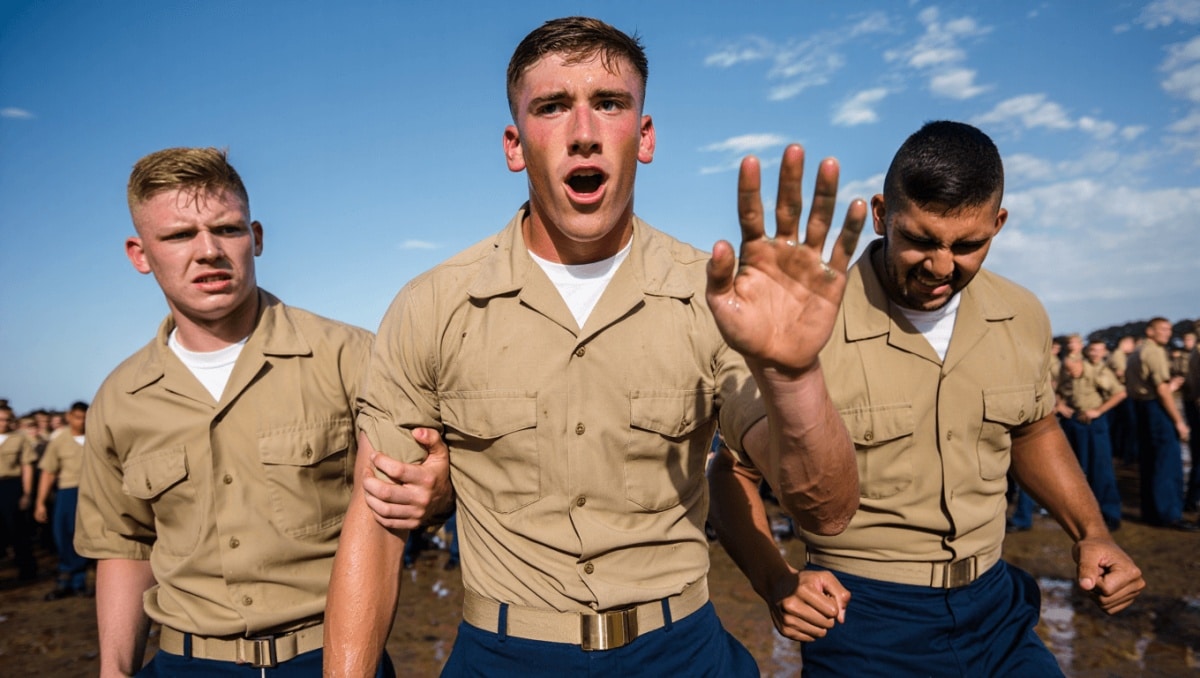
Netflix’s Boots drops viewers into the mud, shouting and awkward brotherhood of Marine basic training. The eight-episode series adapts Greg Cope White’s memoir The Pink Marine and carries a notable executive-producer credit for the late Norman Lear. It’s a coming-of-age tale that balances humor with harsh drills and asks what it truly costs to become a Marine.
How Boots came to screen: source material and creative team
The show is adapted by Andy Parker from Greg Cope White’s memoir. Parker also serves as a driving creative force.
Nas slams music industry over disrespect: teases new music, vows to address it
1992 vocal performances: 3 jaw-dropping moments that still amaze
Boots is billed as an eight-episode season on Netflix. Jennifer Cecil joined Parker as co-showrunner. Peter Hoar directed the pilot. The series carries what may be one of Norman Lear’s final producing credits.
Setting and premise: 1990, Parris Island and the buddy system
The story is set in 1990. That year matters because being openly gay was taboo in the military.
Cameron Cope, a young man eager for change, signs up for the Marines to train alongside his only friend. Basic training at Parris Island becomes the series’ engine.
Episode structure: milestones of basic training
The season follows the timeline of recruit training. Each episode centers on a specific benchmark.
- Obstacle-course week
- Water-based challenges
- Firearms instruction
- The Crucible, the season’s climactic test
This episodic design gives viewers a clear arc tied to the mechanics of becoming a Marine.
Main characters and the actors who play them
The series leans on a young ensemble. Cast highlights include:
- Miles Heizer as Cameron Cope, the central recruit.
- Liam Oh as Ray, Cameron’s friend and fellow enlistee.
- Vera Farmiga as Barbara, Cameron’s unpredictable mother.
- Cedrick Cooper as McKinnon, a drill instructor with presence.
- Nicholas Logan as Howitt, another drill leader.
- Max Parker as Sgt. Sullivan, a decorated and stern veteran.
- Ana Ayora as Capt. Fajardo, the company commander.
- Jonathan Nieves, Blake Burton, Angus O’Brien, Dominic Goodman and Kieron Moore in prominent recruit roles.
Several supporting performers make memorable impressions, including late arrivals who shift platoon dynamics.
Point of view and narrative devices
Cameron narrates parts of the story. That lens blends personal humor with anxiety.
The show uses a surrogate self, an on-screen alter ego who debates with Cameron. That device adds meta commentary. It works unevenly across the episodes.
Tone, genre and directorial choices
Boots mixes comedy and drama. It occasionally swings between reverent and critical.
- Some scenes feel like a recruitment ad for the Corps.
- Other moments dwell on abuse, prejudice and trauma.
- Directorial flourishes appear in training montages and muddy heroics.
Peter Hoar’s pilot sets a measured visual tone that other episodes follow.
Major themes: identity, discrimination and institutional pride
The series foregrounds the tension between selfhood and military conformity.
Boots examines how young recruits wrestle with sexual identity, race and gender in a rigid institution.
At times the show tries to condemn discrimination while also celebrating the Corps. That dual aim creates moments of friction in the storytelling.
What the series does well — and where it falters
Strengths:
- Strong central performance by Miles Heizer.
- Clear episodic momentum tied to training goals.
- A likable ensemble with several rising talents.
Weaknesses:
- Uneven handling of racism and gender barriers.
- Some characters receive flashbacks then vanish.
- Occasional overreliance on military clichés.
Miles Heizer and the ensemble: performances that carry the show
Heizer anchors the season. He plays a recruit who grows physically and emotionally through training.
Supporting actors sell both the brutality and the tenderness of boot camp. Drill sergeant roles, by necessity, can verge on archetype. Several performers find surprising depth within those constraints.
Comparisons, visuals and cultural echoes
Boots nods to classic military portrayals, including cinematic training films. References to Full Metal Jacket are intentional.
Visually, the series churns up mud, sweat and recruitment-style cinematics. It rarely reaches the iconic advertising imagery of earlier Marine campaigns, but it aims for authenticity.










