
Show summary Hide summary
- How the announcement landed and why it mattered
- Political backlash and high-profile critics
- NFL leadership pushes back and stands firm
- Bad Bunny’s own response and how he handled the heat
- Context: what similar halftime shows drew
- Numbers that frame the debate
- Logistics: Bad Bunny’s tour and schedule questions
- What the selection says about audience strategy
- Voices from fans and the industry
- Key moments to watch as show day approaches
- Open question to readers
When the NFL named Puerto Rican superstar Bad Bunny as the headline act for Super Bowl LX, the announcement ignited a storm of praise, confusion, and political criticism. Supporters celebrated a bold, culturally resonant choice. Opponents questioned the pick’s “broad appeal.” Between media sound bites and late-night jokes, the debate turned into one of the biggest cultural conversations around next year’s game.
How the announcement landed and why it mattered
On Sept. 28 the NFL confirmed Benito Antonio Martínez Ocasio—known worldwide as Bad Bunny—would perform the halftime show at Super Bowl LX. The selection immediately became more than an entertainment decision.
Nas slams music industry over disrespect: teases new music, vows to address it
1992 vocal performances: 3 jaw-dropping moments that still amaze
The implications were clear:
- Global reach: Bad Bunny streams to tens of millions monthly, giving the NFL access to vast, younger audiences.
- Cultural signal: Choosing a Spanish-language global icon marked a shift in the league’s programming priorities.
- Timing: The Super Bowl remains one of the most-watched TV events each year, magnifying any artist’s exposure.
Political backlash and high-profile critics
The announcement prompted predictable pushback from some Republican figures and conservative media. Comments ranged from puzzled to outright critical.
Notable reactions
- House Speaker Mike Johnson told reporters he was unfamiliar with Bad Bunny and called the choice “a terrible decision,” adding he doubted the artist’s appeal to a general audience.
- Former President Donald Trump, during a Newsmax interview, said he had never heard of the performer and called the selection “crazy,” blaming promoters for the pick.
- Some pundits suggested older or more traditionally patriotic performers should headline instead.
NFL leadership pushes back and stands firm
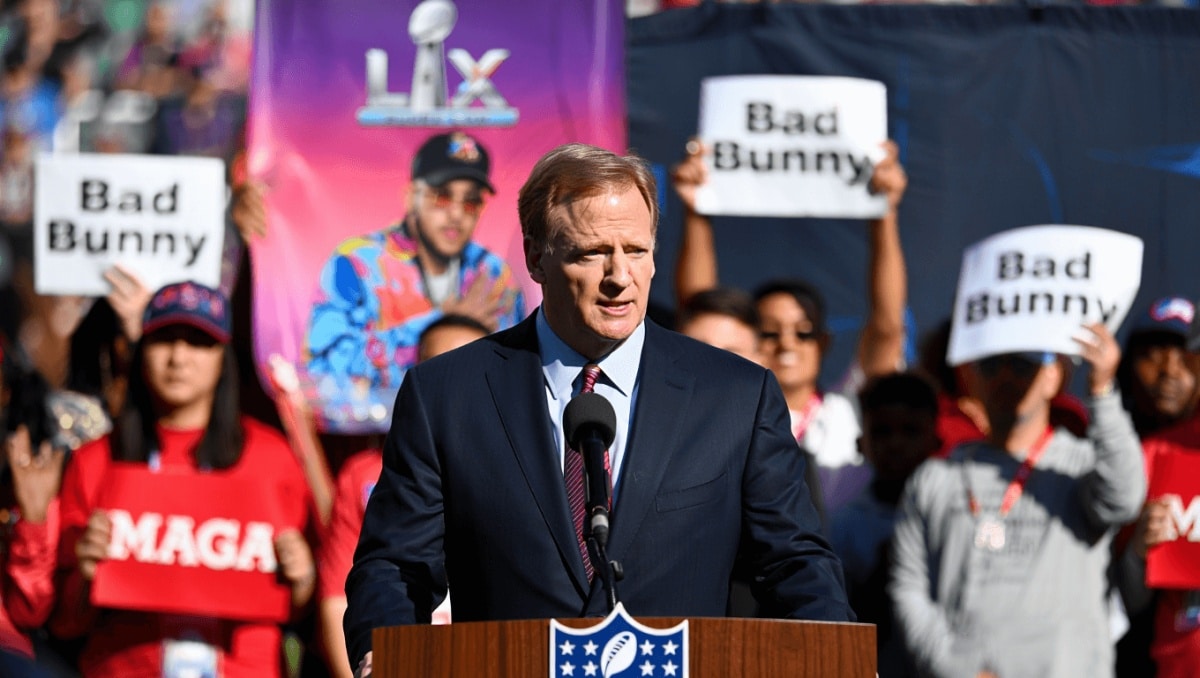
The league did not waver. Commissioner Roger Goodell defended the selection as a deliberate, well-considered move. He noted that nearly every halftime pick draws some criticism.
Goodell emphasized confidence that Bad Bunny understands the scope of the platform and that the performance would bring people together.
Bad Bunny’s own response and how he handled the heat
Rather than shrinking from the controversy, Bad Bunny addressed it with humor during the Season 51 premiere of Saturday Night Live.
- He said he was happy about the halftime slot and joked that even conservative outlets were singing his praises.
- In a comedic bit, SNL edited clips of commentators to produce a tongue-in-cheek line about Bad Bunny being “my favorite musician.”
His public reaction displayed a mix of amusement and confidence, signaling he plans to embrace the spotlight rather than avoid it.
Context: what similar halftime shows drew
To understand the stakes, consider recent streaming figures. The 2025 halftime set by Kendrick Lamar averaged about 133.5 million views across platforms.
That number shows the halftime stage reaches global audiences on a scale few other events match. The NFL appears to be betting on Bad Bunny’s massive streaming fanbase to drive engagement.
Numbers that frame the debate
- Bad Bunny: roughly 81 million monthly listeners on major streaming platforms.
- Suggested alternative Lee Greenwood: about 399,000 monthly listeners on Spotify.
- Super Bowl LX date and site: Feb. 7 at Levi’s Stadium in Santa Clara, California.
Logistics: Bad Bunny’s tour and schedule questions
Bad Bunny has a global tour titled Debí Tirar Más Fotos planned from Nov. 21, 2025, through July 22, 2026. That itinerary overlaps with the Super Bowl timeline.
Key planning items for the NFL and the artist’s team include:
- Travel and rehearsal windows around the Feb. 7 performance.
- Stage design and production that accommodate a short, high-impact set.
- Coordination with broadcasters and sponsors for prime-time promotion.
What the selection says about audience strategy
Choosing Bad Bunny signals the NFL’s intent to court younger, bilingual, and international viewers. The league is increasingly programming for diverse demographics.
The halftime slot is both entertainment and strategy: it’s a ratings magnet and a branding tool for the NFL’s future fan base.
Voices from fans and the industry
Reaction across social platforms was mixed. Some fans hailed the choice as overdue representation. Others claimed unfamiliarity or preferred different genres.
- Industry insiders note the NFL often prioritizes artists with proven streaming numbers and global cachet.
- Some commentators warned that controversy can increase viewership by creating curiosity.
Key moments to watch as show day approaches
- Official set list and guest performers announcement.
- Teaser promotions from the NFL and performer team.
- Ticketing and broadcast tie-ins that leverage the halftime moment.
Open question to readers
With the league doubling down and Bad Bunny responding with levity, will the halftime show succeed at expanding the Super Bowl’s audience?










