Show summary Hide summary
- Why Switch 2 owners have been waiting for Fortune’s Weave
- A tournament premise grows into a continent-spanning tale
- Combat and systems: tactics inside and outside the battlefield
- The world map turns strategy into a layered experience
- Extra content: dungeons, progression, and when systems overstay their welcome
- Parallel campaigns and replayability redesigned for modern players
- Expect a marathon: runtime, visuals, and performance on Switch 2
Nintendo’s second-generation console finally gets the sprawling, original RPG many players have been waiting for. Fire Emblem: Fortune’s Weave delivers deep tactics, memorable characters, and a scope that demands serious time. If you value strategic complexity and long-form stories, this is a release that will keep you invested for weeks.
Why Switch 2 owners have been waiting for Fortune’s Weave
The Switch 2 has shown off Nintendo’s strengths: standout platformers, polished ports, and renewed franchises. What it lacked, until now, was a brand-new, large-scale tactics RPG built from the ground up. Fortune’s Weave aims to fill that gap with an ambitious package.
Nas slams music industry over disrespect: teases new music, vows to address it
1992 vocal performances: 3 jaw-dropping moments that still amaze
The game brings together the familiar Fire Emblem DNA — unit-based combat, class systems, and character bonds — with new systems layered on top. It leans into long campaigns, multiple perspectives, and a variety of gameplay modes that reward planning as much as execution.
A tournament premise grows into a continent-spanning tale
Instead of a single protagonist, Fortune’s Weave opens by offering four playable leads. The first major arc revolves around a grand martial contest in the Dagdan capital. Each hero enters the competition for different reasons, and their early chapters reveal their personal stakes.
Meet the four leads and their motivations
- Leda — a performer driven by vengeance after a family tragedy.
- Cai — a youth determined to free his father from a grim fate.
- Dietrich — a wanderer who seeks ever-greater foes to test his skill.
- Theodora — a newly crowned queen balancing national identity and politics.
Each campaign reveals unique slices of the world: undercity intrigue, religious tensions, lore connections, and geopolitical maneuvering. Taken together, these arcs provide a mosaic of the game’s setting.
That said, the narrative shifts dramatically after the tournament. The opening act feels the most focused and personal. Later segments broaden the stakes and move away from the intimate conflicts introduced earlier. The result is an uneven journey: compelling in parts, diffuse in others.
Combat and systems: tactics inside and outside the battlefield
At its core, Fortune’s Weave is a turn-based tactics game. Combat uses grid maps, classes, weapon rules, terrain, and unit positioning. The title embraces the franchise’s emphasis on personalities and relationships.

- Unit bonds are fostered via activities like shared meals and events.
- Classes determine movement, equipment, and special skills.
- Maps introduce hazards and varied objectives that demand adaptive plans.
Many battles grow large and complex. Late-game conflicts can be exhausting in the best way, requiring layered strategies and careful resource management. If you enjoy mentally demanding encounters, the combat will reward patience.
The world map turns strategy into a layered experience
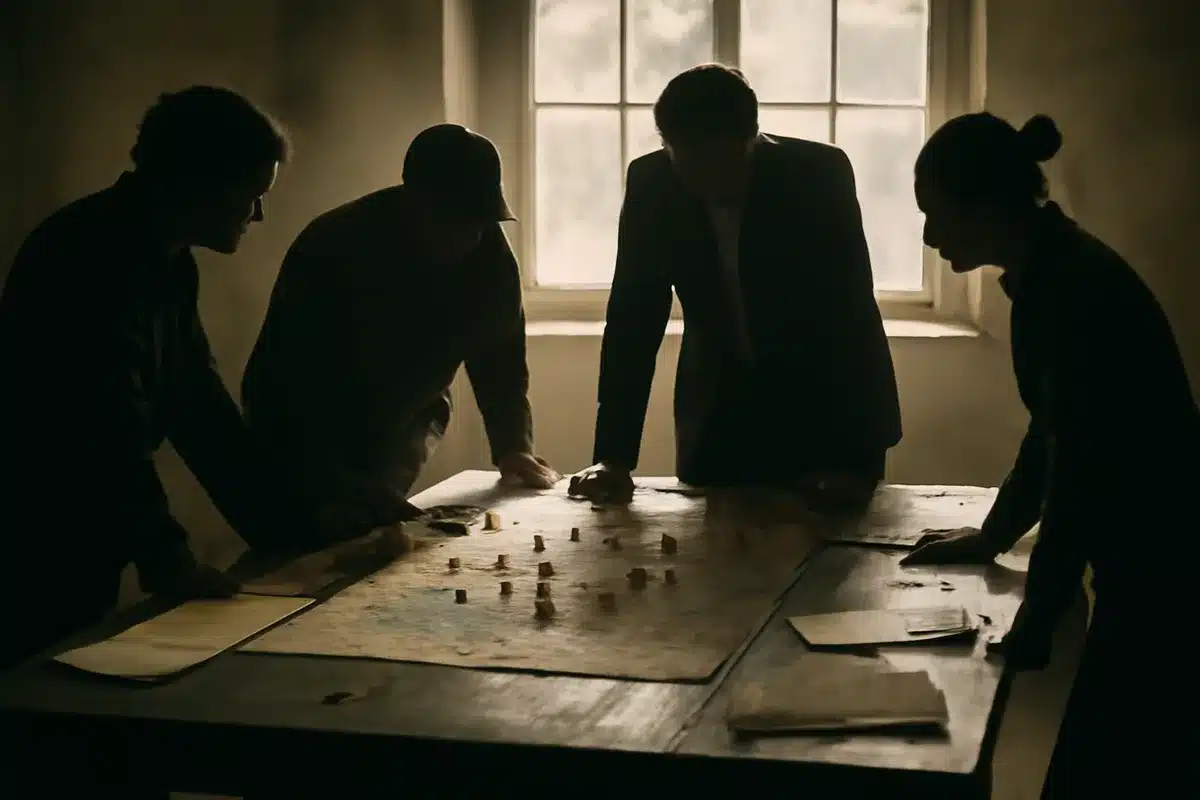
Between fights, the game places you on a board-like campaign map. You have limited turns each chapter, and each movement is a tactical decision. This meta-layer adds meaning to travel, recruitment, and timing.
Each protagonist also has exclusive map actions. For example:
- Dietrich can summon strong foes for specialized encounters.
- Theodora can marshal soldiers from cities to expand her forces.
As the story progresses, you’ll command multiple squads simultaneously. That raises the stakes and turns the entire campaign into a multi-front puzzle. The interplay between battlefield tactics and map-level choices is one of the game’s greatest strengths.
Extra content: dungeons, progression, and when systems overstay their welcome
Fortune’s Weave packs in optional activities beyond battles and social events. Short third-person dungeons let you find gear and grind experience. These areas are useful but mechanically simpler than the main combat.
Because dungeon fights are conventional and repetitive, many players will eventually rely on the game’s auto-battle to speed them up. They’re handy for leveling and loot, but they rarely match the depth of the grid-based encounters.
Parallel campaigns and replayability redesigned for modern players
One thoughtful design choice: you can switch between the four protagonist campaigns freely. The game lets you suspend one playthrough and resume another without penalty. This choice encourages seeing the entire story rather than punishing single-path decisions.
Playing every campaign also yields tangible mechanical benefits. Armies and recruits from different runs can be combined in the late game, making the final act a true culmination of all your efforts. That structure addresses a common critique of branching narratives in past Fire Emblem titles.
Expect a marathon: runtime, visuals, and performance on Switch 2
This is not a quick play. My personal completion took roughly 100 hours. That figure reflects the game’s size and its layers of optional systems. The experience earns its runtime, but it demands commitment.
On Switch 2, visuals are a mixed bag. Character art and models are strong, supported by solid direction. Environments, however, can feel plain compared with other first-party titles. The game also runs at a fixed 30 frames per second, which stands out against some smoother Switch 2 releases.
Performance does not undermine the core gameplay. In turn-based combat, frame rate rarely impacts playability. Still, the balance between presentation and ambition is a little uneven on the hardware.