
Show summary Hide summary
- What happened inside the Apollo Gallery: a fast, calculated theft
- How the thieves are believed to have escaped
- Security questions and institutional fallout
- Brands, influencers and the meme machine
- The photograph that spawned a thousand memes
- Why the public is hooked: the psychology of fascination
- Voices from film and pop culture
- Investigative next steps and public safety concerns
- How the conversation has shifted — from theft to spectacle
A brazen daytime theft at the Louvre has captured the world’s attention — not just for the value of what vanished, but for how quickly the story slid into memes, brand jokes and viral trends. What began as a high-profile museum robbery in Paris has become a global cultural moment, blending real criminal investigation with online spectacle.
What happened inside the Apollo Gallery: a fast, calculated theft
Officials say the robbery unfolded in minutes. Four masked individuals climbed to the second-floor Apollo Gallery, removed several imperial jewels, and fled before security could stop them.
Nas slams music industry over disrespect: teases new music, vows to address it
1992 vocal performances: 3 jaw-dropping moments that still amaze
Key facts at a glance
- Timeframe: The entire operation reportedly lasted under seven minutes.
- Suspects: Four people, faces covered, used a portable lift to access the gallery.
- Loot: Nine items were taken. One—Empress Eugénie’s crown—was later found damaged near the scene.
- Value: Authorities call the pieces “priceless,” while public estimates put the total near $102 million.
- Arrests: Prosecutors reported several detentions, including a suspect stopped while preparing to leave from Roissy Airport.
How the thieves are believed to have escaped
Law enforcement accounts say the group used an electric lift to reach a window and again to descend to street level. From there they jumped on scooters and sped toward a nearby highway.
Security questions and institutional fallout
The museum and government officials now face intense scrutiny. Critics point to gaps in monitoring and the absence of cameras where the theft occurred.
- The Louvre’s director acknowledged failings in protection measures.
- France’s culture minister described the episode as a national embarrassment.
- Expect audits of alarm systems, staff procedures and gallery surveillance.
Brands, influencers and the meme machine
Within hours the heist became fodder for marketing teams and social accounts. Companies and creators repackaged the incident as playful promotion, while users turned it into costume ideas and short-form videos.
- Böcker, the German maker of the lift reportedly used in the break-in, posted a cheeky ad that played on its product slogan.
- IKEA Switzerland posted a tongue-in-cheek image highlighting a display case — a nod to the limits of consumer-grade protection.
- Fashion creators pushed a “heist chic” look: black jumpsuits, gloves, sunglasses and costume jewels.
The online response blurred the line between grim real-world crime and sharable entertainment.
The photograph that spawned a thousand memes
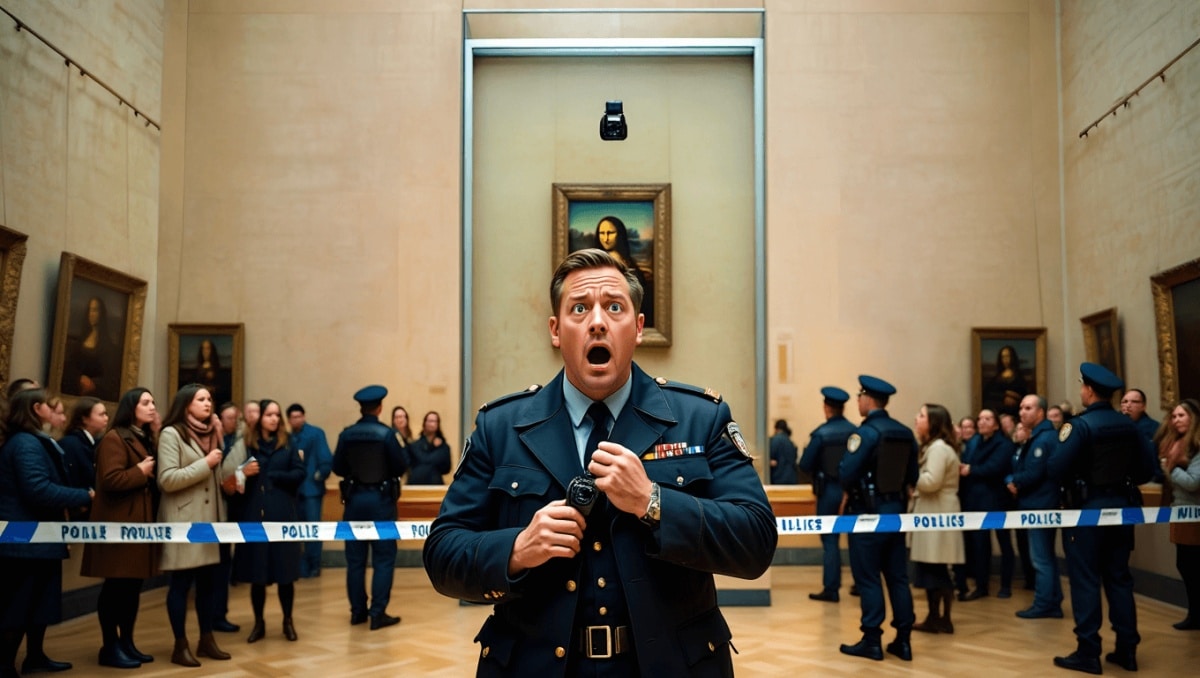
An image taken outside the museum of a well-dressed passerby — coat, tie and fedora — quickly went viral. The man was widely lampooned as a cinematic detective, despite a journalist on the scene saying he was simply walking past.
The photograph racked up millions of views and spawned variations that recast the stranger as a suave sleuth or an idle bystander with perfect timing.
Why the public is hooked: the psychology of fascination
Observers point to a few reasons the story resonates so strongly.
- It reads like fiction: tidy, dramatic and lacking the trauma of mass violence.
- The items are historical and ornate, which invites romantic imagination.
- Social platforms amplify visuals and jokes, turning news into participatory content.
Commentators note the paradox: the theft has made the jewels more talked-about than they had been on display for centuries.
Voices from film and pop culture
Hollywood and media figures couldn’t resist reacting. Actors associated with heist films made wry remarks, and online chatter linked the event to cinematic capers.
That cultural reflex — seeing real events through the lens of fiction — helped propel the story beyond traditional news coverage.
Investigative next steps and public safety concerns
Authorities continue to pursue leads. The prosecutor’s office confirmed arrests and said searches and detentions were ongoing.
- Officials will re-check the museum’s access points and alarm logs.
- Airport and border checks were intensified after a suspect was said to be leaving the country.
- Expect legal proceedings and possible international cooperation if items cross borders.
How the conversation has shifted — from theft to spectacle
The Louvre robbery has become a case study in how modern audiences consume and remix news. The blend of historical objects, cinematic methods and rapid online reaction created a feedback loop.
News, commerce and memes collided to turn a criminal act into cultural content almost in real time.










