
Show summary Hide summary
- How the series avoids sensational gore and shifts focus
- Patrick Macmanus’ storytelling choices and pacing
- Putting victims at the center
- Michael Chernus and the ensemble cast
- Visual design and directorial tone
- How the series treats Gacy’s offenses and personal history
- Narrative balance between investigation and empathy
- Flashbacks as emotional anchors
- Ethics, the courtroom, and the final episodes
- Where the series falters and where it succeeds
Peacock’s Devil in Disguise: John Wayne Gacy takes a measured, often chilly approach to one of America’s most notorious crimes. Instead of lurid spectacle, the limited series favors slow-building dread and an emphasis on the people left behind.
How the series avoids sensational gore and shifts focus
The show sidesteps the lurid tropes common to true-crime TV. There are few explicit scenes of physical violence. Most of the series dwells on aftermath and implication.
Nas slams music industry over disrespect: teases new music, vows to address it
1992 vocal performances: 3 jaw-dropping moments that still amaze
Devil in Disguise chooses restraint over shock. That choice shapes the tone from the pilot onward. Even the moment Gacy dons the clown costume is brief and muted. The series resists converting that icon into a showpiece.
Patrick Macmanus’ storytelling choices and pacing
Creator Patrick Macmanus builds the narrative in a patient, forensic way. Episodes unfold through a mix of 1978 investigation and non-linear flashbacks.
- Police procedures and interviews drive much of the forward momentum.
- Legal maneuvering and courtroom preparation form a parallel track.
- Flashbacks illuminate victims and moments before they disappeared.
This structure keeps the drama procedural and reflective. At times the pacing feels extended. A tighter edit might have trimmed repetitive beats. Yet the slower rhythm also allows quieter scenes to land.
Putting victims at the center
Rather than fetishizing the killer, the series elevates his victims. Their lives are sketched in detail. The show probes why they were vulnerable.
Viewers meet young men who hoped for steady work, or families wrestling with absence. Those portraits create empathy. They also emphasize societal failures that left people exposed to predation.
Devil in Disguise pairs reenacted sequences with documentary-style clippings. Each episode closes with archival images and resources for at-risk youth. Those choices underline the producers’ intent.
Michael Chernus and the ensemble cast
Michael Chernus brings a chillingly bifurcated performance to the role of John Wayne Gacy. He flickers between charm and menace.
Supporting actors register exhaustion and moral strain. James Badge Dale, Gabriel Luna and Michael Angarano portray lawmen, prosecutors and counsel laboring under imperfect systems. Their restrained work complements the show’s cool color palette.
- Gacy: a blend of warmth and menace under Chernus’s control.
- Investigators: methodical, often exasperated.
- Families: worn down by uncertainty and grief.
Visual design and directorial tone
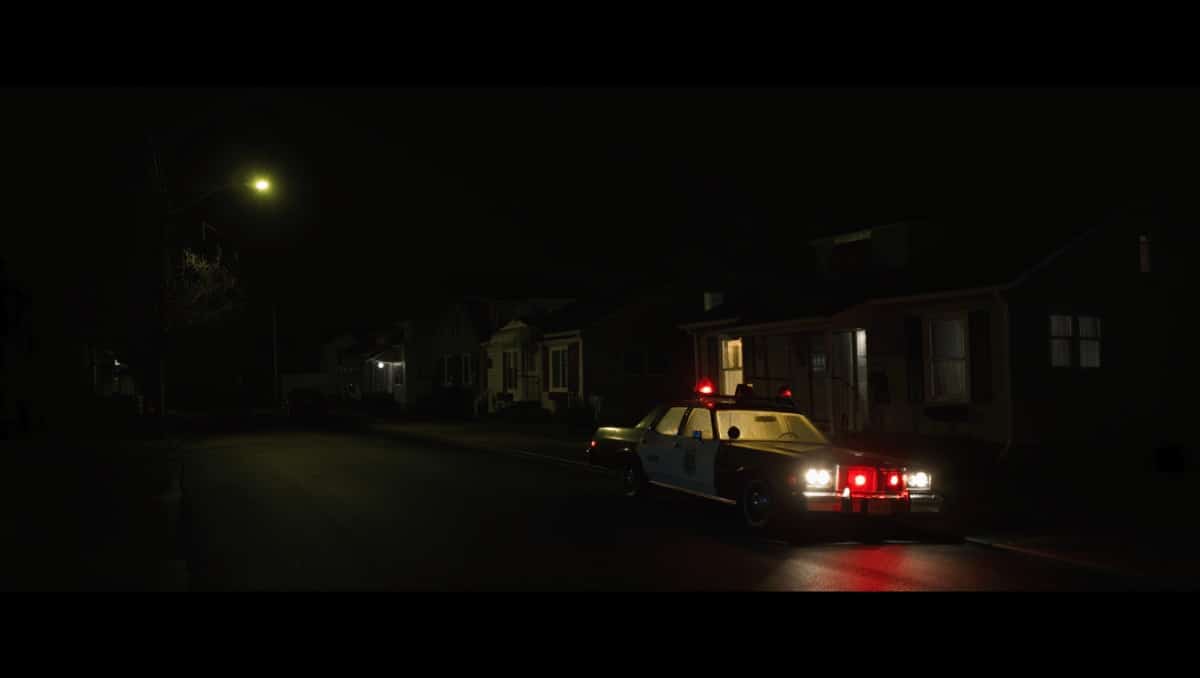
Director Larysa Kondracki and the production team craft a muted visual world. The palette often reads like a Midwestern winter.
Sets and props—especially Gacy’s home and its crawlspace—are meticulously realized. The series avoids flashy camerawork. The visuals favor quiet framing and slow reveals.
These choices produce an aesthetic that is somber rather than sensational. The effect amplifies the show’s emphasis on consequence over shock.
How the series treats Gacy’s offenses and personal history
The series largely adheres to established facts instead of inventing dramatic set pieces. Disturbing elements of Gacy’s life are implied rather than staged for spectacle.
When the show explores Gacy’s past, it does so gingerly. Explanations for his behavior avoid tidy psychological shortcuts. The series suggests a mix of personal pathology and institutional lapse.
Scenes kept off-screen
- Graphic acts are mostly absent from view.
- Emotional aftermath gets more screen time than the violence itself.
- The clown persona appears briefly and is not fetishized.
Narrative balance between investigation and empathy
Episodes oscillate between detective work and human portraits. That dual focus sometimes slows the central momentum. At other times it deepens the emotional stakes.
The police procedural elements recall well-studied true-crime work. Those sequences foreground technique, chain-of-custody, and bureaucratic friction. Parallel scenes trace legal strategy and public spectacle.
Flashbacks as emotional anchors
Flashbacks are scattered and non-linear. They create mood more than chronology. These glimpses provide faces and backstories for victims often reduced by media narratives.
By refusing chronological neatness, the series keeps viewers attentive to motive and context rather than to sensational reveals.
Ethics, the courtroom, and the final episodes
The finale jumps ahead to Gacy’s execution year. That leap assembles survivors and relatives in a fraught moral conversation about capital punishment.
Rather than delivering a tidy moral verdict, the series poses questions. It gives viewers a space to consider retribution, closure and the limits of justice.
Where the series falters and where it succeeds
At times the show feels overlong. Certain narrative threads multiply without clear payoff. The finale underuses a crucial confrontation scene.
Still, the series accomplishes what many true-crime dramas do not. It diminishes the killer’s spectacle and restores humanity to those harmed. In doing so, it reframes the story as social critique as much as crime drama.
Devil in Disguise will not satisfy viewers seeking sensational thrills. It will reward those interested in meticulous craft, moral ambiguity and a focus on victims rather than myth-making.










