
Show summary Hide summary
- Why the East Wing mattered: a short history
- Notable public moments recorded at the East Wing
- Cultural, ceremonial, and everyday uses
- Recent activations and displays before demolition
- How the demolition unfolded
- Images that tell the story: from fountains to satellite shots
- What was removed with the East Wing
- Visual context: aerial and satellite perspectives
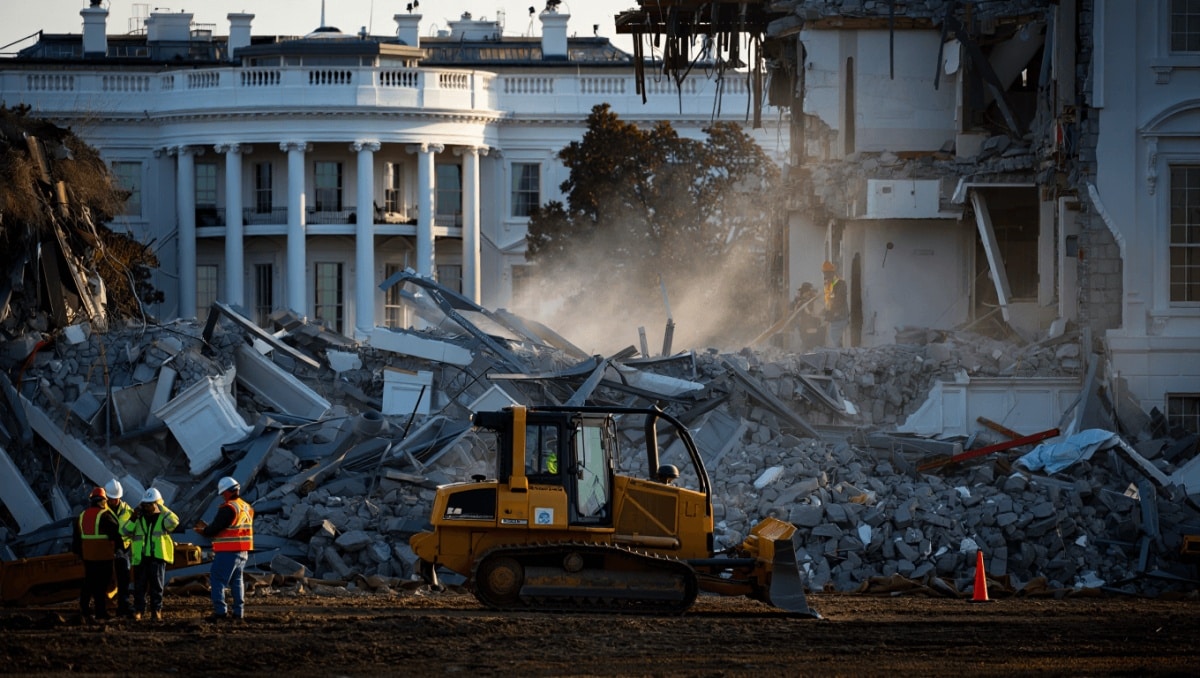
The East Wing of the White House was torn down this week to clear space for a proposed new ballroom. A building that witnessed suffrage pickets, garden dedications, family movie nights, and presidential press briefings is now gone, leaving a century of public moments documented in photos and satellite images.
Why the East Wing mattered: a short history
The annex that became the East Wing first rose in 1902. It began as a modest addition and grew into a hub of both work and ceremonial life at 1600 Pennsylvania Avenue.
Nas slams music industry over disrespect: teases new music, vows to address it
1992 vocal performances: 3 jaw-dropping moments that still amaze
- The structure later connected to the White House via the East Colonnade.
- It housed the first lady’s workspace for decades, even before the office was formally moved into the wing in 1978.
- The family theater, located inside, became a place for private screenings and gatherings.
- The Jacqueline Kennedy Garden, beside the wing, became a high-profile public garden and event site.
Notable public moments recorded at the East Wing
A wide range of events unfolded by the wing’s doors and colonnade. Photographs across eras capture activism, official ceremonies, and day-to-day presidential life.
- 1917: Women’s suffrage protesters, known as the Silent Sentinels, picketed near the entrance.
- 1927: President Calvin Coolidge posed with Osage Nation representatives at the colonnade.
- Mid-20th century: Presidents held news conferences in rooms adjacent to the wing.
- 1960s–70s: First ladies used the space for public garden dedications and press work.
- 1990s–2010s: Family events and holiday performances became recurring scenes.
Cultural, ceremonial, and everyday uses
The East Wing functioned as both a political stage and a domestic backdrop.
- Garden dedications and fashion spreads made the Jacqueline Kennedy Garden a media fixture.
- Public tours and private art viewings took place in rooms like the Green Room.
- Presidents and families used the theater for film screenings and holiday gatherings.
- Seasonal decor often transformed the wing’s public-facing areas during winter months.
Recent activations and displays before demolition
In recent years the East Wing continued to host a mix of traditional and high-profile installations.
- 2018: A controversial seasonal display attracted attention at the East Colonnade.
- 2012–2013: The family theater and trick-or-treat events drew military families and local children.
- 2023: An art installation honored military children, staged by the first lady.
- May 2025: A public outreach event used the Jacqueline Kennedy Garden for a children’s program.
How the demolition unfolded
Work to remove the annex began on Oct. 21, 2025. Crews proceeded rapidly, and the following days saw the footprint shrink dramatically.
- Initial demolition cleared interior and exterior structures.
- Within 48 hours, contractors had reached the East Colonnade and adjacent garden.
- The removal extended to the very edge of the original White House shell.
Images that tell the story: from fountains to satellite shots
A curated set of 37 images traces the wing’s transformation over time.
- Early 1900s photos show the wing with its original fountain and landscaping.
- Decades of archival shots capture demonstrations, press conferences, and official visits.
- Aerial photography from mid-century to the 2000s documents the wing’s position on the grounds.
- Recent photos highlight seasonal decor and public programming before demolition.
- Satellite images provide a stark before-and-after view showing the annex’s complete removal.
What was removed with the East Wing
- The East Colonnade, the covered walkway linking the annex to the main residence.
- The Jacqueline Kennedy Garden, a public-facing green space known for ceremonies.
- Interior spaces including offices, the family theater, and ceremonial landing areas.
Visual context: aerial and satellite perspectives
Overhead shots from different eras show how the wing related to the White House complex. Recent satellite imagery makes the change unmistakable.
- 1930s aerials place the wing in the early garden layout.
- 1990s and 2000s views show the wing’s established footprint.
- 2025 satellite photos reveal a cleared site where the annex once stood.










