
Show summary Hide summary
- Ethan Hawke brings Lorenz Hart to life in Blue Moon
- Richard Linklater’s approach: intimate, human, and observant
- Andrew Scott and Margaret Qualley add new layers
- The historical backdrop: Oklahoma! and a changing Broadway
- What stands out: music, mood, and visual tone
- Key takeaways for viewers and theater fans
On a night that reshaped American musical theater, a lonelier story unfolds in the new film Blue Moon. Ethan Hawke portrays lyricist Lorenz Hart as he endures a devastating professional and personal blow the evening Oklahoma! opens. The movie, guided by Richard Linklater’s sensitive eye, examines fame, friendship and the cost of creative life.
Ethan Hawke brings Lorenz Hart to life in Blue Moon
Hawke’s portrayal avoids caricature. He shows Hart’s wit, tenderness and crumbling self-confidence. Scenes shift between sharp dialogue and quiet moments. Viewers see a man confronting a partnership that has quietly slipped away.
Smashing Pumpkins reunite with legendary 90s producer Butch Vig on new Hunger Games track
U.K. terror plot: what we know and why the Gulf remains in limbo
Blue Moon focuses on Hart’s internal fallout when his longtime collaborator Richard Rodgers pairs with Oscar Hammerstein II.
Richard Linklater’s approach: intimate, human, and observant
Linklater, known for naturalistic storytelling, frames the film like a late-night confession. He favors small beats over spectacle. The director lets performances breathe.
The result is a film that reads as both period piece and character study. It keeps the audience close to Hart’s perspective.
Andrew Scott and Margaret Qualley add new layers
Andrew Scott plays Richard Rodgers with restrained force. His chemistry with Hawke is a study in contrasts. Margaret Qualley contributes a magnetic presence that shifts the film’s emotional axis.
Notable supporting elements
- Andrew Scott — portrays Rodgers, delivering quiet intensity.
- Margaret Qualley — offers a performance that grounds several key scenes.
- Ensemble players and period detail amplify the era without overwhelming the story.
The historical backdrop: Oklahoma! and a changing Broadway
Oklahoma! was a watershed moment in musical theater. In Blue Moon, that premiere becomes a pivot point in Hart’s life. The film recreates the excitement of the opening night while tracking the private consequences for one man.
This contrast between public triumph and private despair is central to the movie’s emotional engine.
What stands out: music, mood, and visual tone
The score and period sound design are woven into moments of intimacy. Linklater avoids overplaying musical cues. Instead, music underlines character choices and regrets.
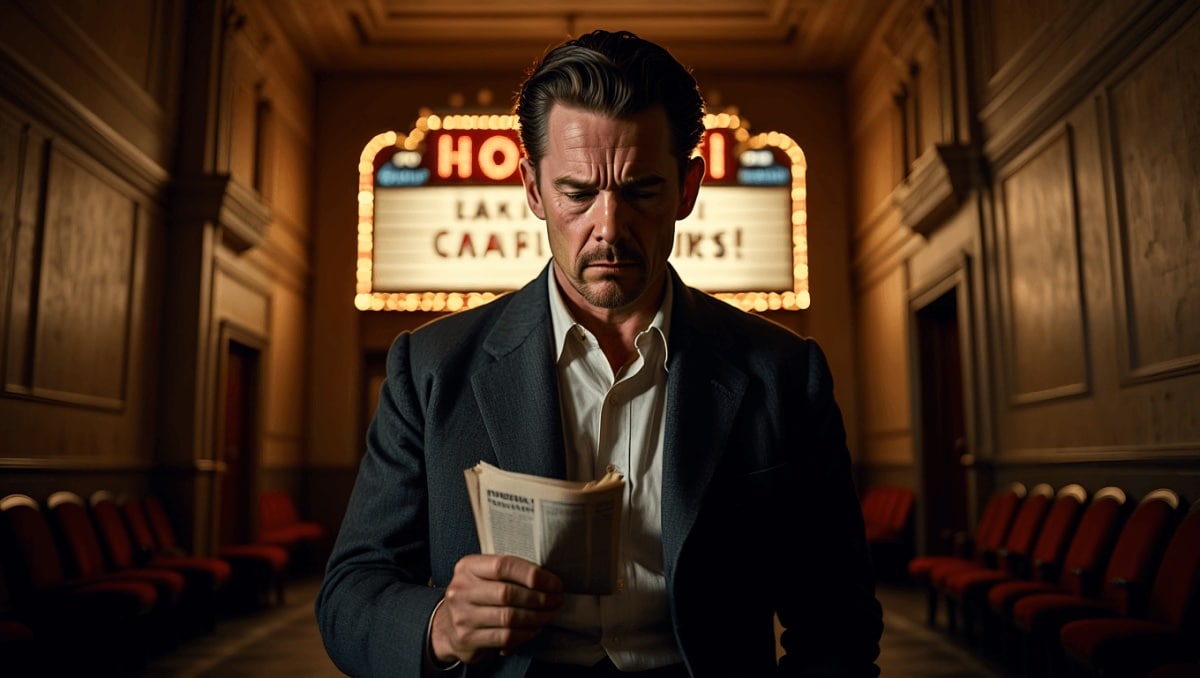
Visually, the film favors warm palettes and close framings. Those choices keep the audience focused on human detail.
Key takeaways for viewers and theater fans
- The film centers on character rather than grand historical retelling.
- Performances anchor the narrative; Hawke’s Hart is the film’s emotional core.
- Linklater’s direction blends biographical elements with dramatic invention.
- Fans of musical history will appreciate the careful handling of the Oklahoma! moment.










