
Show summary Hide summary
- From a pregnancy craving to a cult candy
- How a single video turned it global
- What’s inside a Dubai-style chocolate bar
- Why big companies and grocery chains jumped in
- Production limits and the price puzzle
- Why people buy — and post — the bars
- The cultural swirl: luxury, excess, and “brain-rot” trends
- Quality swings and disappointment videos
- How to tell originals from knockoffs
- Where the trend might go next
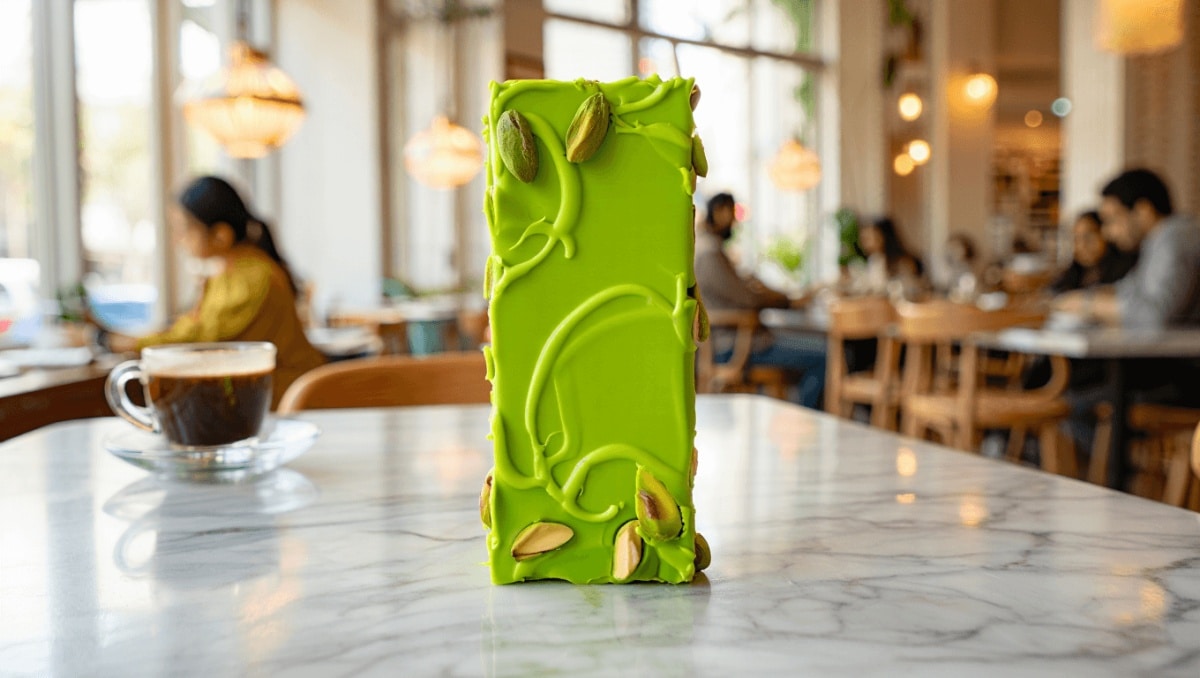
A neon-green, pistachio-filled chocolate bar has gone from an Instagram curiosity to a fixture at checkout lanes and corner cafes. What began as a homegrown Dubai creation has swept into grocery aisles, national chains, and viral videos, leaving shoppers wondering why one dessert is suddenly everywhere.
From a pregnancy craving to a cult candy
How the original bar came to be
Nas slams music industry over disrespect: teases new music, vows to address it
1992 vocal performances: 3 jaw-dropping moments that still amaze
The recipe traces back to 2021, when a British-Egyptian entrepreneur living in Dubai mixed childhood flavors into a candy bar. She blended pistachio cream, tahini, and the sweet, shredded pastry known as knafeh into a chocolate shell.
She launched a small brand and named the product with a playful nod to knafeh. Early orders came mostly from local customers and visitors.
How a single video turned it global
One key social clip changed everything. A creator known for mukbang-style content filmed an ASMR-style crack-and-dip moment that exploded online.
- Video reach: The clip racked up viral views and spread across platforms.
- Visual impact: The gooey, green interior made for irresistible short-form content.
- Imitation: International brands quickly released their own versions.
What’s inside a Dubai-style chocolate bar
The popular combo hits multiple textures and flavors at once. Expect a brittle shell that reveals a soft, colored center.
- Pistachio cream for nuttiness and the signature green color.
- Tahini for a savory, sesame undertone.
- Knafeh elements: shredded pastry, sweet syrup, and soft cheese notes.
- Extra crunchy bits for contrast.
The result is extremely sweet and deliberately photogenic.
Why big companies and grocery chains jumped in
Within months, well-known food companies introduced copycat bars. Retailers from premium grocers to discounters put versions on shelves.
- Lindt and other established chocolatiers launched Dubai-style bars.
- European supermarkets released affordable knockoffs.
- Specialty bakeries and cookie chains offered limited-edition twists.
The combination of novelty and visual appeal made the product tempting for marketers.
Production limits and the price puzzle
Despite the trend, the candy is not cheap to make. The pastry element is fragile, and integrating it into a bar requires careful handling.
Industry observers point out that the knafeh component resists mass-production without special equipment. That scarcity helps keep prices high.
- Small-batch bars from the original maker sell at a premium.
- Some mainstream brands price their versions in the mid-range to keep demand.
High cost and limited supply feed the bar’s luxury appeal.
Why people buy — and post — the bars
Many shoppers are drawn less by taste alone than by the social signal that comes with ownership.
- Novelty: The bar offers a dramatic reveal that plays well on short-form video.
- Shareability: The messy, colorful interior invites clips and photos.
- Status: Expensive, hard-to-find foods can act as a micro-status symbol.
Social scientists say consumers often want to be seen trying or owning trending items. The bar’s performative quality makes it perfect for that cycle.
The cultural swirl: luxury, excess, and “brain-rot” trends
The candy sits at an odd crossroads. It borrows cues from luxury food culture while leaning into maximalist colors and textures.
Observers describe a broader cultural mood: an embrace of bizarre, attention-grabbing products that read as aspirational to younger buyers.
Memes, identity, and online fatigue
On TikTok and other platforms, the bar often appears in memes that spoof a low-attention, hyper-marketed lifestyle. Those jokes both mock and amplify the trend.
The uglier or weirder a reveal, the likelier it is to spread. That makes the bar a strangely perfect product for today’s internet culture.
Quality swings and disappointment videos
Not every unboxing is satisfying. For every seamless split that reveals bright, gooey filling, there are clips showing meager or dry interiors.
Those failures feed a feedback loop: viral presentation raises expectations, and disappointment becomes content in its own right.
How to tell originals from knockoffs
- Packaging: Original makers often use distinctive, boutique-style wrappers.
- Price point: Genuine small-batch bars cost significantly more.
- Texture and filling: Authentic versions emphasize the pastry and a dense pistachio cream.
Trying different brands will show wide variation in filling, crunch, and overall sweetness.
Where the trend might go next
As mainstream companies scale up their versions, the niche aura may fade. But the product’s viral template — a loud visual reveal and quirky flavor mash-up — will likely inspire future food fads.
For now, the bars remain a case study in how social media, scarcity, and bold flavors can turn one local invention into a global obsession.










