
Show summary Hide summary
- What Bannon said and where it appeared
- How his remarks read against the 22nd Amendment
- Immediate reactions from experts and critics
- Social media and public response
- Age, health, and practical obstacles
- How commentators frame the risk
- Paths scholars say would be required to change the status quo
- What to watch next
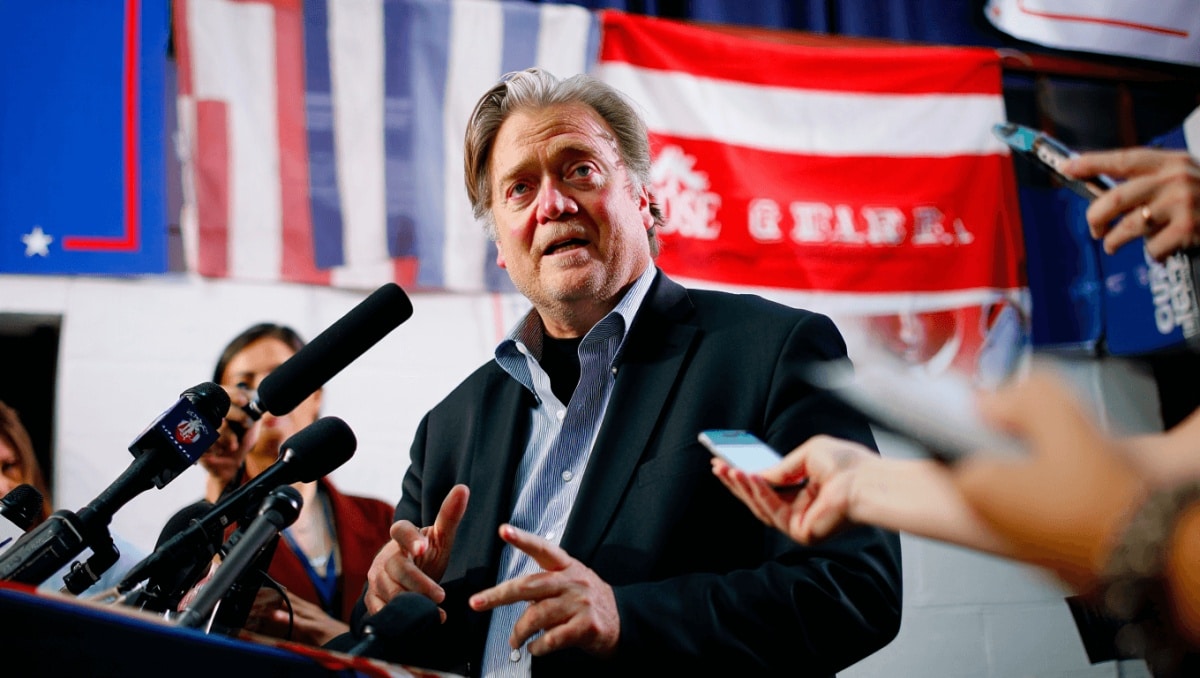
Steve Bannon told a major magazine he has a roadmap that could bring Donald Trump back to the White House after 2024. The claim has ignited fierce debate about legality, rhetoric, and the state of American democracy.
What Bannon said and where it appeared
In an interview published by The Economist, Bannon predicted Trump would return to power in 2028. He framed that future as more than wishful thinking. He insisted there is a plan to make it happen.
Nas slams music industry over disrespect: teases new music, vows to address it
1992 vocal performances: 3 jaw-dropping moments that still amaze
He did not lay out a step-by-step blueprint. Instead, he suggested options exist and promised details later. That promise alone has amplified concern among legal scholars and civic groups.
How his remarks read against the 22nd Amendment
The Constitution’s 22nd Amendment limits presidents to two elected terms. It also bars someone who served more than two years of another president’s term from being elected more than once.
Bannon said those legal phrases can be interpreted or “defined” in ways that would permit another Trump presidency. He argued the wording could be reexamined to fit a different political strategy.
Possible legal angles people are discussing
- Legal challenges to the 22nd Amendment’s applicability.
- Attempts at constitutional amendment or reinterpretation.
- Extraordinary political maneuvers such as proxy leadership or caretaker arrangements.
Experts note these ideas face steep constitutional and practical barriers. Yet Bannon’s comments have pushed those scenarios into public debate.
Immediate reactions from experts and critics
Scholars of authoritarianism called the rhetoric alarming. Many noted the language that elevates a leader to a quasi-mythic role. That framing is often used by strongmen elsewhere.
Other commentators accused Bannon of normalizing an effort to override constitutional limits. Critics say such talk must be taken seriously because it signals intent and strategy.
Social media and public response
Across platforms, reactions ranged from alarm to outrage. Veterans groups, academics, journalists, and activists weighed in.
- Some users described the remarks as evidence of a plan to seize power.
- Others warned that dismissing the talk as mere bluster would be a mistake.
- Opponents pointed to public signs—merchandise and messaging—as proof the campaign is already preparing for 2028.
Age, health, and practical obstacles
Even supporters of the idea must contend with practical realities. Trump would be 82 before Election Day in 2028. If returned to office, he would serve into his mid-80s.
That raises questions about stamina, medical transparency, and leadership capacity. These concerns add another layer to the constitutional debate.
How commentators frame the risk
Many commentators view Bannon’s statements as a warning shot. They argue that rhetoric about redefining constitutional limits can prime a base for extraordinary measures.
Some call this language a roadmap to authoritarian tactics. Others say it simply reflects wishful political thinking. The split underscores how polarized the conversation has become.
Paths scholars say would be required to change the status quo
- Formal amendment to the Constitution — a difficult, multi-state process.
- Supreme Court reinterpretation — unlikely without a case that forces review.
- Legislative or executive workarounds — often constrained by legal checks and political opposition.
Legal experts stress any attempt to bypass the 22nd Amendment would end up in court. That would create high-stakes litigation and political turmoil.
What to watch next
- Follow-up interviews or statements from Bannon and Trump allies.
- Legal filings or new political maneuvers that test constitutional lines.
- Public organizing, both for and against, that could shape the coming debate.
Those signals will determine whether the remarks remain provocative talk or become the first steps of a broader campaign to alter presidential term limits. For now, the claim has made constitutional scholars, civic leaders, and the public more alert to the possibilities and dangers.










