
Show summary Hide summary
- Where the Immortal Universe Started and Where It Stands
- What the Series Promises — and What It Delivers
- Characters, Casting, and Performances
- Pacing, Plot Holes, and Structural Issues
- Bright Spots: Dialogue, Atmosphere, and Comic Relief
- How the Series Handles Source Material and Adaptation Choices
- Where the Franchise Could Go Next
AMC’s attempt to stitch Anne Rice’s gothic universe into a multi‑series franchise has produced highs and lows. One entry dazzled, another stumbled, and the newest series, Anne Rice’s Talamasca: The Secret Order, lands somewhere in the middle — ambitious on paper, uneven in execution. Fans of the Immortal Universe will find moments of intrigue, but the season often feels rushed and unfocused.
Where the Immortal Universe Started and Where It Stands
“Interview With the Vampire” set a high bar. That show captured Rice’s sensual prose and dark humor while updating themes for a modern audience. It also proved that AMC could make bold, character-driven horror for television.
Nas slams music industry over disrespect: teases new music, vows to address it
1992 vocal performances: 3 jaw-dropping moments that still amaze
By contrast, “Mayfair Witches” failed to match that energy. Its second season faded quietly, lacking the urgency and eccentricity that gave “Interview” its life.
Talamasca arrives as the third piece of this franchise puzzle. The series attempts to expand Rice’s mythology by focusing on a secretive order that monitors the paranormal world. But the result is a mixed bag — good ideas, scattered execution.
What the Series Promises — and What It Delivers
At its core, the show is about the Talamasca, an organization centuries old in Rice’s novels. On screen, the group is presented as a human counterforce to vampires, witches, and other supernatural entities. Yet the series leaves crucial world‑building undeveloped.
- The protagonist, Guy, is introduced as an ordinary man with telepathic gifts.
- He is recruited into the Talamasca by Helen, a reserved British operative.
- The plot orbits a lost archive and a mysterious artifact labeled the 752.
These elements should anchor the story, but their motivations and stakes are often unclear. The crew leans on mystery rather than clear rules, which frustrates viewers seeking a coherent supernatural framework.
Characters, Casting, and Performances
Nicholas Denton plays Guy, a young telepath who must choose between a conventional life and a secretive calling. Denton shows promise but struggles to settle into his American cadence, and his character is written with few distinguishing traits.
Elizabeth McGovern portrays Helen with a clipped, distant authority. Her subplot — a search into her past — further dilutes her role as mentor and strategist.
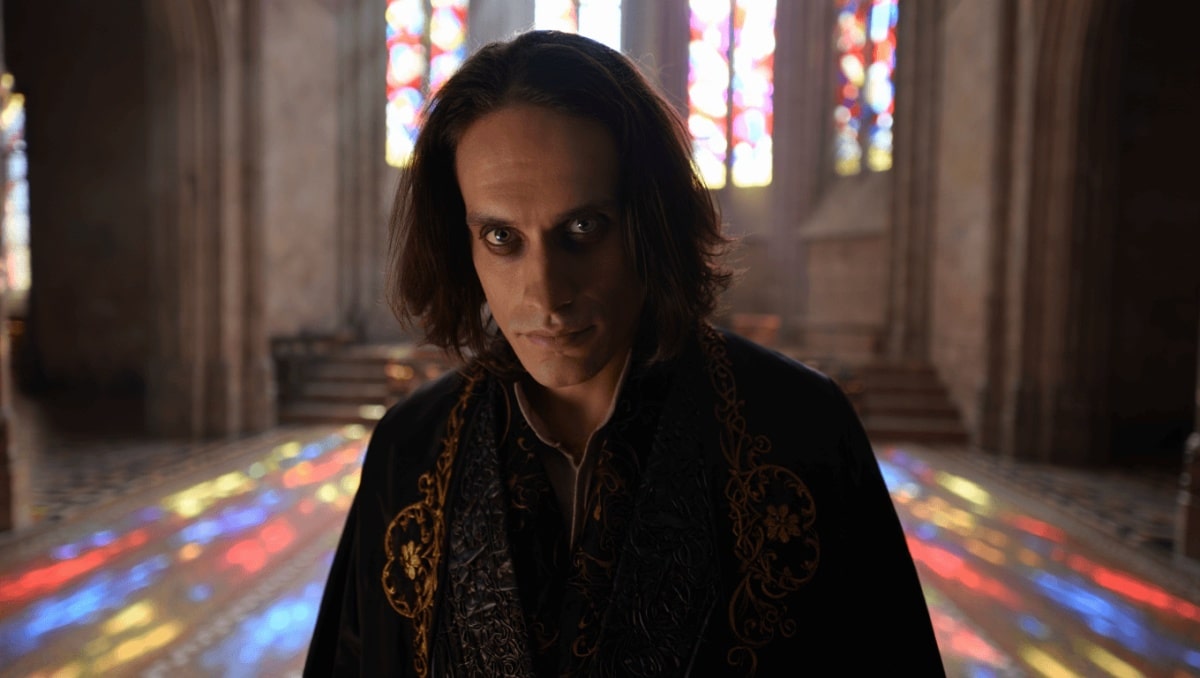
William Fichtner stands out as Jasper, a vampire whose roguish energy brings levity and menace. His lines often land with the kind of bombastic flair that suits Rice’s tone.
- Notable cameos: Eric Bogosian returns from “Interview With the Vampire.”
- Jason Schwartzman appears briefly as an urbane vampire in a New York penthouse.
These guest turns provide bursts of color but cannot fully compensate for the series’ pacing problems.
Pacing, Plot Holes, and Structural Issues
One recurring problem is compression. Guy’s training, which should span months, is crammed into days. The show rushes through key developments to reach the next twist.
Other issues include:
- Minimal explanation of Guy’s telepathic origins and how powers are distributed in this world.
- Frequent introductions of secondary players who vanish without payoff.
- A reliance on warnings that the Talamasca is untrustworthy, rather than showing systemic ambiguity.
The centerpiece MacGuffin, known simply as the 752, is meant to drive the hunt. Instead, it often feels like a placeholder for urgency that the series never quite attains.
Why shifting loyalties hurt the narrative
Allies and enemies trade places too quickly. Every character seems to carry a secret, which in theory builds tension. In practice, the constant swings create confusion. Viewers are asked to care about betrayals that lack emotional grounding.
Bright Spots: Dialogue, Atmosphere, and Comic Relief
Despite its flaws, Talamasca has moments that work. Fichtner’s performance supplies much of the show’s bite. Cameos from established Immortal Universe talent help connect this series to the broader franchise.
Production design and locations occasionally evoke Rice’s gothic sensibility. Scenes set in old archive rooms and shadowed penthouses capture the mood Rice fans expect.
Comic and surprising lines give the series flashes of Rice’s darker wit. Those spikes of personality suggest what the show might become with clearer focus.
How the Series Handles Source Material and Adaptation Choices
Turning the Talamasca into a spy‑thriller hybrid is an intriguing choice. The books cast the order as a repository of history and occult research. The adaptation favors action and conspiracy, aiming for momentum rather than encyclopedic exposition.
That approach requires sharp plotting. When the writing slips into vagueness, the stakes weaken. Rice’s novels reward deep mythos; this show trims some of that depth, to its detriment.
Where the Franchise Could Go Next
Talamasca ends its first season with open threads, leaving room for a second installment. No new Immortal Universe series have been announced beyond what’s already in production.
- “The Vampire Lestat” remains the most anticipated follow‑up among fans.
- Producers may need to reconsider pacing and clarifying mythology before greenlighting more spinoffs.
Anne Rice’s Talamasca: The Secret Order premieres with two episodes on AMC and AMC+ on Oct. 26 at 9 p.m. ET.










