
Show summary Hide summary
- Why Lanterns reads like a modern Reacher tale
- Setup: Hal Jordan and John Stewart in Rushville
- A Midwestern mystery with extraterrestrial flare
- Race, power and the outsider perspective
- Cast highlights: performances that elevate the script
- Episode pacing: peaks, valleys and tonal shifts
- Sci-fi ambition versus grounded drama
- Visuals, budget choices and where the series shines
- Who the show will most appeal to
- Elements that could have been stronger
- Why the series matters in today’s TV landscape
HBO’s Lanterns lands with a curious mix of small-town noir and comic-book strangeness. The show pairs two very different Green Lanterns and leans into terse, often witty character work more than non-stop spectacle. What emerges is equal parts buddy drama and genre meditation, with race, authority and outsider status threaded through its Nebraska-set mystery.
Why Lanterns reads like a modern Reacher tale
The series, adapted by Chris Mundy, Damon Lindelof and Tom King, often feels less like a cosmic epic and more like a road-worn thriller dropped into the Midwest.
Nas slams music industry over disrespect: teases new music, vows to address it
1992 vocal performances: 3 jaw-dropping moments that still amaze
- Two mismatched protagonists show up in a small town.
- Tense local attitudes and militia undertones complicate every interaction.
- A stranger’s arrival exposes hidden conflicts and unspoken prejudices.
That comparison to Jack Reacher isn’t accidental. Lanterns swaps travelers and takedowns for ring-fueled powers and alien visitors, but the narrative beats — outsider enters town, local authority resists, secrets bubble up — are familiar.

Setup: Hal Jordan and John Stewart in Rushville
The drama begins with a flashback to the moment Hal Jordan becomes the first human Green Lantern. Decades later he’s a senior Lantern and a reluctant mentor.
Aaron Pierre’s John Stewart is introduced as the physically imposing, quietly simmering counterpart. Hal, played by Kyle Chandler, is curt, world-weary and supremely confident.
How the pairing works on screen
- Hal is the test-pilot-turned-guardian, prickly and defensive.
- John arrives as a large, disciplined figure aware of how the world views him.
- Tension arises from Hal’s reluctance to step down and John’s long wait for real responsibility.
A Midwestern mystery with extraterrestrial flare
When the pair travel to Rushville, a reported mass shooting turns out to be a tangled event involving alien bodies and a hidden visitor. The town sheriff, Kerry, resists outside help.

Kerry, portrayed by Kelly Macdonald, anchors the human side of the story. She’s protective of her community and wary of chaos arriving like a storm.
- Local power players include a land-owning patriarch with private militias.
- Tensions bubble in diners, bars and pickup trucks.
- Meanwhile, John flirts with Zoe, a mysterious woman tied to the town’s troubles.
Race, power and the outsider perspective
John Stewart’s identity frames much of the show’s subtext. As a towering Black man who enforces the law and carries an alien-seeming weapon, his presence complicates typical small-town dynamics.
Lanterns asks what changes when the wandering hero is a Black man. The series interrogates who is allowed to be eccentric, who is presumed dangerous, and how allyship can mask control.
Dialogues and confrontations make the theme explicit without heavy-handedness. The writing often lets actors carry the nuance.
Cast highlights: performances that elevate the script
Aaron Pierre and Kyle Chandler form a textured, combustible duo. Chandler turns Hal’s irritation into an emotionally layered portrait.
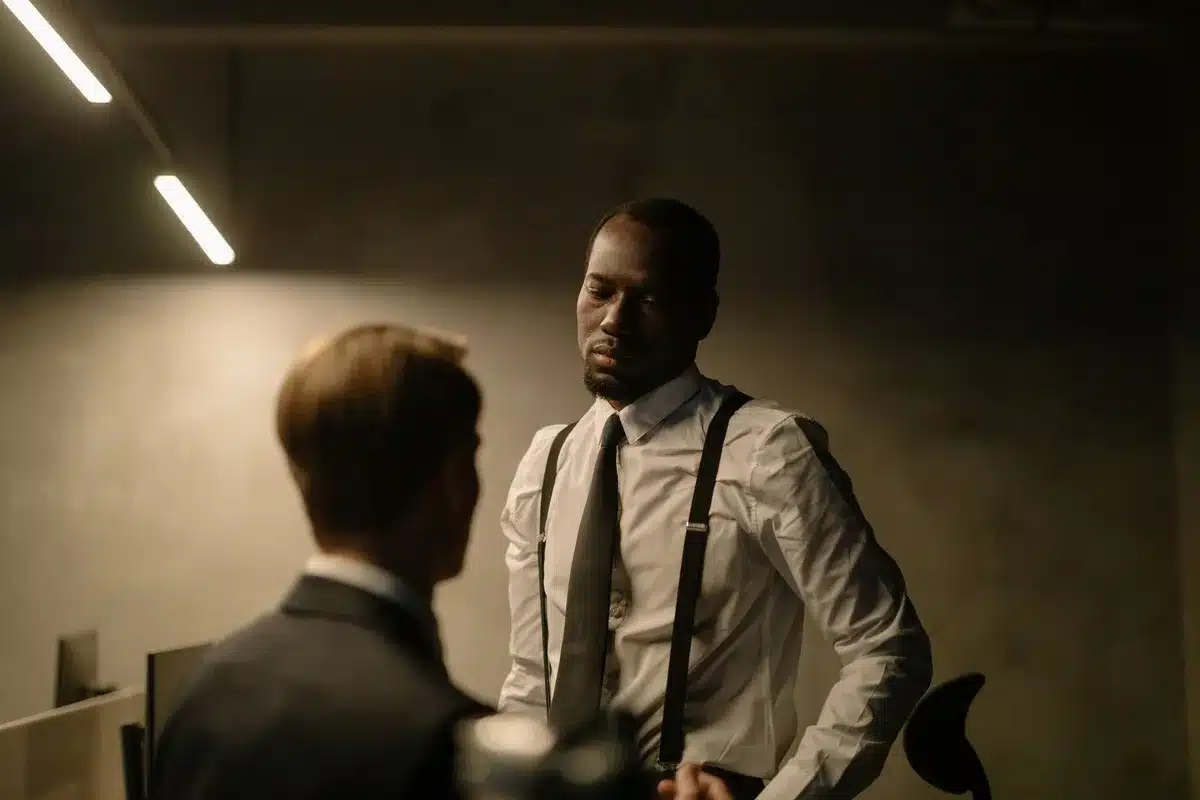
Pierre gives John a slow-burning forcefulness. He conveys the character’s patience and low-key menace in a way that feels lived-in.
- Kyle Chandler — gruff, insecure, sometimes heroic.
- Aaron Pierre — quiet, intense, morally centered.
- Kelly Macdonald — small in stature but large in presence; she brings trustworthiness to the sheriff.
- Strong supporting work from Poorna Jagannathan and Garret Dillahunt rounds out the town’s personalities.
Episode pacing: peaks, valleys and tonal shifts
The first episode hits hard, leaning into subtext and the exchange-driven chemistry of Hal and John. Subsequent installments are uneven but mostly rewarding.
Some episodes deepen character history and family ties. Others lose momentum, trading social commentary for quieter beats that feel thin by comparison.
- Episode 1: Confident, subtext-heavy and engaging.
- Episode 3: Best backstory work for John and his family.
- Episode 5: The action episode; ambitious but occasionally flat in execution.
Sci-fi ambition versus grounded drama
Lanterns balances grounded, human drama with occasional cosmic set pieces. The show intentionally limits visual spectacle.
The writers often sideline full-blown effects in favor of character scenes and political friction. A ring that works sporadically becomes a narrative device, not a constant solution.
Cosmic cameos and outer-space councils appear sparingly. These moments add texture but aren’t the emotional core.
Visuals, budget choices and where the series shines
The production uses effects economically. When the show leans into CGI it can feel striking. More often, the choice is to keep the stakes intimate and human.
The emotional payoff comes from performance and atmosphere, not nonstop spectacle. Practical sets, tense face-offs, and quieter scenes give the series a particular texture.
Who the show will most appeal to
Viewers who enjoy character-driven genre work will find much to like. Fans of buddy-cop dynamics with reflective themes will be satisfied.
- If you want nonstop superhero battles, this will frustrate you.
- If you appreciate sociopolitical undercurrents inside genre TV, this will reward you.
- If you simply want to watch two strong actors spar and grow, the show delivers.
Elements that could have been stronger
Some episodes pull back from the show’s most persuasive social commentary. A few action sequences aim high but land with perfunctory energy.
And while other Green Lanterns and familiar faces show up, the series keeps them on the periphery. The drama rests on the lead duo.
Why the series matters in today’s TV landscape
Lanterns reframes a comic-book property as a small-scale character study with political teeth. It’s less about planetary stakes and more about who gets to be seen as a protector.
Transforming a mythic franchise into a grounded, sometimes raw human story is the show’s most interesting gamble. This choice makes it feel contemporary.










