
Show summary Hide summary
- How Monsters of God frames the underground reptile market
- Eric Goode’s change in documentary style
- Portraits of collectors, dealers and smugglers
- The narrative arc: chronological drama with methodical pacing
- Law enforcement and sting operations put on display
- Cinematography: animals as visual anchors
- What the series gets right
- What the series could have done better
- Ethical and conservation tensions revealed
- Human drama without schadenfreude
- Where this fits in Goode’s catalog and what might come next
Eric Goode’s latest HBO five-part series dives into the shadowy world of illegal reptile trafficking, tracing how snakes, tortoises and lizards become high-value contraband. The show trades spectacle for a steadier, investigative pace and asks uncomfortable questions about collectors, smugglers and the institutions that benefit.
How Monsters of God frames the underground reptile market
Monsters of God reconstructs an underground supply chain that moves exotic reptiles across borders. It maps out the players, the routes and the profits behind a trade that is both thrilling and unlawful.
Nas slams music industry over disrespect: teases new music, vows to address it
1992 vocal performances: 3 jaw-dropping moments that still amaze
The series opens with a startling scene: a handler and a king cobra. It feels cinematic and dangerous. From there, the narrative widens.
- Primary figures: the doc highlights veteran importers turned smugglers.
- Evolution of the trade: legal collecting becomes a pathway to illicit commerce.
- Global footprint: animals travel through ports, private planes and shadow networks.
The program focuses less on shock and more on systems. Instead of building a tabloid-style fever, it traces the trade’s history and mechanics.
Eric Goode’s change in documentary style
Goode’s earlier hits leaned into eccentric characters and spectacle. Those choices made for viral moments and mass conversation.
Here, Goode pares back the mockery. The series trades ironic soundtrack beats and framing gags for straight reporting. The result feels quieter and, at times, more accountable.
He also acknowledges personal ties to the scene. Goode admits he once participated in the reptile marketplace. But the documentary rarely pauses to examine his own history in depth.
Portraits of collectors, dealers and smugglers
The people interviewed are drawn to reptiles for the same reasons casual fans visit reptile houses: fascination, rarity and control. Over time, that fascination slides into commerce.
- Beginnings: many start as hobbyist collectors.
- Transition: collecting turns into retail and then into illegal importing.
- Mindset: thrill-seeking, status, and a taste for the forbidden drive decisions.
Most subjects are men, often presented as personable, profane and passionate. The series shows them handling animals with skill and, occasionally, recklessness.
The narrative arc: chronological drama with methodical pacing
Monsters of God unfolds like an international thriller, but its tempo is methodical. The episodes progress in time, tracking how a trade begins, morphs and gets policed.
Goode lines up key figures across generations and pushes the story through a sequence of stings and busts. The procedural elements are clear and sometimes familiar.
The show reuses a documentary device often seen in crime films: the suspense of securing rare interviews. That tactic highlights access but becomes repetitive after a few uses.
Law enforcement and sting operations put on display
The series details several enforcement campaigns aimed at breaking trafficking rings. Names and operations carry evocative labels.
- Sting operations: authorities mount coordinated efforts to intercept shipments.
- Coordination challenges: wildlife crime crosses jurisdictions and complicates prosecutions.
- Outcomes vary: some operations net arrests, others expose the limits of enforcement.
These sequences show both the dedication of investigators and the ingenuity of smugglers. The tug-of-war between cops and traffickers is a central theme.
Cinematography: animals as visual anchors
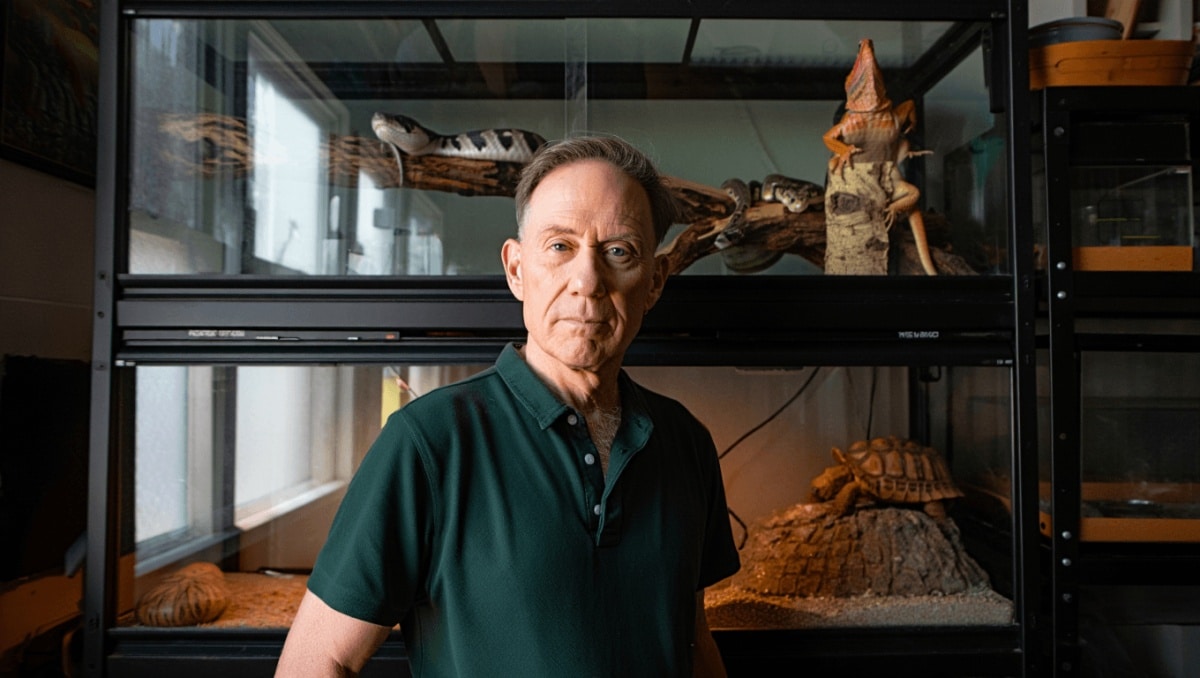
Beautiful close-ups of reptiles punctuate the show. Scales, eyes and patterns get camera time usually reserved for stars.
Those images serve two purposes: they remind viewers why these creatures are coveted and they create a visual counterpoint to the human stories. The animals appear simultaneously majestic and vulnerable.
What the series gets right
- Research depth: it traces networks and names key organizers.
- Balanced tone: it avoids outright ridicule and leans toward sober reporting.
- Access: Goode secures interviews with many central figures and some unexpected locations.
These elements make Monsters of God engaging and informative without relying on sensationalism.
What the series could have done better
- Pacing issues: episodes feel long and repeat similar beats.
- Surface-level self-reflection: Goode admits involvement, but the film offers little personal excavation.
- Limited view of end users: the fates of many animals after trafficking receive scant attention.
At times the documentary circles the same anecdote, which dilutes urgency. Still, the reporting often delivers new context about a little-discussed industry.
Ethical and conservation tensions revealed
Monsters of God raises questions about which practices should be legal and which should be banned outright. It foregrounds a difficult debate: how to balance legitimate trade with species protection.
Endangered tortoises, rare snakes and exotic lizards sit at the center of that debate. Wealth and demand drive many of the transactions.
The series also suggests that the broader public bears some responsibility. Zoos, private collectors and casual pet buyers all form part of a market that rewards scarcity.
Human drama without schadenfreude
Unlike certain earlier true-crime spectacles, this series avoids dwelling on the misfortunes of its subjects as entertainment. It rarely invites the viewer to laugh at failures.
Instead, Goode focuses on motivations, histories and the practical logistics of moving animals around the globe. That choice produces a documentary that feels cleaner and more purposeful.
Where this fits in Goode’s catalog and what might come next
Monsters of God reads as a step toward more restrained, systemic investigations. Goode’s brand of storytelling appears to be shifting from broad carnival to targeted reporting.
This direction hints at future projects that might probe less sensational topics with real cultural impact. Topics like puppy mills or the commercial breeding of designer pets would fit that trajectory.
If Goode keeps refining his approach, the next documentary could examine everyday animal commerce in a way that changes how viewers think about common pet industries.










