
Show summary Hide summary
- A quick snapshot: what changed and what you get
- Detailed specs and configuration options
- Real-world speed and benchmark snapshot
- Does the MacBook Air now overshoot its audience?
- Screen, sound and camera — media work and playback
- Battery life: test results and what to expect
- Buying considerations and pricing context
- How we tested this MacBook Air
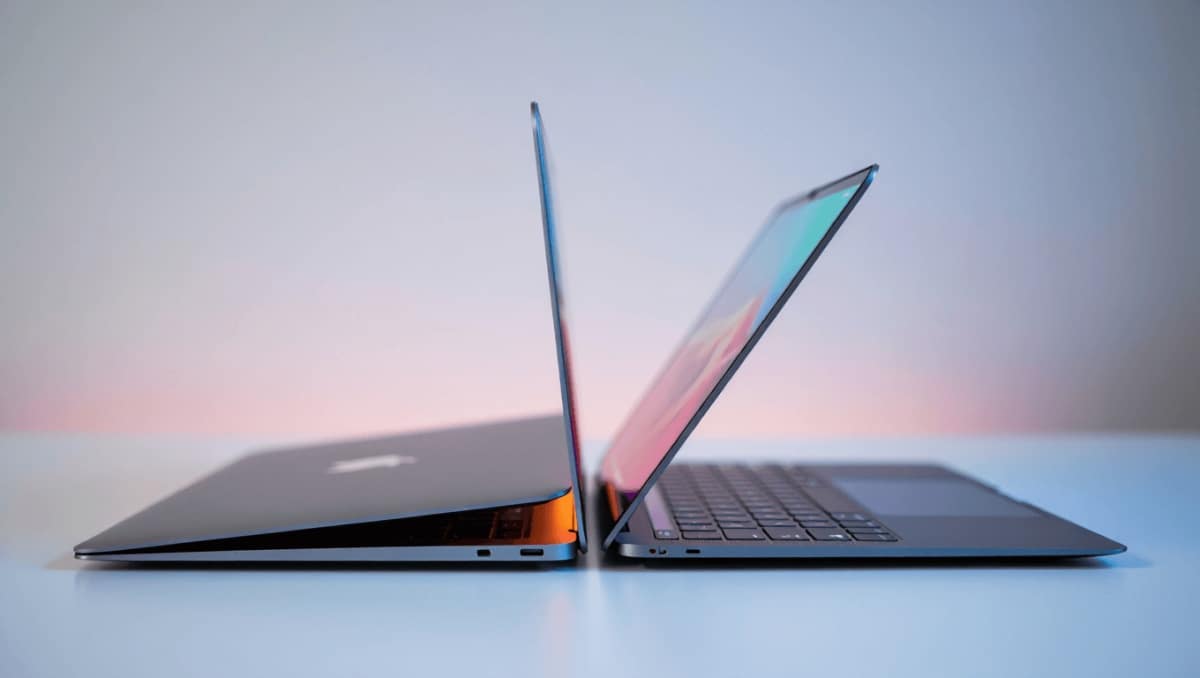
The latest MacBook Air with Apple’s M5 chip lands as a remarkably slim, speedy laptop that forces a re-evaluation of what “Air” means. It blends near-Pro performance with a featherweight frame, but a recent price bump has clouded the value proposition for many buyers.
A quick snapshot: what changed and what you get
- Price shift: The 13-inch now starts at $1,299, and the 15-inch at $1,499.
- Form factor: Two sizes — about 0.44 inches thin and roughly 2.7 pounds.
- Key features: M5 system-on-a-chip, Liquid Retina HDR display, Touch ID, and Neural Accelerators for AI tasks.
- Colors: Midnight black, sky blue, silver, and starlight.
Nas slams music industry over disrespect: teases new music, vows to address it
1992 vocal performances: 3 jaw-dropping moments that still amaze
Detailed specs and configuration options
- Chip: Apple M5 (10-core CPU, 8-core GPU, Neural Accelerators)
- Memory: Configurations from 16GB up to 32GB
- Storage: Base SSD options up to 4TB; review unit had 1TB
- Displays: 13.6-inch or 15.3-inch Liquid Retina panels, HDR-capable
- Brightness: Rated near 500 nits
- Connectivity: Wi‑Fi 7, Bluetooth 6, Apple N1 chip
- Ports: MagSafe 3, Thunderbolt 4 / USB‑C, headset jack, DisplayPort support
- Camera and audio: 12MP Center Stage camera, three-mic array, four-speaker system with Dolby Atmos
- Dimensions & weight: ~11.97 x 8.46 x 0.44 inches; about 2.7 pounds
Real-world speed and benchmark snapshot
The M5 Air behaves more like a Pro than a run-of-the-mill ultraportable. In our synthetic and practical tests it showed strong results while staying cool without fans.
Benchmarks and everyday responsiveness
- Geekbench 6 multi-core: around 16,099.
- Geekbench 6 single-core: roughly 4,025.
- Relative power: Our tests put the M5 Air at about 92.5% of the latest MacBook Pro’s performance.
These numbers match what you perceive using the laptop: apps open instantly, media exports finish fast, and even some gaming is feasible. Heavy video timelines and large photo edits glide along with minimal delay.
Does the MacBook Air now overshoot its audience?
Apple’s silicon evolution has been rapid. The M1 started a revolution, and successive M-series chips brought more headroom. That brings a new question: is the Air now more power than its typical buyer needs?
- The MacBook Air remains a top pick for students and early-career professionals.
- Power users who run extensive rendering or color grading will still favor the Pro line.
- Apple increased base storage and raised the starting price, which affects perceived value.
In simple terms: the M5 Air provides near-Pro power. For many buyers, that capability is more than necessary. For others, it is a welcome upgrade in a lighter chassis.
Screen, sound and camera — media work and playback
The Liquid Retina display delivers vivid HDR playback and rich colors. It isn’t OLED, but it performs very well for streaming, editing, and general use.
- Speakers: A four-driver setup supports spatial audio and Dolby Atmos.
- Microphones and webcam: Three-mic array with beamforming plus a 12MP Center Stage camera with Desk View.
- Upgrade note: These components match the prior generation; Apple did not change them this cycle.
Battery life: test results and what to expect
We run a repeatable video-loop test to measure battery endurance. This gives a baseline you can compare across machines.
- Video-loop test (1080p Tears of Steel, 50% brightness and volume): 17 hours, 40 minutes.
- Daily mixed-use: consistent all-day performance in our real-world workflow tests.
- Expectation gap: many recent MacBooks have hit near-19-hour marks, so this Air is strong but not class-leading.
Buying considerations and pricing context
The new starting price changes the calculus. If you find the previous sale prices attractive, the current MSRP may feel steep.
- If you want near‑Pro performance in a lighter body, the M5 Air is compelling.
- If your tasks are basic productivity and web browsing, earlier Air models or lower-cost alternatives may be smarter buys.
- Watch seasonal sales; discounts can return and dramatically improve the value proposition.
Bottom line for shoppers: the M5 MacBook Air is technically excellent, but the increased launch price means timing and buyer needs are more important than before.
How we tested this MacBook Air
- Unit used: 15.3-inch model with 1TB SSD in everyday conditions.
- Benchmarks: Geekbench 6 for single- and multi-core scores.
- Battery: continuous 1080p video playback at standardized brightness and volume.
- Real-world tasks: file transfers, video exports, multitasking, and audio/video calls.










