
Show summary Hide summary
- Why cars still rule much of the United States
- World Cup fears that didn’t come true
- How cities managed the surge in riders
- Culture, safety, and the turning point in Los Angeles
- Challenges that remain once fans go home
- What cities must do to keep momentum
- From a soccer surge to lasting ridership gains
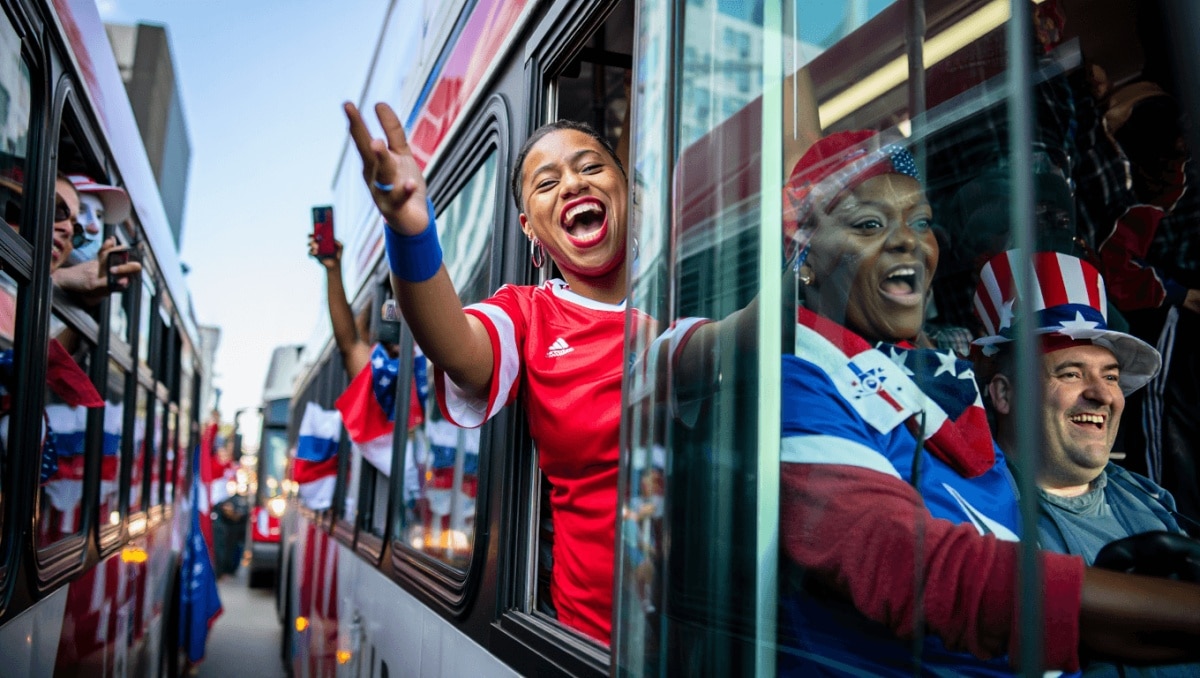
As the World Cup turned American streets into rivers of chanting fans, a familiar worry resurfaced: could U.S. public transit handle the pressure? The answer surprised many. What critics expected to be chaos instead revealed a patchwork of progress, short-term fixes, and a deeper cultural shift in how some cities move people.
Why cars still rule much of the United States
Car culture in the U.S. runs deep. Tailgating, suburban stadiums, and sprawling parking lots are shorthand for how Americans celebrate sports.
Nas slams music industry over disrespect: teases new music, vows to address it
1992 vocal performances: 3 jaw-dropping moments that still amaze
That lifestyle shows up in the numbers: the typical American spends many hours behind the wheel each year. The country also has far fewer trains and buses per person than peer nations.
The consequences are clear. Traffic deaths per capita are higher than in much of Europe. Compared with rail-forward countries, the U.S. records dramatically more fatalities on the road.
World Cup fears that didn’t come true
Before kickoff, many experts warned of transit meltdowns. Some episodes fed that narrative.
- New Jersey initially considered charging steep round-trip fares to reach MetLife Stadium, drawing heavy criticism.
- Kansas City’s temporary World Cup buses ran into long delays during early matches.
Still, across multiple host cities the worst-case scenarios largely failed to materialize. Systems absorbed record crowds for stadiums, fan zones, and watch parties without widespread collapse.
How cities managed the surge in riders
Several metropolitan areas moved quickly to add capacity or rework networks ahead of the tournament.
- Los Angeles opened new subway stations and leaned into customer experience upgrades.
- Seattle benefitted from a long-awaited light-rail extension that helped shuttle hundreds of thousands to key matches.
- Atlanta reconfigured bus routes, Miami tapped a new rapid corridor, and Kansas City expanded tram service and launched pop-up shuttles.
These efforts combined infrastructure expansion with operational tweaks, like extra service and temporary fan zones inside transit hubs.
Measured gains and one-off fixes
Many cities relied on both permanent projects and short-term measures. Extensions and new lines provided lasting capacity. Pop-up shuttles filled immediate gaps.
Culture, safety, and the turning point in Los Angeles
Los Angeles emerged as a notable case study in shifting attitudes toward trains and buses. The city invested heavily in new stations and safety changes in recent years.
Transit crime rates fell in measured categories after those efforts, lowering violent incidents and other safety problems on the system.
The shift was not only technical. Public campaigns, playful branding around new stations, and visible improvements changed how people felt about riding transit. Riders began to view transit as part of city life, not a last resort.
Challenges that remain once fans go home
Temporary success does not erase structural problems. Many transit agencies still face unstable finances and political resistance.
Case in point: Kansas City ran extended tram service for World Cup crowds, then scaled back and announced cuts to regular routes soon after.
Experts warn that many projects are treated as add-ons rather than real alternatives to driving. As one urban policy leader put it, new lines often act as complements, not catalysts for broad mode shifts.
What cities must do to keep momentum
Moving from event-driven boosts to sustained transit growth requires a clear strategy.
- Create real destinations along lines: jobs, housing, and amenities near stations.
- Pair incentives with disincentives: make transit attractive while reducing the ease of driving.
- Secure long-term funding so temporary services don’t evaporate after peak events.
- Design networks that connect everyday commutes, not only stadiums and airports.
If transit doesn’t get people to places they need, it won’t become part of daily life.
From a soccer surge to lasting ridership gains
Major sporting events can reveal and accelerate change. The World Cup exposed gaps but also showed what’s possible when cities invest.
With the 2028 Olympics approaching, cities like Los Angeles are testing whether temporary spikes in ridership can turn into steady habits.
Americans embraced soccer quickly. The tougher test is whether they will adopt trains and buses with similar enthusiasm as part of regular life.










