
Show summary Hide summary
- Why the Kennedy Center premiere was canceled
- Where and how the world premiere took place
- How Glass uses Lincoln’s voice in Symphony No. 15
- What the conductor and performers emphasized
- Glass’s Lincoln in context of his earlier works
- Audience reaction and the piece’s tone
- Practical notes from the premiere
Philip Glass’s newest symphony, a work built from the words of Abraham Lincoln, did not debut where many expected. Plans shifted amid controversy, and the piece instead premiered this weekend at the Boston Symphony’s summer stage in the Berkshires.
Why the Kennedy Center premiere was canceled
Glass originally intended the new score to open at the Kennedy Center during the nation’s 250th anniversary year. The center had seemed a natural home for a portrait of Lincoln by one of America’s most celebrated living composers.
Nas slams music industry over disrespect: teases new music, vows to address it
1992 vocal performances: 3 jaw-dropping moments that still amaze
But tensions around the institution’s leadership prompted a change of plans. Glass publicly withdrew the scheduled Kennedy Center premiere, saying the center’s direction conflicted with the symphony’s message. He made the decision in January and declined interviews afterward.
The dispute followed a period when the Kennedy Center had attracted attention for its ties to the White House. Glass said those developments made the venue inappropriate for a work he described as a reflection on unity and national purpose.
Where and how the world premiere took place
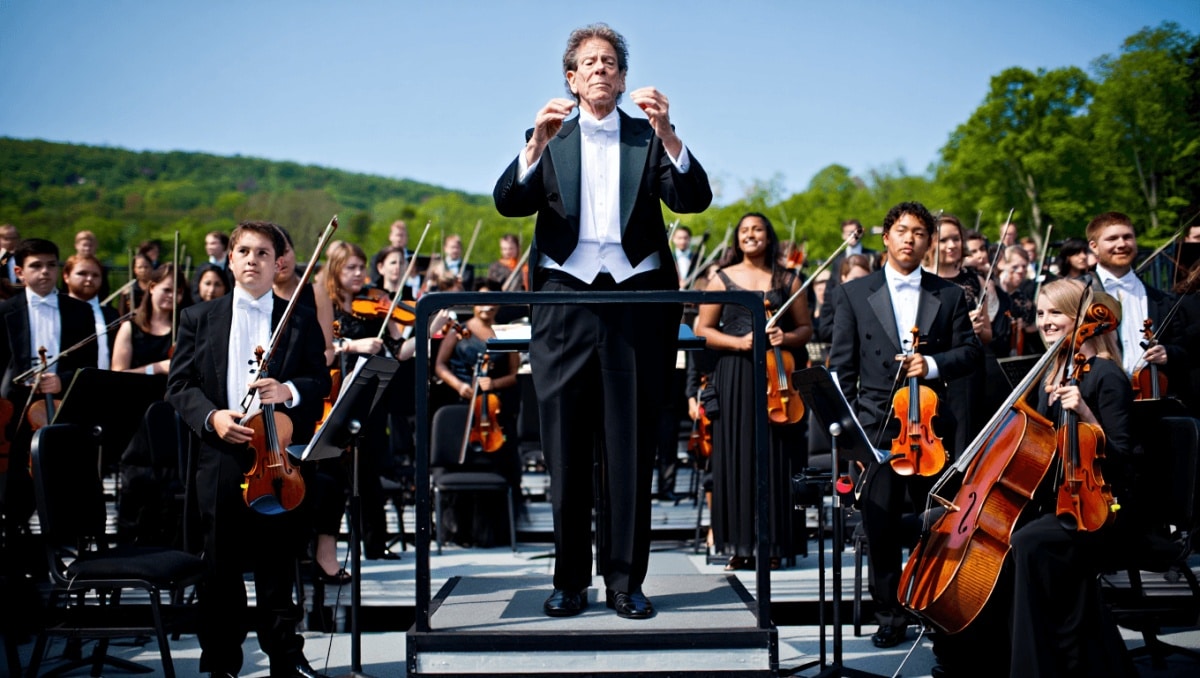
The Boston Symphony Orchestra gave the first public performance at Tanglewood, the orchestra’s summer home in western Massachusetts.
- Conductor: Karen Kamensek
- Lincoln role: Baritone Zachary James
- Program partners: a suite of John Williams’s score from the film Lincoln and Aaron Copland’s “Lincoln Portrait,” narrated by Alec Baldwin
The program framed Glass’s new symphony within other modern takes on Lincoln. That pairing underscored the composer’s decision to place Lincoln’s own phrases at the heart of the piece.
How Glass uses Lincoln’s voice in Symphony No. 15
Rather than inventing new text, Glass curated phrases and passages from Lincoln’s speeches and letters. The composer wanted Lincoln to come forward directly, without an intermediary voice.
Baritone Zachary James delivered both sung and spoken segments. He said blending those modes created special challenges. Speaking allowed emotional freedom that singing often constrains.
James described Lincoln’s language as direct and unexpectedly vulnerable for his era. He said the role showed Lincoln as a man who spoke plainly, often without the polish of a speechwriter.
What the conductor and performers emphasized
Karen Kamensek has conducted Glass’s music for decades. She said this symphony is less about long melodic lines than about projecting Lincoln’s text.
“There are melodies,” she told the audience, “but the priority is the words.”
Kamensek also noted how timely Lincoln’s phrases felt. She found the passages both prophetic and relevant to current debates about the nation’s future.
Rehearsal approach and musical decisions
Kamensek worked with the orchestra to shape an unusual close to the piece. The symphony runs eight movements and ends not with a fanfare but with quiet, sustained chords.
She encouraged musicians to focus sound inward and toward one another. In rehearsal she asked them to create four interlocking sonic “columns” to symbolize the foundations of society.
Glass’s Lincoln in context of his earlier works
Lincoln is not new to Glass’s repertoire. The president has appeared in other Glass projects, including a stage piece called The Civil Wars and the opera Appomattox.
In The Perfect American, Glass explored Walt Disney and even staged a mechanical Lincoln figure. Those earlier encounters show a long-standing fascination with the 16th president.
Audience reaction and the piece’s tone
Listeners at Tanglewood heard a work that favors reflection over dramatics. The closing chords left a spacious, contemplative silence instead of applause-ready flourishes.
That restraint fits the composer’s focus on speech and moral weight. Audience members and critics noted how the music seemed to set Lincoln’s sentences into sound, giving them room to land.
The symphony aims to let historical words resonate in the present. For many, that made the performance especially resonant around Independence Day weekend.
Practical notes from the premiere
Glass, now in his late eighties, declined to participate in media interviews. Kamensek and James did speak about the project and its difficulties.
- Premiere location: Tanglewood, Massachusetts
- Orchestra: Boston Symphony Orchestra
- Additional works on the bill: John Williams suite from Lincoln; Copland’s “Lincoln Portrait” narrated live
- Recording: Audio provided by the BSO and GBH Music










